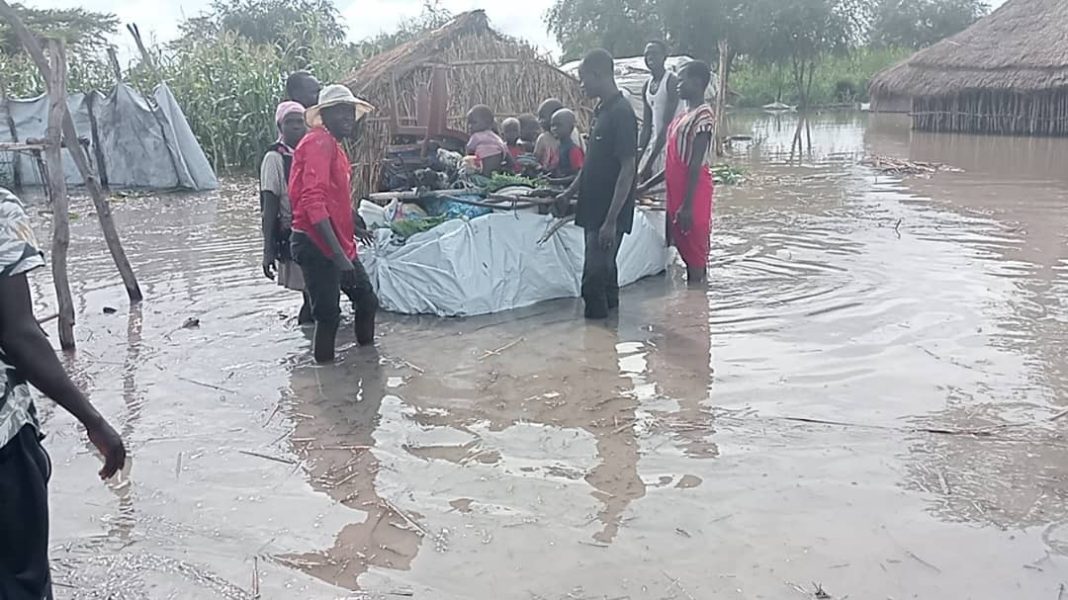
Families are wading through waist-deep waters, schools stand submerged, and entire villages have vanished under the swelling Nile as floods continue to devastate communities across South Sudan — affecting nearly a million people, according to the UN Office for the Coordination of Humanitarian Affairs (OCHA).
As of October 17, more than 926,000 people have been affected in 26 counties across six states, with Jonglei and Unity alone accounting for over 91 percent of those impacted.
OCHA says nearly 302,000 people have been forced to flee their homes for higher ground, leaving behind destroyed farmland and submerged shelters.
In Fangak County of Jonglei State, floodwaters have displaced over 89,000 people, while in Northern Bahr el Ghazal, more than 60,000 residents are struggling to survive after rivers burst their banks in Aweil East, Aweil North, Aweil South, and surrounding areas.
“Floodwaters, which have persisted since July, continue to damage homes, farmland, and critical infrastructure, disrupting health and education services,” OCHA said in its latest update.
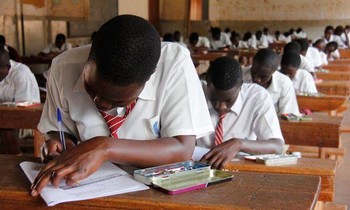
The floods have also left a trail of destruction in education. At least 61 schools across Central Equatoria, Jonglei, Upper Nile, Unity, and Western Equatoria have been affected, disrupting learning for over 22,000 children and 700 teachers.
In Unity State, new flash floods over the past week washed away roads and forced more families out of their homes. The Ganyiel airstrip in Panyinjiar County, which had only recently been restored for aid flights, is once again underwater.
Despite access challenges, humanitarian partners are continuing to deliver emergency food, medicine, and shelter supplies in the most affected regions.
During the International Day for Disaster Risk Reduction on October 13, Humanitarian Coordinator Anita Kiki Gbeho urged for greater investment in climate-smart solutions, flood prevention, and sustainable infrastructure — adding that “peace remains essential for lasting progress.”