The Ministry of Gender, Child, and Social Welfare, in partnership with the Centre for Inclusive Governance, Peace, and Justice (CIGPJ), is in the final stages of preparing its official report on the Convention on the Elimination of All Forms of Discrimination Against Women (CEDAW).
The report focuses on South Sudan’s progress in implementing CEDAW, an international treaty, often called a “bill of rights” for women, that aims to end discrimination against women in all areas of life, including politics, health, and economics.
Speaking at the opening of a two-day consultation workshop on Tuesday, November 4th, at the South Sudan Council of Churches, Undersecretary Esther Ikere explained that South Sudan agreed to the convention in 2015 and submitted its first report in 2019.
After receiving recommendations from the UN in 2021, the country is now required to report back on its progress.
“We were given recommendations to implement,” she said. “We are now expected to report this November back to Geneva about how we have implemented the CEDAW Convention,” Ikere stated.
To write the report, the government has been holding consultations across the country. This week, it is meeting with civil society organizations (CSOs), women’s rights groups, and youth organizations.
“CEDAW is not a one-man show. It is a country reality,” she said, explaining that the Ministry has held consultations at state and national levels and is now gathering final input from women’s rights groups, youth organizations, and community leaders.
The Undersecretary acknowledged challenges, including limited funds that prevented consultations from reaching every grassroots community and traditional leaders.
“This is a gap, as these leaders are the custodians of customs, and this is where many women face injustices,” Ikere noted.
She encouraged civil society organizations (CSOs) to submit their own shadow reports to the UN.
“Your language will be different from ours, but the two reports should complement each other,” she said.
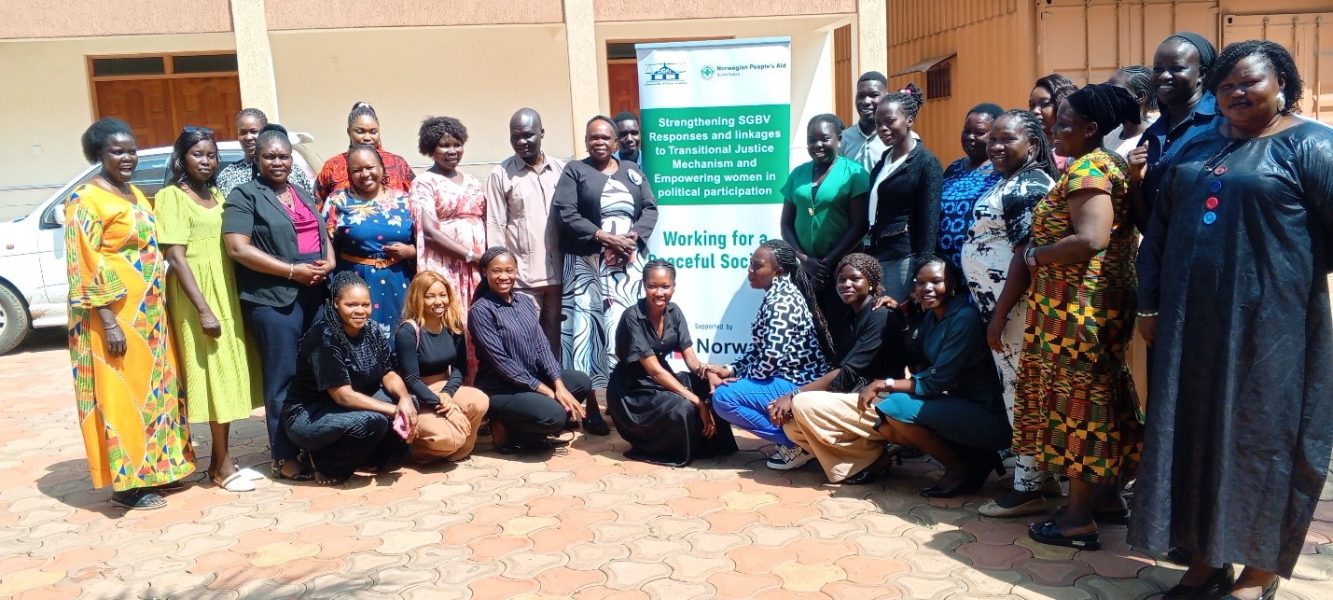
The convening brought together over 25 women-led organisations across different spheres. This collaboration is expected to lead to stronger recommendations from the UN.
Meanwhile, Nunu Diana Alison, a Project Coordinator for the Centre for Inclusive Governance, Peace and Justice, which is hosting a consultation workshop, said the report must reflect difficult truths.
“For the past many years, South Sudan has never been a safe place for women and girls,” Alison stated.
She pointed to ongoing problems like child marriage, gender-based violence, and the exclusion of women from politics.
A major stumbling block, she said, is the delay in passing key laws like the Anti-Gender-Based Violence Bill and the Family Law Bill.
Alison cited lack of political will and competing national crises as the main reasons these bills have stalled.
She highlighted that the report will look at where we are as South Sudan on issues like gender equality, child marriage, and gender-based violence,” she said.
After these consultations, the Ministry of Gender will validate the official report. It will then be formally submitted to the UN’s CEDAW Committee in Geneva by the end of November.
The convening was supported by Norwegian People’s Aid (NPA)