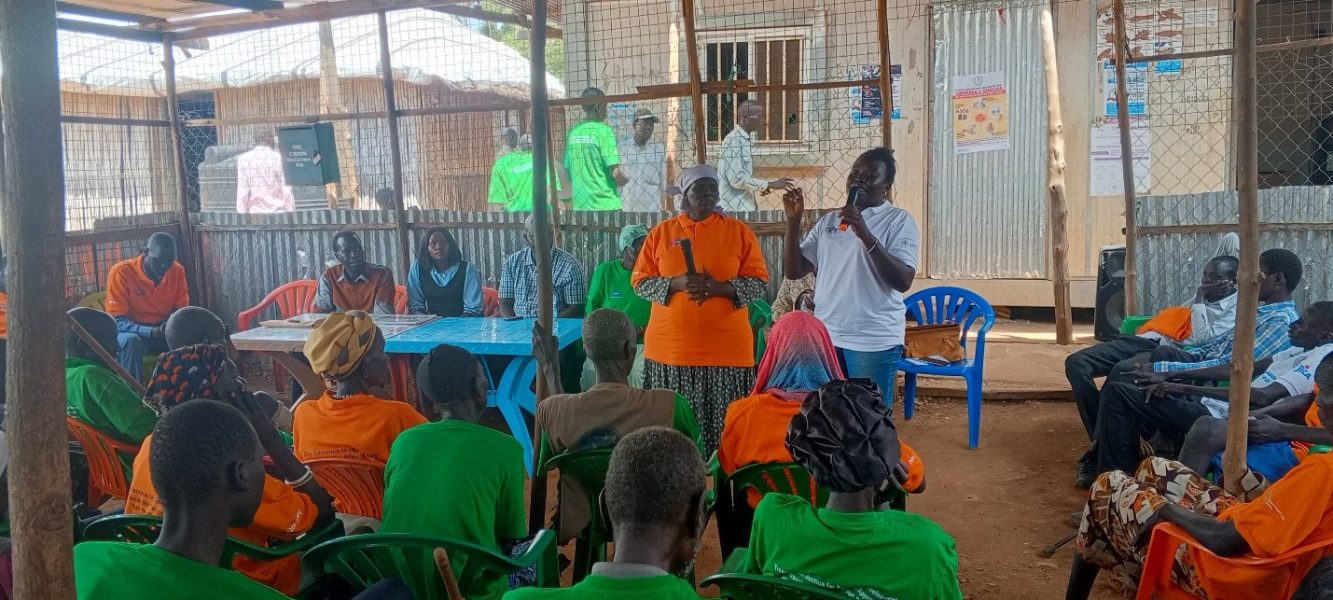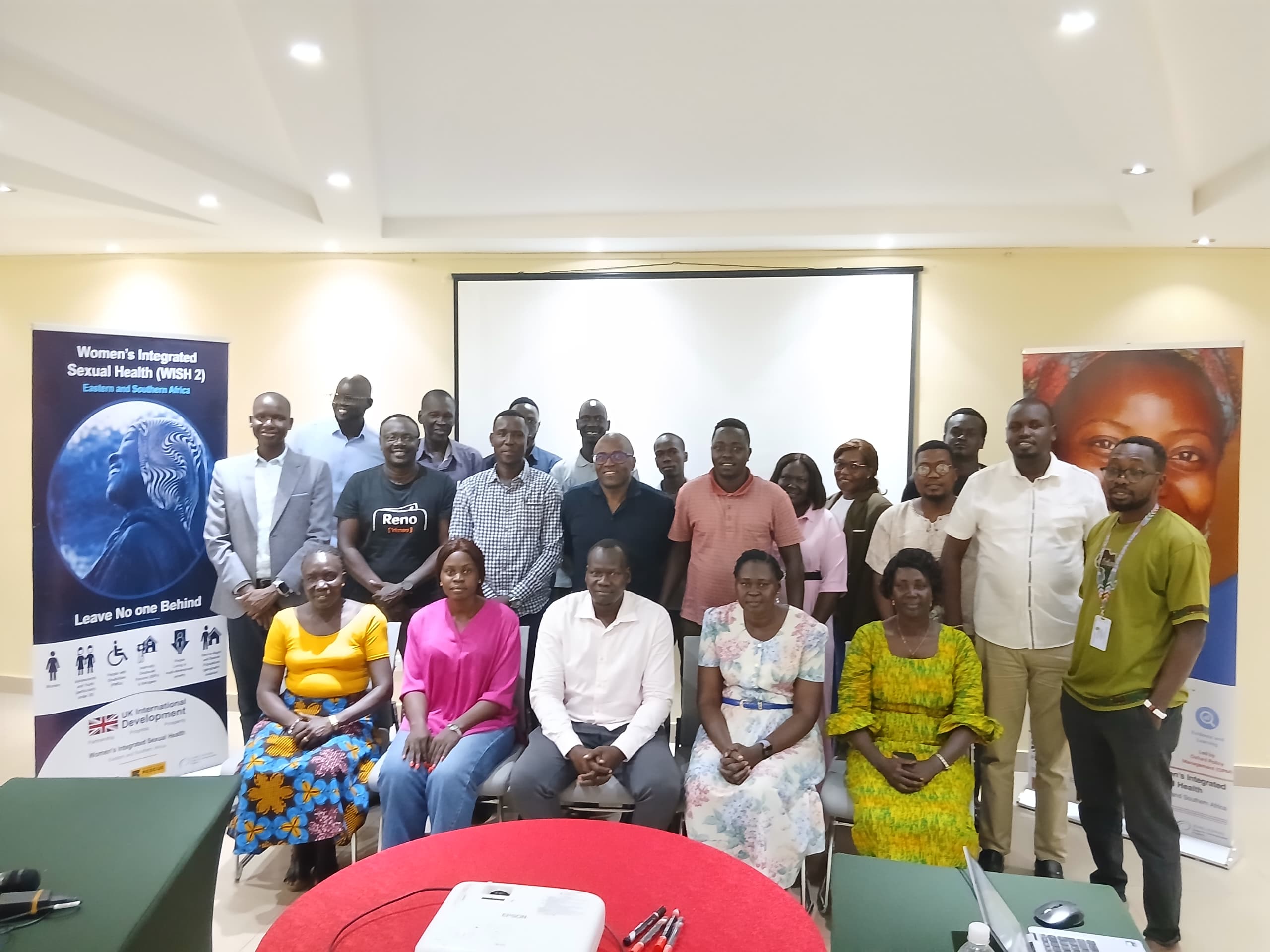
The Centre for Inclusive Governance, Peace and Justice (CIGPJ), on Tuesday, November 11, 2025, conducted civic education for displaced persons on the Commission for Truth, Healing and Reconciliation (CTHR) and the Compensation and Reparations Authority (CRA) Bills – two key legislations of the country’s transitional justice framework.
The civic education, held at the Protection of Civilians (PoC 3) Site in Juba, aims to engage residents of PoC sites, often the most direct victims of violence, to ensure they understand their rights and the pathways to justice and healing.
Supported by Norwegian People’s Aid (NPA), the session brought together over 213 participants, mainly women, youth, and persons with disabilities.
To address past human rights abuses and promote reconciliation after years of conflict, marked by displacement, loss of lives and property, President Salva Kiir signed the CTHR and CRA bills into law on November 11, 2024, as required by Chapter V of the 2018 Revitalised Agreement on the Resolution of the Conflict in South Sudan (R-ARCSS).
This formal establishment is seen as a positive step in addressing the legacy of violence and promoting national unity.
The process is now moving into a critical new phase. In early November 2025, the Ministry of Justice and Constitutional Affairs advertised positions for commissioners to lead the two institutions.
However, for the mechanisms to be truly effective, widespread public awareness and engagement are paramount.
Nunu Diana Alison, program officer for CIGPJ, it is their mandate to ensure that such vital information on transitional justice is passed in languages that everyone can understand, adding that this has been done through well-trained facilitators.
She stated that this is the third series of civic engagement on the transitional justice laws, that is the Commission on Truth, Healing and Reconciliation, and then the Compensation and Reparation Authority.
“We feel passing information is very powerful, and access to information is also a human right,” she said. “So this is our role as an organization, as Center for Inclusive Governance, Peace and Justice, to ensure that each and every one, every woman at the grassroots level have access to these laws that were recently passed, and also have their say.”
With the two institutions established and positions for commissioners advertised, Diana added “it’s our hope that we ought to tell the people at the grassroots level, even the mandate of these commissioners.”
The session covered a range of topics, including the mandate and objectives of the CTHR, which aims to investigate human rights violations, promote healing through dialogue, and recommend reconciliation initiatives.
Participants learned about the different forms of truth-telling, the importance of acknowledging past harms, and how the commission will facilitate a safe space for victims to share their stories.
A detailed explanation was provided on the CRA’s role in delivering reparations and compensation to victims. This included discussions on various forms of redress, eligibility criteria, and the process for survivors to seek justice for their losses and suffering.
The sessions were highly participatory, utilizing interactive sessions, local languages, and visual aids to ensure the information is accessible and clearly understood by participants.
Meanwhile, during the sessions community members raised questions mostly on compensation, and most of them asked how are they going to be compensated for those who lost property.
“But we told them that since the commissioners will be having national-wide consultations, they will be documenting what the citizens want in terms of reparations,” Diana said.
Some participants also raised concerns about the ongoing court proceedings, whether it is in line with the formation of the hybrid court with some worried about the political context that is happening currently.
While others also questioned the role of these transitional justice mechanisms in terms of ensuring peace building, and also how they co-exist with other communities.
“So, these are some of the questions that came out from the discussions, but of course our role as an organization is to ensure that we give them the right information, and also how they can peacefully co-exist with themselves within the host communities, and those who are living at the POCs.”
Community leaders within the PoC sites have welcomed CIGPJ’s intervention, thanking the organization for their support to the community.
Peter Bol, Secretary General of persons with disability at the POC 3, appreciated CIGPJ for enlightening them… stating that they want the awareness to be inclusive.
His sentiment was echoed by another participant who did not want her names mentioned, stating that “most of the people at the PoC have undergone through trauma as a result of the 2013 and 2016 war.”
For his part, Michael Gorjin Kuol, Youth and Women Rights Coordinator at the Norwegian People’s Aid, (NPA) stated the sessions were very important in carrying out awareness on the legislations that have been passed.
He urged communities to engage in the session and speak freely their thoughts on how justice can be achieved in the country.
CIGPJ stressed that an informed citizenry is crucial for the success and legitimacy of South Sudan’s transitional justice agenda.
Such civic education sessions are therefore seen as a vital step in laying the groundwork for accountability, ensuring that the voices of victims are heard, and delivering justice to those who need it most.