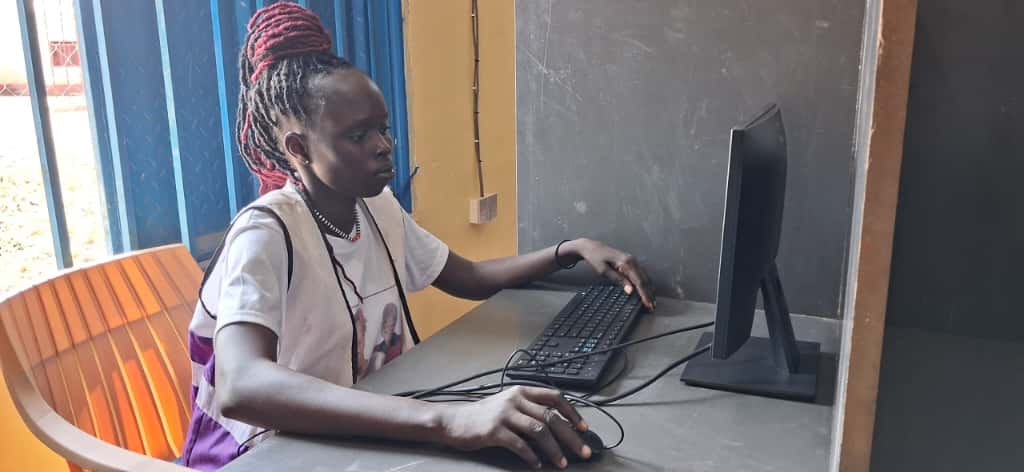
In a region long scarred by conflict and displacement, the reopening of Rubkona Technical College has emerged as a powerful symbol of recovery and resilience.
Once abandoned and converted into a storage warehouse, the centre is now buzzing with life, hope, and ambition as youth and women return to classrooms many for the first time in years.
The revival is part of an EU-funded initiative implemented by Save the Children in partnership with Tearfund, Coalition for Humanity (CH), and WOCO.
The programme focuses on restoring community structures, strengthening peacebuilding efforts, and expanding opportunities for livelihoods across Unity State.
Before the intervention, the college stood silent. No instructors. No students. No future.
Today, 105 learners—85 men and 20 women are enrolled in practical courses including computing, tailoring, agribusiness, and garment-making.
The renewed energy within its walls reflects a broader shift towards rebuilding lives and strengthening community resilience.
Principal Gatiek Tap Teny, also a director in the State Ministry of General Education, said the transformation is “nothing short of a milestone.”
“There were no students here before CH intervened. This place was dead.”
For many of the youth, the reopened centre is their first step toward secure employment and economic independence.
Dictor Nyang Bol, a computer student, praised the skills he is gaining but hopes to see the programme expand.
“Three students share one computer. We need more computers and a bigger classroom,” he said, calling for future departments like electrical and mechanical engineering.
Despite challenges, Dictor says the centre has offered “new skills and new hope” for young people in Rubkona.
Women’s participation once limited due to conflict, displacement, and traditional barriers is growing steadily.
Nyardier William Dabor, a young woman studying computing, said she now feels equipped to seek work and help other girls who dropped out of school regain confidence.
She appealed for more learning materials, including books, uniforms, hygiene kits, and additional computers, saying these essentials remain out of reach for many.
Meanwhile, Nyakuoth Tut Gai, a mother of five, joined the tailoring class after years of selling tea to support her family. She now earns an income through tailoring while staying close to her children.
“This tailoring is good for me. I can continue my business, and now many clients are coming. These two dresses are for my customers,” she said proudly.
Nyakuoth is set to graduate at the end of the month and encourages other women not to “remain idle when opportunities exist.”
While celebrating progress, Principal Gatiek stressed the need for long-term sustainability. He listed priorities such as:
More instructors and expanded departments (mechanics, carpentry, electrical engineering)
Adult education programmes for women, stronger partnerships with organizations like UNICEF, continuous teacher training and community contributions to keep the centre operational.
“This centre must not collapse when donor funding ends. It should continue to serve returnees, youth, women, and school dropouts across the state,” he said.
The revival of Rubkona Technical College shows what is possible when humanitarian organizations, local authorities, and communities unite behind a shared vision.
In a state where conflict once shuttered classrooms and shut down dreams, the centre is giving youth and women the tools they need to rebuild their futures one skill at a time.
Rubkona’s story is proof that even in the most challenging environments, education and opportunity can bring a community back to life.