
In the flood-affected vicinities of Rubkona County in Unity state, where families rely almost entirely on humanitarian assistance, a new dawn is unfolding as young mothers find hope in local nutrition support.
For many years now, the area has continued to face severe malnutrition emergencies, with families grappling with food insecurity and limited health care, putting children and lactating mothers at risk.
According to the latest Integrated Food Security Phase Classification (IPC) analysis 2025, acute malnutrition in South Sudan was projected to reach an unprecedented levels, with Guit, Rubkona and Mayiendit counties in Unity state, surpassing emergency thresholds.
Between April and July this year, an estimated 2.3 million pregnant and breastfeeding women were expected to require urgent treatment, while 7.7 million people projected to face severe food insecurity across the country.
However, the nutrition program in Bentiu Hospital, overseen by both local stakeholders, humanitarian partners and UNICEF South Sudan is now the lifeline for the communities in the area.
For young mothers, the series of programs provide more than just food and medical care for their children but also offers reassurances that their children’s life once miserable could still be saved.
In a sequence of interviews with the affected mothers at Bentiu Hospital’s stabilization center in September, many families began to see hope as children, once frail and lethargic, were slowly regaining strength.
Nyewar Pan Wiey, 22, a mother of twins whose children were admitted and still struggling, narrates how she needed help when the children’s situation was out of hand.
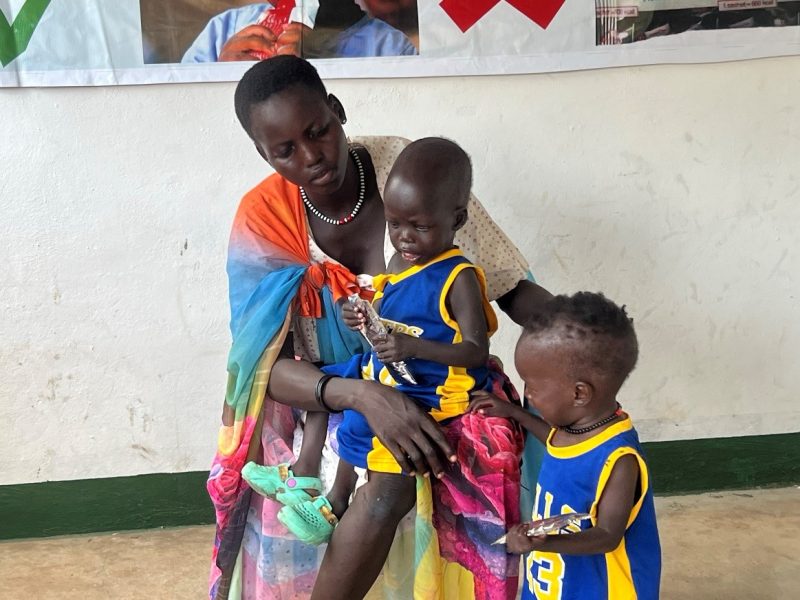
“Before my children {twins} were brought here, they were extremely malnourished and badly off. They have been getting sick on a regular basis,” she explained while seated at the hospital ward.
“But since we came here, we have been served with key messages and supplies to treat malnutrition. Now, my children are recovering. They are not like before though we are still in the program as we speak,” Nyewar added with optimism.
Admitted in July, Nyewar’s one-and-half year old twins are showing progress after hospitalization.
To her, what once seemed a hopeless situation was now turning into a story of resilience, thanks to therapeutic food, medical support and health education at Benitu Hospital.
The young mother affirms that the journey to recovery is ongoing, but the impact of the program is undeniable.
Children who might have succumbed to malnutrition, said Nyewar, are now showing signs of growth and vitality, giving families a renewed sense of optimism.
Nyachot Gatluak Ruai, 26, whose child has completely recovered from wasting, revealed that what started as diarrhea and fever would have cost her family if there was no such support.
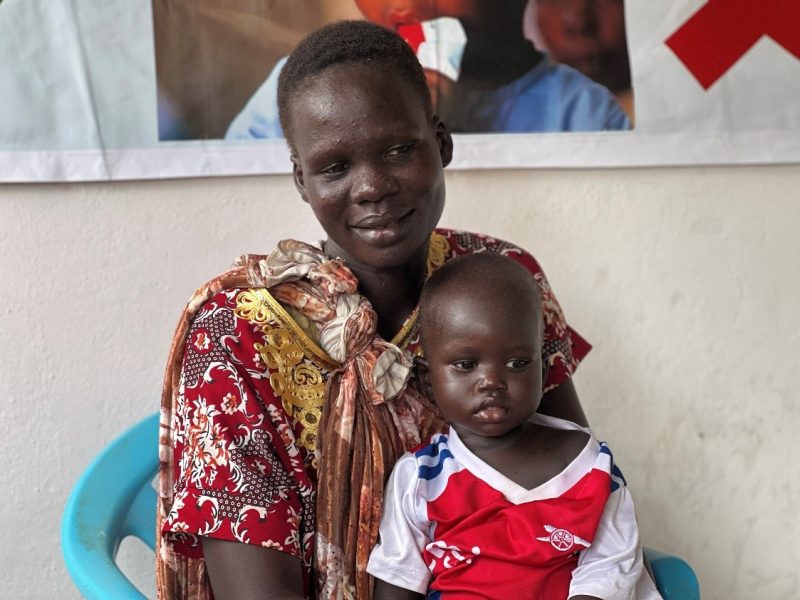
“If this support was not there, my child won’t be surviving for now. It will be so bad for my family,” she narrated.
“When the child becomes sick, and the weight is lost, and there is no food at home, there is always no hope. So, if this support wasn’t there, we would be talking stories now,”
In her presentation, her son was first admitted to Targeted Supplementary Feeding Programme (TSFP) for the management of the situation. However, after months of treatment and careful monitoring, he eventually became stable and discharged.
“My child is now fine because he was treated well in this nutrition center,” she said with a sense of relief, while referring to Bentiu Hospital.
Ruai’s reflection echoes an indefinite care offered to the children from community referrals to stabilization centers that ensures no one is left behind.
In Rubkona County alone, about 768 children with Severe Acute Malnutrition, 485 children with moderate acute malnutrition and 180 pregnant lactating mothers are admitted into different nutrition centers every week, according to reliable data on the ground.
Longa Edward, the Area’s Nutrition Coordinator for World Relief said admissions tend to spike or drop depending on the season and other underlying conditions.
“One of the great triggers is that since 2021 the area has been flooded and up to date the flooding has not subsided,” he stated.
“Most of the land is covered by water and food insecurity is widespread. Displacement, poor infant and young child feeding practices and constant diseases outbreak in this county (Rubkona) and influx of returnees also contribute greatly,”
On the other hand, Edward noted that humanitarian funding cuts also aggravated the situation, with about eight of the local health facilities closed down and six nutrition centers.
In average, the state Ministry of Health and its partners including UNICEF South Sudan and World Relief treat approximately 3,072 children with severe acute malnutrition monthly across the Outpatients Therapeutic Program (OTP) sites and about 1,933 children with moderate acute malnutrition admitted under the targeted supplementary feeding program (TSFP).
Additionally, 720 pregnant and lactating mothers are enrolled into the nutrition facility each month. Out of 3,072, about 5% of severely malnourished children develop complications that always require 24-hour care in stabilization centers.
Edward said the children’s recovery has been the ultimate achievement of their drive.
“Generally, every child who recovers is a story of hope, a reminder that malnutrition can be overcome,” he stated.
“Seeing a weak child regain strength and smile again is the greatest reward of our work. Each recovery gives courage to the family, motivates our team, and then it also gives hope to the entire community. When a child recovers, it is not just a life saved; it is a future restored,” Edward concluded.
Within January to July this year, Rubkona County alone recorded at least 23,301 admissions for both Severe Acute Malnutrition (SAM) and Moderate Acute Malnutrition (MAM) as a result of the wasting crisis.
Of the number, 18,607 were discharged, reflecting recovery rate of 99.6% and 99.5% for SAM and MAM respectively.
During the same period, about 5,040 pregnant and lactating women (PLWs) were also admitted due to the hassle. Out of the figure, 3,633 recovered with 3,623, fully discharged, representing recovery rate of 99.7%.
The Health Sector Transformational Project which integrates health and nutrition services has also played a crucial role in sustaining the gains.
In partnership with the implementing partners, the HSTP has expanded emergency outreach, referrals and maternal nutrition support across Unity state.
Community nutrition volunteers, outreach teams and Boma Health Initiative workers bring services closer to households, ensuring timely referrals for the sick and malnourished children.
Dor Gai Patai, the County Health Director in Rubkona, acknowledges the project’s impact, terming as a lifesaving initiative in the area.
“We can see a lot of mothers coming to the facilities to collect the medication and receive services at the Bentiu Hospital,” he admits.
“HSTP also has managed to hire qualified doctors, including surgeons and pediatricians, who handle emergencies, from gunshot wounds to complicated pregnancies and premature births,” he said.
Patai added that the enhanced services now provide lifesaving interventions such as C-sections, neonatal care for premature infants, and support for orphaned babies who lost mothers during birth.
David Kidega Ojok Okumu, Nutrition Program Officer for UNCEF in Unity State, emphasized the project fulfilled its mandate in terms of health and nutrition supplies.
“HSTP has been one of the {best} projects, in terms of health and nutrition. Most of the health facilities under HSTP have essential supplies at the PHC, PHCU, and also at the state hospital levels,”
According to Okumu, without nutrition program support, the mortality rate among the children under five would be rampant.
“If no intervention was put in place, we would lose many children. Acute malnutrition is a major cause of morbidity and mortality, especially in areas hit by flooding and food shortages. Children under five are extremely vulnerable, without support, many lives would be lost,” she said.
As Rubkona continues to struggle with challenges ranging from displacement to economic hardship, nutrition support remains a critical lifeline for its vulnerable residents.
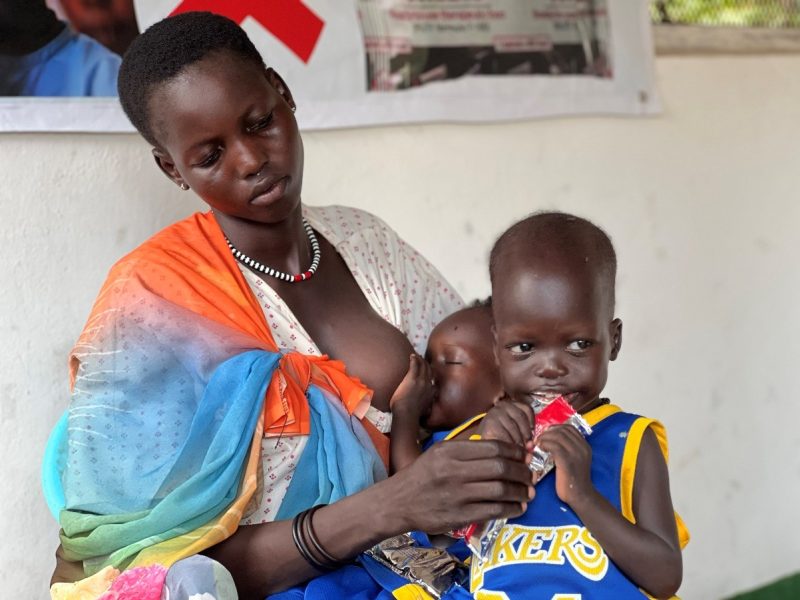
For mothers, the support means their children can survive against the odds, while health workers see it as a proof that wasting can be overcome even in hard times.