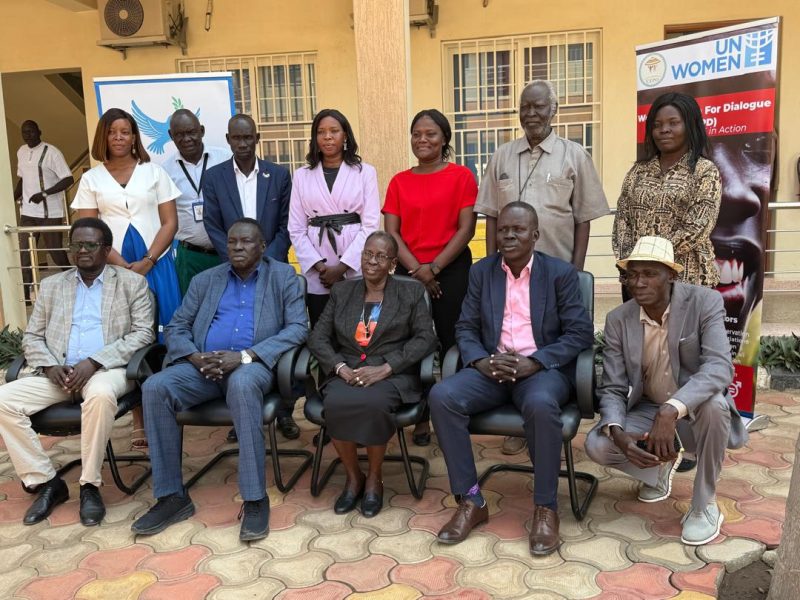
Dialogue aimed at restoring trust and implementing the Revitalized Agreement on the Resolution of the Conflict in South Sudan (R-ARCSS) continued this week, with Former Political Detainees (FDS) engaging in constructive discussions with women mediators and other stakeholders.
Akot Dut Ajieno, Member of Parliament at South Sudan’s Transitional National Legislative Assembly (TNLA) and representative of the FDS, described the dialogue as “fruitful and very interesting,” emphasizing the critical need for inclusive engagement to address persistent political challenges in the country.
“We will continue to engage in dialogue because we need solutions, and those solutions require the participation of all stakeholders,” Ajieno said, noting that parties previously engaged in the process have a shared responsibility to ensure lasting peace.
Ajieno pointed to systemic violations of the R-ARCSS, including the lack of respect for the agreement by SPLM/IG, the removal and replacement of political seats without consent, and the broader power struggles at national and state levels, which have undermined the implementation of the peace agreement.
“We support the agreements, we need permanent peace, and we are committed to dialogue that prioritizes the country and its people over individual interests,” he added.
During the dialogue, the FDS raised several key concerns threatening the peace process, including:
Lack of political will and commitment by parties, insufficient political compromise among leaders, delays in electoral decisions and constitution-making, removal of signatories from government positions, division within SPLM/IO threatening the R-ARCSS, unreconciled leaders and lack of trust among stakeholders and inadequate funding for elections and institutional reforms.
The group called on all main political actors to return to the dialogue table and implement the agreement in full, in both letter and spirit, stressing that inclusive engagement is essential to sustainable peace in South Sudan.
Dr. Lona James Luduro Elia, Deputy Chair of the Political Party Council and a member of the women mediators, welcomed the dialogue, noting the openness, honesty, and commitment of the FDS participants. She emphasized that dialogue remains the only viable vehicle for achieving sustainable peace in South Sudan.
“We are grateful to all those supporting this process, including UN Women, and we are committed to continuing engagements with all political parties until a consensus is reached,” Dr. Luduro Elia said.
The FDS are expected to meet with other signatory groups in further direct or face-to-face discussions in Juba next week, signaling the continuation of the inclusive peace process and efforts to overcome political divisions that have hindered the full implementation of the R-ARCSS.