Women leaders in South Sudan are raising the alarm over escalating online harassment, a form of abuse that mirrors the physical and psychological violence many women face in homes and public spaces across the country.
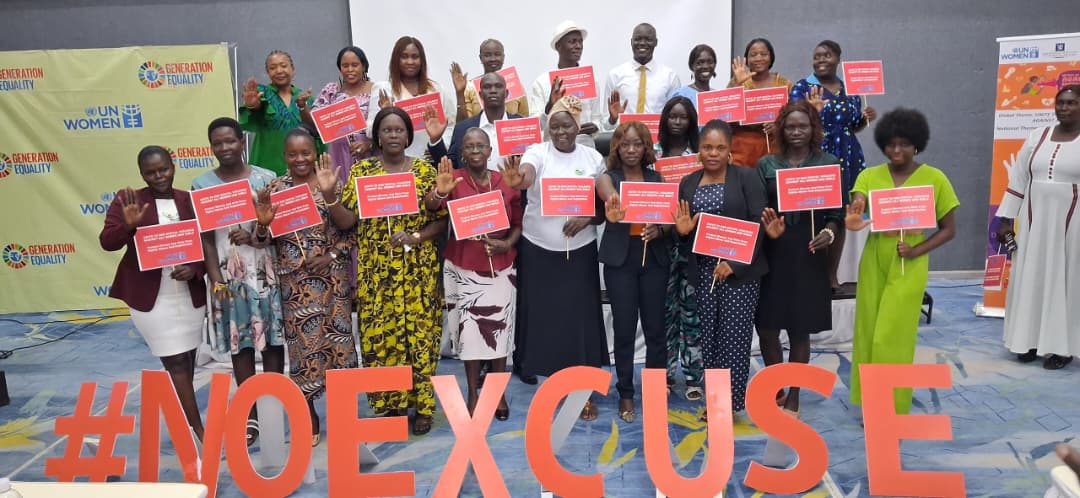
Speaking at a UN Women roundtable on Saturday during the 16 Days of Activism Against Gender-Based Violence, Lorna James Elias, Deputy Chairperson of the Political Parties Council, said digital spaces are increasingly hostile to women.
“What happens online does not stay online. It destroys women’s confidence, silences them, and makes them fear public participation,” Elias said.
She highlighted the experiences of women in leadership positions, who face gendered insults, body-shaming, intimidation, and threats on social media.
These attacks, she noted, reinforce harmful cultural norms that already undermine women’s voices in politics and society.
Elias also revealed that many women in public life continue to suffer domestic abuse that is often hidden from the public eye.
“Some of us who hold political positions are beaten by our husbands, but when we go to the office, we lie that we knocked our heads on the door,” she said.
She warned that partners are increasingly using technology to monitor women’s phones and online interactions, turning digital tools into instruments of control.
“Online gender-based violence actually mirrors offline gender violence,” Elias emphasized.
UN Women Country Representative Delphine Serumaga added that technology-facilitated violence is one of the fastest-growing forms of abuse globally, and South Sudanese women including politicians, journalists, and activists are not immune.
Citing global data, Serumaga said more than 80% of women parliamentarians worldwide have faced psychological violence, including online threats, and nearly half have received threats of rape or physical harm.
In South Sudan, alerts from the Human Rights Defenders Network indicate rising cases of cyberbullying, hate speech, misinformation, and image-based abuse targeting women.
“These attacks weaken women’s participation and threaten the country’s efforts to meet the 35% affirmative action quota,” Serumaga said.
She stressed that as South Sudan prepares for future elections, women in public life are especially vulnerable to smear campaigns, online manipulation, and intimidation.
The UN official called for stronger legal protections, digital literacy programs, accountability for perpetrators, and psychosocial support for survivors.
“Every woman and girl in South Sudan has the right to participate, both online and offline, without fear or intimidation,” Serumaga said, urging stakeholders to continue the fight against digital violence beyond the 16 Days campaign.