Renewed fighting between South Sudan’s opposing forces has left a generation of children in Mundri East County paying a heavy price. Since clashes erupted in late September, schools have been closed, communities displaced, and the safety of children severely compromised, leaving families and educators desperate for a return to peace.
The clashes that began in Kediba after SPLA-IO and NAS forces overran an SSPDF base and government troops launched operations to retake it quickly triggered a crisis far larger than the frontline.
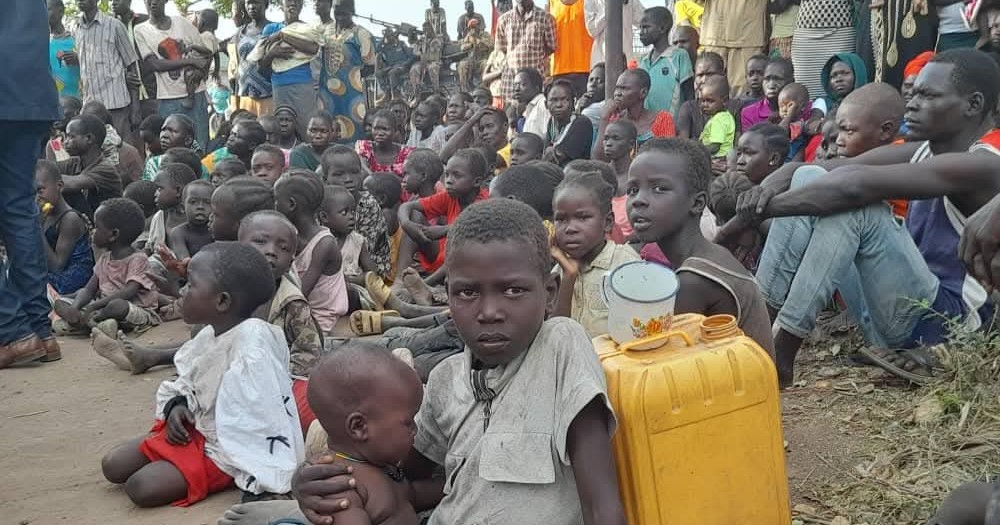
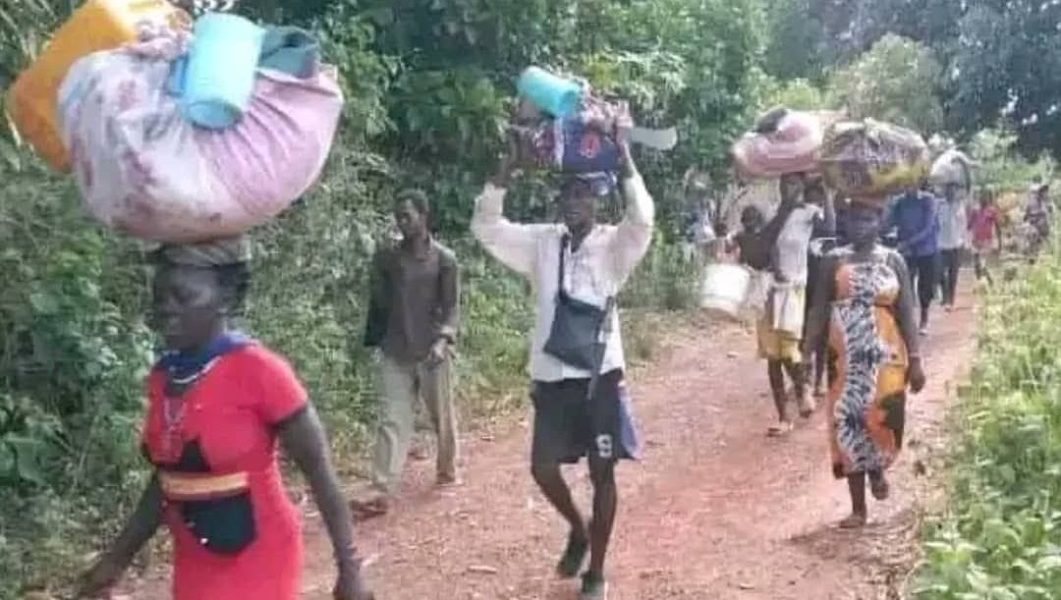
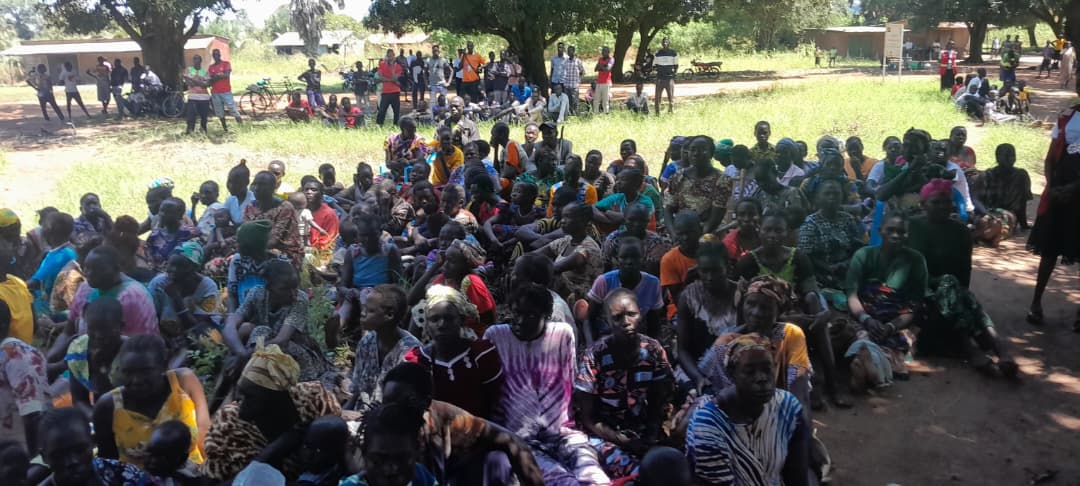
As nearly 30,000 civilians fled according to media reports, the conflict spread into Lakama’di Payam and nearby villages, closing schools and health centres and cutting thousands of children off from the education they had worked toward all year.
The immediate consequences for students have been devastating. Martin Light, a teacher at Lakama’di Primary School, described the heartbreak of seeing children deprived of their education due to circumstances beyond their control.
“Over 500 pupils, from Primary One to Primary Eight, have not sat for their third-term exams because of the fighting,” he said.
“It is the responsibility of the state to protect children, not expose them to such dangers.”
Light emphasized the toll on young girls, many of whom missed critical final examinations.
“Five bright and intelligent girls, along with seven others, missed their Primary Eight final exams because they were displaced. Most of these students are between the ages of 15 and 17.”
Parents, too, are grappling with the impact of the fighting. Mary Jackson, a resident of Kediba Payam, recounted the pain of seeing his four children miss school despite having paid their school fees in full.
“It is unbearable for parents like us to see our children lose their education after committing to pay for their schooling,” she said.
Jackson added “My 15-year-old daughter was supposed to sit for her Primary Eight final exams, but the fighting forced us to flee. We, the vulnerable, have no voice while our leaders’ children live safely abroad.”
Jackson’s plea ended in tears, calling for urgent peace and protection for families in conflict-affected areas.
For students like Rebecca Keyiwo, the chance is already lost, and they believe nothing will change—even if they speak out.
“What can we do?” Rebecca Keyiwo said quietly. “If we had the power, we would sit for our exams even if not here, we would find a place where we could. But I have no more words… nothing we say will change the fact that our exams are gone until next year.”
Education officials say the situation has been particularly dire in Lakama’di and Kediba payams.
Kennedy Anyanya, Mundri East County Director for Education, explained that entire cohorts of students from Primary One to Seven were unable to sit for their third-term examinations.
Some Primary Eight and Senior Four students were relocated to Mundri West in an effort to ensure they could take their exams, but many displaced far from their homes missed the opportunity entirely.
“In Kediba Payam, 68 students were registered for Primary Eight final exams, but only 60 managed to sit,”Anyanya said.
“In Lakama’di, 12 out of 32 students missed their exams because families could not transport them or access the necessary information. Displacement and fear forced children to stay far from their schools.”
Officials are exploring alternative arrangements for children who missed exams, but Anyanya stressed that the ongoing insecurity makes such plans difficult.
“We are trying our best, but without peace, these children’s dreams remain shattered.”
The impact of the fighting extends far beyond missed examinations. Willson Elia, an education inspector in Mundri West, reported that many displaced children are experiencing trauma, stress, illness, and the loss of educational materials or even parents.
“These experiences violate their basic rights. We pray for their strength and hope for peace, but the human cost is immense,” he said.
The humanitarian crisis has also been documented by community leaders. On 14 November, Maburuk Denis submitted a formal letter to the Western Equatoria State Deputy Governor, detailing the destruction of villages and displacement of residents.
According to the report, residents fled to churches, neighboring payams, or hid in forests without access to food, water, medicine, or shelter.
Villages such as Kasiko Boma, parts of Lakama’di Payam, and Madu-Ngama Boma were burned, while health facilities were looted, leaving pregnant women, the elderly, and the sick without care.
Schools in the affected areas were closed, putting hundreds of pupils at risk of losing an entire academic year.
Denis further reported that SSPDF forces entered the area without engaging the opposition, and civilians remained at risk.
“Several young boys were arrested while two others were killed and burned inside a house,” he wrote.
Denis also accused local authorities, including the Mundri East County Commissioner, of failing to intervene to protect civilians.
The disruption to children’s education and safety has drawn the attention of lawmakers.
Joseline Pita Benson, the MP representing Mundri East, raised the alarm during the Western Equatoria State Assembly.
She noted that security personnel had allegedly looted civilian property and called on the state government to investigate the incidents, identify perpetrators, and restore accountability.
“Children are being denied their right to education, and families live in fear,” she said. “The government must ensure safety and peace in these communities.”
For teachers like Martin Light, the plight of the students is a daily reminder of the human cost of insecurity.
“These children are paying for a conflict they did not start. Their dreams are being crushed while we, as a society, watch,” he said.
Parents, too, are pleading for a resolution. “All we want is peace, so our children can learn and grow safely. They deserve a future, just like every child in this country,” said Mary Jackson.
Looking Ahead
Officials are working to find solutions for children who missed exams, but the prospects depend on the broader security situation. As Anyanya noted, “Unless peace returns, our efforts may not help those children. We need leaders to prioritize the protection of the young generation and their right to education.”
For now, the children of Mundri East County remain in limbo. Displaced from homes, schools, and communities, they face the double burden of trauma and interrupted education.
The story of Mundri’s children is a stark reminder that in South Sudan, the cost of conflict is often paid by those least able to defend themselves.
Until peace is restored, the future of these children and the hopes of parents, teachers, and community leaders, remains uncertain.
Their struggle underscores the urgent need for dialogue, protection, and accountability in conflict-affected areas, so that South Sudan’s next generation can learn, grow, and thrive.
This story is reported with a grant from Journalists for Human Rights under the ‘Tackling Mis/Disinformation Project,’ funded by the Peace and Stabilization Program of the Government of Canada.