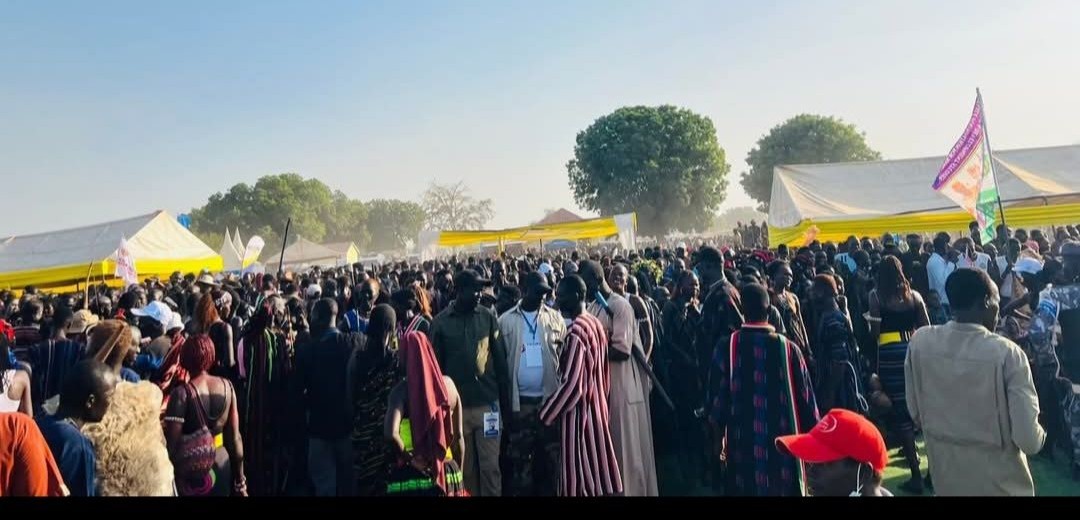
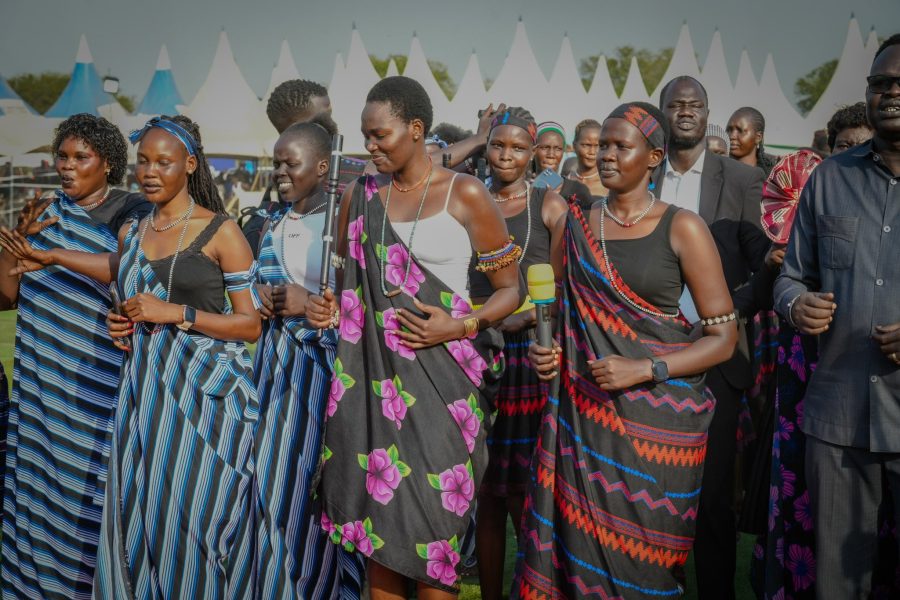
The 3rd Annual Mundari Cultural Festival in Terekeka County was more than a showcase of tradition, music, cattle culture, and identity.
It became a national moment of reflection one that raised a deeper question about leadership and peace in South Sudan: were the country’s top leaders present merely for ceremonial visibility and personal political interest, or were they there to learn, internalize, and act on the lessons of unity demonstrated by the people?
The attendance of senior national figures, including Vice Presidents Josephine Lagu Yanga, Rebecca Nyandeng De Mabior, Dr. James Wani Igga, Central Equatoria State Governor Emmanuel Adil Anthony, and Senior Presidential Envoy Adut Salva Kiir, elevated the festival into a political and social symbol.
Their presence suggested an acknowledgment that peace cannot be imposed through force or negotiated agreements alone, but must be nurtured through social cohesion, cultural respect, and inclusive governance.
At the heart of the Mundari celebration was a lived expression of unity. Communities from across South Sudan, Mundari, Shilluk, Nuer, Toposa, Kakwa, Kuku, Bari, and others gathered peacefully, performed together, and shared space without fear or exclusion.
In a country long scarred by ethnic conflict, this coexistence stood as quiet evidence that unity is not an abstract ideal but a practical reality when people are given safe and inclusive platforms to interact.
Leaders who addressed the festival repeatedly framed culture as a bridge rather than a barrier.
Vice President Josephine Lagu Yanga emphasized the preservation of culture as a tool for peace, development, and national identity, linking Terekeka’s cultural strength to economic opportunities such as tourism, fisheries, and creative industries.
Her remarks highlighted an important truth: peace is more sustainable when communities see development dividends tied to stability and cooperation.
Vice President Rebecca Nyandeng De Mabior’s message, delivered on behalf of President Salva Kiir Mayardit, carried a stronger moral tone.
Her call for peace, love, reconciliation, and her firm condemnation of violence against women spoke to the deeper social foundations of conflict.
By framing peace as something that begins in homes and families, she challenged leaders and citizens alike to confront everyday practices that normalize violence and division.
Yet, while speeches and symbolism matter, the festival also exposed a familiar dilemma in South Sudanese politics: the gap between presence and purpose.
Public events often attract leaders for visibility, political capital, and regional influence.
The critical question, therefore, is whether such appearances translate into policy action, institutional reform, and genuine commitment to national cohesion.
Governor Emmanuel Adil Anthony’s focus on agriculture, food security, and youth engagement provided a more practical pathway.
His message acknowledged that unity cannot survive on rhetoric alone it requires livelihoods, dignity, and shared economic interests.
When young people are productively engaged and communities are food-secure, the drivers of conflict are significantly reduced.
The Mundari Festival, in this sense, served as both inspiration and test. It demonstrated what peaceful coexistence looks like at the community level while simultaneously challenging leaders to replicate this model nationally.
Learning from the festival means translating cultural unity into inclusive governance, equitable service delivery, protection of civilians, respect for diversity, and accountability.
If leaders attended the festival only to be seen, photographed, and politically positioned, the moment will fade with the music and dances.
But if they attended to listen, learn, and internalize the lesson that unity is built through respect, inclusion, and shared purpose, then the festival could mark a meaningful step toward peace.
South Sudan’s path to stability depends not on the number of cultural events attended by leaders, but on their courage to implement what those events symbolize.
Peace agreements must be upheld, elections must be credible, women and youth must be protected and empowered, and development must reach beyond capitals to communities like Terekeka.
Ultimately, the Mundari Cultural Festival revealed that the people of South Sudan are often ahead of their leaders in practicing unity.
The responsibility now lies with those in power to turn cultural harmony into political action. If they do, South Sudan can move closer to becoming not just a nation rich in culture, but a country where peace is lived, protected, and sustained for all.