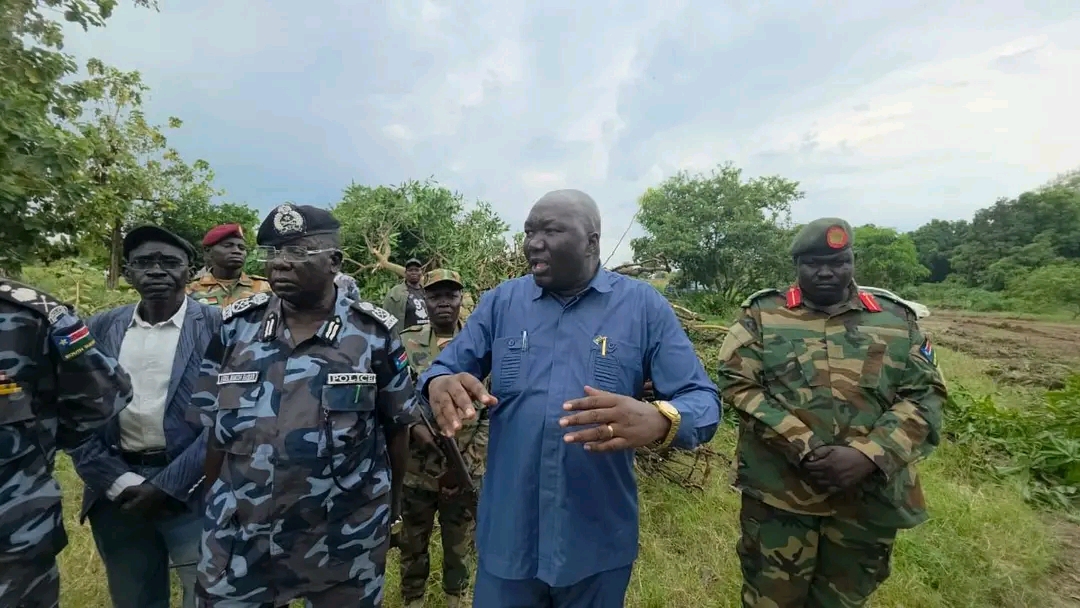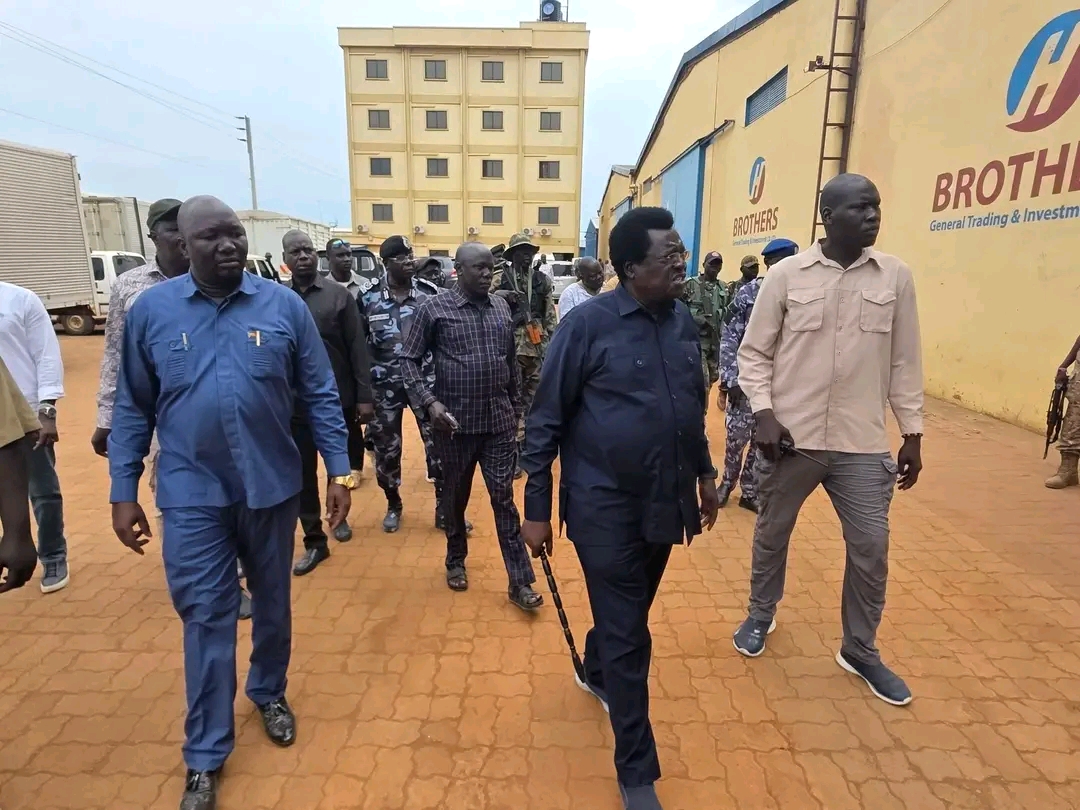
The construction of protective dykes in Rubkona County and Bentiu town has brought long-awaited relief to communities in Unity State, successfully pushing back persistent floodwaters and restoring swathes of land that had been submerged for years.
For residents of this oil-rich region, the new infrastructure represents a crucial step towards security, stability, and renewed livelihoods.
Kangach Chap Deng, a resident of Nhier Pakur, stated that the 17.7-kilometre dyke has reclaimed land that had been underwater for years, enabling people to return and farm.
“After the reclamation of this area, we can access the land where we have settled, as well as space for farming and grazing our cattle,” Chap told the Dawn in an exclusive interview in Unity State.
Chap explained that the dykes create barriers, preventing floods from overflowing onto normally dry land, making it safe for habitation and farming.
“They save our lives. Without this intervention, we would not be here today. We can now live happily without the fear of floods destroying our houses and livelihoods,” he said.
He expressed gratitude to the IOM and the government for protecting their lives, restoring land, and proving that a future can be built from within.
“We are very happy as a community for the support we received from the IOM through the government-led project.”
This development is part of a government-led initiative, the Enhancing Community Resilience and Local Governance Project Phase II (ECRP II), which is funded by the World Bank.
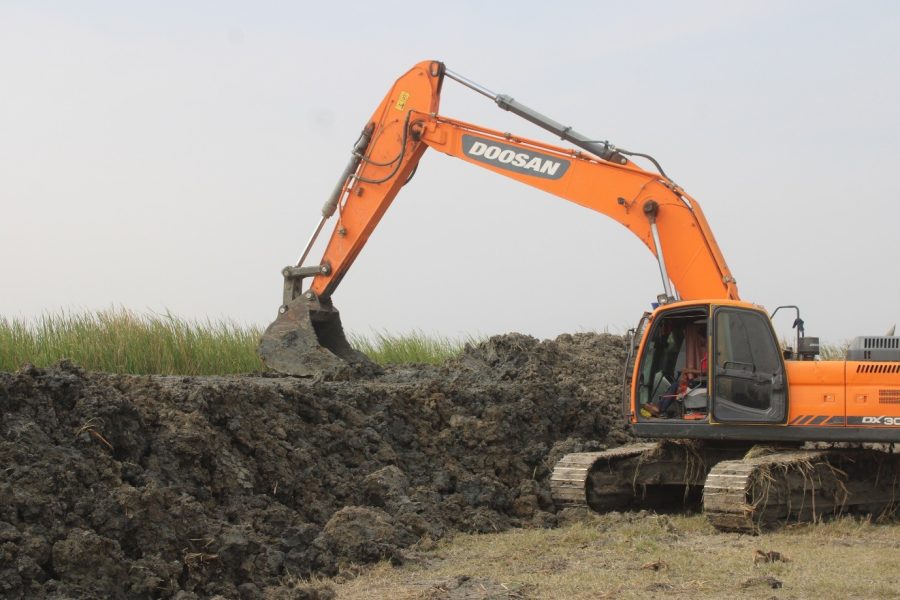
The project enables the International Organization for Migration (IOM) and the government to construct a 17.7-kilometre dyke south of Bentiu.
The dyke stretches from the Kuerbuone-Nhial Diu road in southern Bentiu to the Panthiany-Dhorbor area, reaching up to the Thowmangor suburb.
The project also aims to protect 43 square kilometres of land submerged in water in Panthiany payam, which will accommodate 120,000 households.
Ruon Machar, Chairperson of the Payam Disaster Risk Management Committee in Kalibalek village, stated that they monitor the broken parts of the dyke and repair them.
“We regularly inspect the dyke to identify weak points and make repairs. If the damage exceeds our capacity, we always call ECRP II for assistance,” said Machar.
Machar mentioned that the IOM provided them with tools to repair the damaged parts of the dyke.
“We conduct awareness campaigns in the community regarding water levels. We inform residents in lower-lying areas to move to higher ground if the water level increases.”
He noted that they assisted the IOM in identifying Koyathay, Bilnyang, Baang, and Thowmangor as critical areas for dyke construction to prevent floodwaters from entering Bentiu town.
For over five years, relentless seasonal flooding has displaced more than half the population across Rubkona and other counties in Unity State.
Homes, grazing areas, and farmland have vanished under water, forcing entire communities onto shrinking highlands.
The devastating floods have cut people off from transportation and social services such as healthcare and markets in Bentiu town.
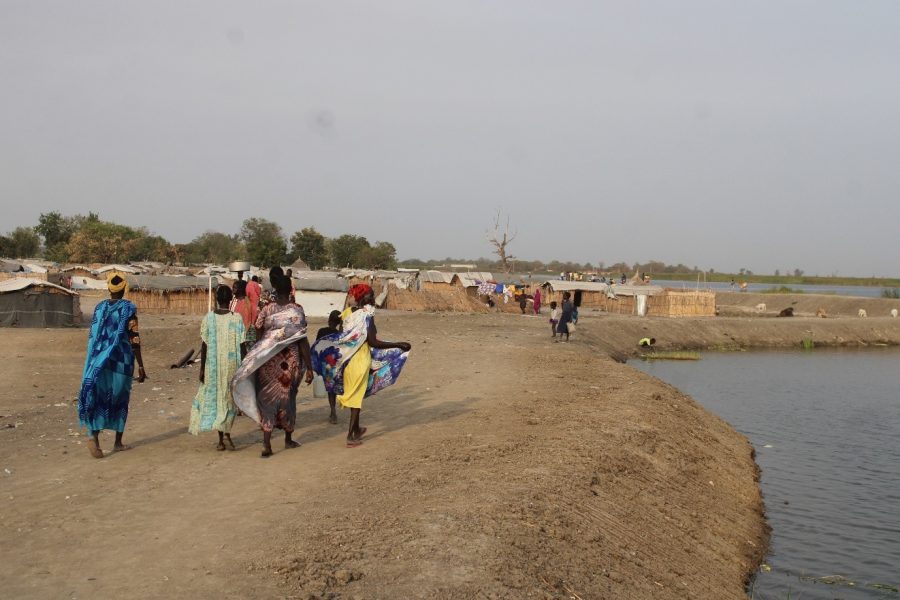
Angelina Nyanthor, a mother of six who sells fish in Bilnyang market, fled her home in 2020 when floodwaters breached the dyke and inundated her home.
Nyanthor returned after the dyke was constructed and has since resumed selling fish to rebuild her life and support her family.
“I earn a small income from selling fish; sometimes I can make 10,000 or 15,000 South Sudanese Pounds per day, depending on the market,” said Nyanthor.
She sources fish from fishermen and sells them at Bilnyang market near the dyke constructed by the IOM.
“I use the money to pay for my children’s school fees, as they are studying in different schools, and I also use some for food.”
Farmers have had to adapt by becoming fishers, and isolated villages, previously cut off by water, are now island communities.
The $150 million project funded by the World Bank aims to benefit 950,000 individuals across 79 counties in Western Bahr el Ghazal, Unity, Upper Nile, Northern Bahr el Ghazal, and Warrap.
This five-year initiative is being implemented by the International Organization for Migration (IOM) as the main partner, along with NGOs.
Tombd Anthony Jadalla, the IOM Senior Field Engineer and Team Lead for the Site-E Dyke Project, stated that the construction of the 17.7 km dyke began on 2nd July 2025.
“We are upgrading the Stage One dyke, which is designed to enclose the area we want to reclaim, approximately 43 square kilometres,” said Jadalla.
“We will also pump out the water. Once this water is removed, the land can accommodate up to 150,000 households.”
He mentioned that they are working to reclaim vital infrastructure such as water yards and government buildings that were submerged during the recent floods.
Jadalla stated that the dyke upgrade is expected to be completed within the next two months.
“The Stage One dyke has a lifespan of five years, and we will need to maintain it at least every five years,” he explained.
“However, as we upgrade the Stage One dyke to the proposed new design, we hope for a lifespan of more than 20 years.”
The project has successfully secured the Koyathay, Bilnyang, Baang, and Thowmangor areas from perennial floods, saving households and villages that had previously been submerged.
The dyke has effectively prevented floods caused by backflow water from Lake Victoria.
Miriam Mutalu, the IOM Head of Sub-Office in Bentiu, mentioned that the ECRP II project covers over 52 kilometres of dyke in Rubkona and Bentiu.
“The dykes are protecting the population of Bentiu and Rubkona, and without these dykes, this area would have been submerged,” said Mutalu.
“Thanks to generous funding from the World Bank through the government, this community has been protected.”
Sudan Chuong Mut, Director General of the Unity State Ministry of Local Government and Law Enforcement Agencies, emphasised the importance of the dyke for the people of Unity State, who have suffered from the effects of flooding since 2021.
“If it were not for this project, there would be no place left for Unity State. The IOM has been working hand in hand with the Unity State government to build dykes and reclaim land that was submerged,” said Chuong.