A growing power struggle has erupted within the South Sudan National Chamber of Commerce, Industry and Agriculture (SSNCCIA), as rival factions clash over claims to the institution’s leadership.
The dispute intensified after businessman Bona Bol Bol Arech was reported to have been elected Interim Chairperson in a controversial General Assembly meeting claims that the sitting Chamber Chairperson Losidik Lukak Legge has rejected as unconstitutional.
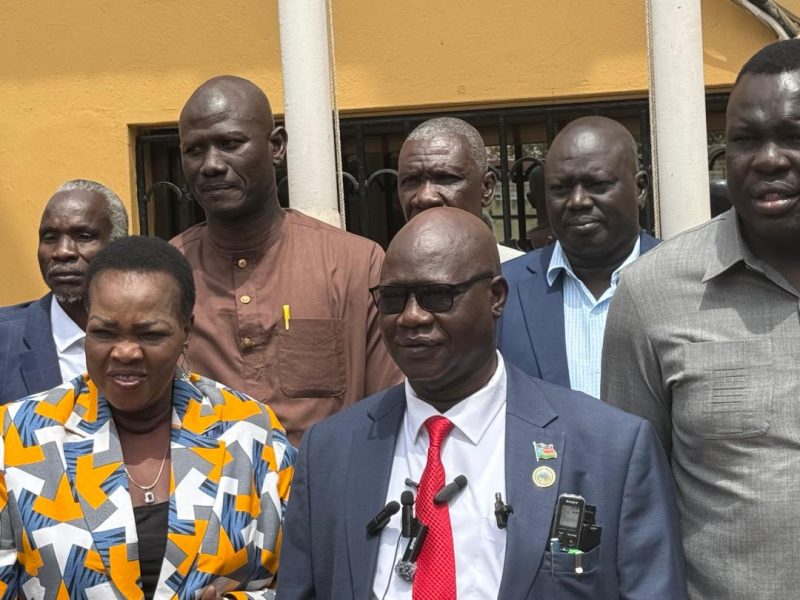
In an official press statement, Lukak dismissed the alleged election, saying the reported gathering was unauthorized, not recognized by SSNCCIA’s legal framework, and in violation of the Chamber’s Constitution.
He emphasized that he currently holds office through constitutional succession after assuming leadership from former Chairperson Dr. Benjamin Bol Mel, who stepped down to take on national duties.
“SSNCCIA is governed by clear rules and structures,” Lukak said. “Leadership cannot emerge from informal or parallel assemblies. Any claims of authority outside the Constitution are null and void.”
The Chamber clarified that its electoral process is multi-tiered, starting at county chambers, moving through state chambers, and culminating at the national level.
Lukak noted that the National Secretariat is already preparing for elections in 2027, ensuring transparent, inclusive, and constitutional leadership transitions.
According to media reports, the disputed meeting was allegedly attended by over 70 members representing Chambers of Commerce from 10 states and three administrative areas.
Bona Bol reportedly pledged to reform the Chamber, combat foreign dominance in local business, and organize elections within 18 months.
He also claimed that the previous leadership had clung to power since 2017 without a proper transition.
SSNCCIA, however, maintained that no lawful complaint or petition had been submitted to justify such an assembly and described the gathering as an illegal attempt to seize control.
The Chamber warned that misrepresentation of the institution, false claims of authority, or actions undermining governance could have legal consequences under South Sudanese law.
The ongoing dispute highlights tensions within South Sudan’s private sector, with the Chamber warning members, partners, and the public to recognize only the constitutionally sanctioned leadership.
Lukak stressed that unity, stability, and lawful governance are critical to protecting business interests nationwide.