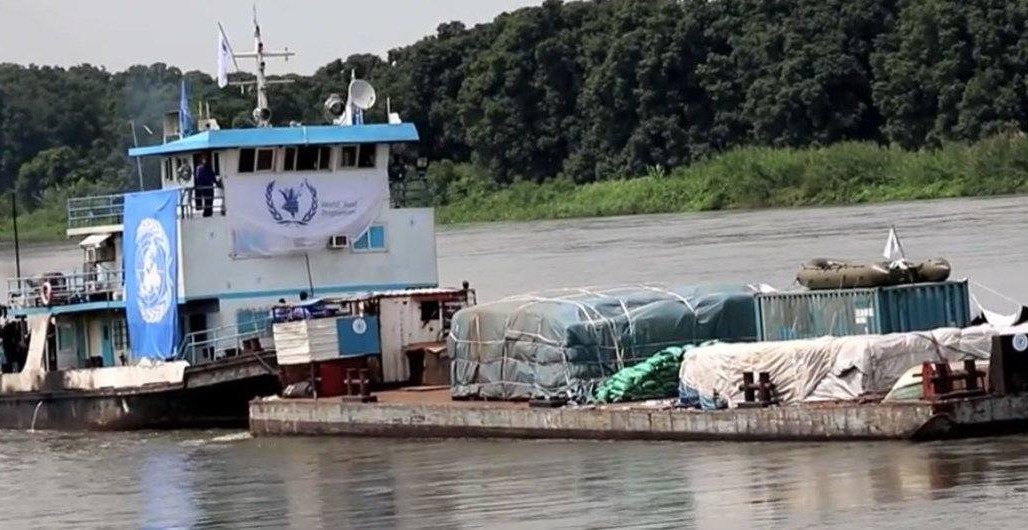
The United Nations World Food Programme (WFP) has suspended its humanitarian operations in Baliet County, Upper Nile State, following a series of armed attacks on a river convoy transporting life-saving assistance.
In a statement, WFP said a 12-boat convoy carrying more than 1,500 metric tons of food and non-food relief items was attacked repeatedly between 30 January and 1 February while traveling through Baliet County.
The supplies were intended for vulnerable communities as well as humanitarian partners operating in the area. Several consignments were looted at multiple locations along the route.
The agency noted that the attacks occurred despite prior security assurances and guarantees provided by local authorities to ensure the safe passage of humanitarian cargo.
As a result, WFP said it has halted all activities in Baliet until the safety of its staff, partners, and contractors can be fully guaranteed and concrete measures are taken by the Government of South Sudan to recover the stolen commodities.
“Attacks on humanitarians are never acceptable,” WFP stated, calling on all parties to respect humanitarian principles and to protect aid workers, facilities, and assets that are essential for delivering life-saving assistance to people in need.
WFP also raised alarm over the deteriorating security situation in Jonglei State, where recent fighting between government forces and opposition groups has caused widespread destruction.
According to the agency, warehouses, health facilities, and other critical infrastructure have been damaged or destroyed in Akobo, Ayod, Nyirol, and Uror counties, further complicating humanitarian access.
The agency warned that continued attacks on aid convoys and access restrictions threaten its ability to reach more than 4.2 million vulnerable women, men, and children across South Sudan.
Due to the insecurity, WFP has already been forced to pause plans to preposition 12,000 metric tons of food in Jonglei State ahead of the rainy season.
WFP remains one of the largest humanitarian responders in South Sudan, providing emergency food assistance, nutrition services, school meals, resilience-building programs, and cash-based transfers to millions of people affected by conflict, displacement, and climate shocks.
The agency urged all stakeholders to urgently protect humanitarian space and guarantee safe, unimpeded access for aid workers, warning that continued violence against humanitarian operations risks deepening hunger and suffering among the country’s most vulnerable populations.