Warrap State is set to take the lion’s share of state transfers in South Sudan’s draft 2025/26 national budget, receiving 38.16 billion South Sudanese Pounds (SSP) out of a proposed 548.94bn SSP earmarked for states and administrative areas, according to budget figures seen by SZN.
The allocation places Warrap ahead of all other states, with Jonglei State ranking second at 34.14bn SSP. Lakes State follows with 31.30bn SSP, while Upper Nile is allocated 29.76bn SSP.
Central Equatoria is set to receive 27.58bn SSP, Northern Bahr el Ghazal 26.29bn SSP, and Unity State 25.09bn SSP.
Lower allocations go to Western Equatoria (22.81bn SSP), Western Bahr el Ghazal (19.52bn SSP) and Eastern Equatoria, which receives the smallest share among the states at 16.66bn SSP.
Administrative areas are allocated more modest amounts, with Greater Pibor Administrative Area set to receive 9.03bn SSP, followed by Ruweng Administrative Area at 5.31bn SSP, and the Abyei Administrative Area at 3.86bn SSP.
The proposed transfers mark a sharp increase from the 344.06bn SSP disbursed to states and administrative areas in the 2024/25 financial year, reflecting the government’s effort to expand sub-national financing amid growing administrative and salary pressures.
More than 60 percent of the total allocation about 335.18bn SSP is earmarked for salaries, highlighting the heavy wage burden at state level. Operating costs account for 204.26bn SSP, while just 9.50bn SSP is allocated for service delivery, mainly in the health sector, raising concerns over limited funding for direct public services.
Despite the increase in transfers, much of the funding will continue to be managed by national ministries.
The Rule of Law sector is allocated 150.33bn SSP, making it the largest sectoral recipient, followed by Education with 103.91bn SSP and Natural Resources and Rural Development with 77.37bn SSP.
Overall, the draft budget projects total government spending of 8.58 trillion SSP against anticipated revenues of 7.01 trillion SSP, leaving a projected deficit of 1.57 trillion SSP.
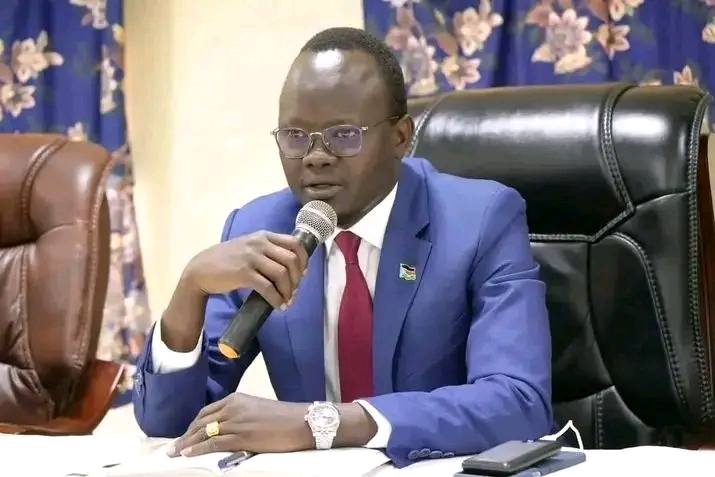
The budget was tabled in the Transitional National Legislative Assembly last week by Finance Minister Bak Barnaba Chol and is awaiting parliamentary approval, with public hearings expected later this week.