Health authorities and medical workers in Lainya County of Central Equatoria State have raised alarm over a severe shortage of essential medicines and basic medical supplies.
They warn that the crisis is pushing vulnerable communities, especially pregnant women and children, into life-threatening situations.
Speaking in an interview, the County Medical Director for Lainya, Julius Luate, said health facilities across the county have run out of essential drugs, leaving patients with limited options but to travel long distances in search of treatment.
“We are facing a lot of problems. No medicine in all the facilities,” Luate said.
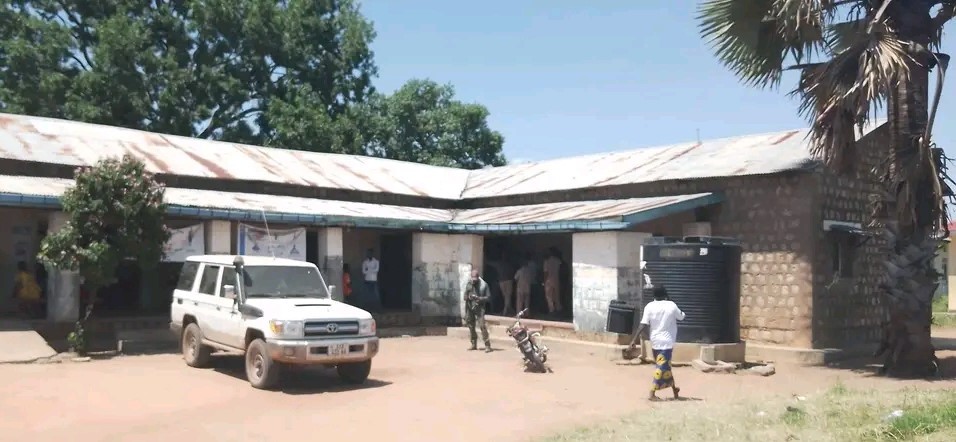
Luate explained that what was once Lainya County Hospital has now been downgraded to a lower-level facility, reducing its capacity to handle serious medical cases.
He added that two health facilities previously supported under the Health Pooled Fund (HPF) were removed from support under the current government-led project, further cutting access to care.
As a result, communities are now forced to travel several miles to access the nearest functioning health center.
“From Logwili to Lainya, it is almost nine miles, Bereka is almost 10 to 12 kilometres. People are traveling from Kupera up to Jamara,” he said.
Luate noted that the situation is particularly dangerous for elderly people and pregnant mothers who cannot manage long journeys on foot.
He cited cases of mothers struggling to reach facilities, including one who needed urgent delivery services.
Few health facilities functional
According to Luate, Lainya County previously had 21 health facilities, but many are no longer operational due to insecurity and conflict in some areas.
“Only six are functioning, but only four are fully functional,” he said, naming Lainya, Limbe, Wuji and Jamara as the main facilities still providing services.
Other areas such as Loka, Loka West, and several communities affected by insecurity have either partially functioning centers or none at all.
Luate said the last major supply of medicines to Lainya County was received in mid-April last year, and since then, there has been no meaningful delivery of drugs.
“Up to now I have not seen any sort of drugs distributed,” he said, adding that the shortage is also affecting other counties in Greater Equatoria, including Yei, Marobo and Kajokeji.
He also noted that laboratory reagents have not been supplied since the beginning of the current project, leaving many diagnostic services non-functional.
With medicine stocks depleted, Luate said the county has been forced to rotate remaining drugs between facilities and cooperate with neighboring counties to borrow supplies.
“We do drug rotations, we support each other,” he explained.
In some cases, health facilities rely on small fees collected from patients to purchase essential drugs and maternity supplies, although he admitted this method is unreliable and burdens poor families.
A clinical officer at Lainya County Primary Health Care Centre, Michael Lokosang, confirmed that the county is lacking several critical drugs needed to manage emergencies.
“Essential drugs like sedative drugs, antipyretic drugs, anti-allergic drugs and life-saving drugs like hydrocortisone, magnesium sulfate, and anticoagulants are not here,” Lokosang said.
He also described serious gaps in maternity care, explaining that the facility has no dedicated maternity ward, no gynecology ward, and an under-equipped workforce.
“We just share a room, for the waiting stage, and at the same time we are using it as the maternity ward,” he said.
Lokosang added that the laboratory is not functional due to lack of reagents and power supply, and even equipment such as oxygen concentrators cannot run because of unreliable electricity and damaged solar batteries.
Transport challenges
Both officials cited transport as another major barrier, saying emergency referrals are almost impossible due to lack of fuel.
Lokosang Luate added that the county health department has no emergency vehicle and an ambulance provided by an NGO is available, but patients must pay for diesel themselves.
“In case of any emergency, the co-patients will fuel the car, but if you are poor, you don’t have that money, you are going to lose your relative,” he said.
Lokosang said malaria remains one of the deadliest threats, particularly because patients arrive late from remote villages where health facilities have been shut down.
“Patients brought to us when they are in dangerous conditions, anemic, sugar level is low, within 24 hours the patient will pass on,” he said.
He reported that in January, the facility recorded two deaths, one woman and one child, linked to complications from malaria.
Although the facility still receives some anti-malarial drugs such as tablets and quinine injections, Lokosang said the supply is limited and does not address other urgent medical needs.
Lokosang further noted that mosquito nets have not been distributed in Lainya for nearly two to three years, increasing malaria risk across communities.
“The anti-malarial drugs are there, but things like mosquito nets are not there,” he said.
Call for government intervention
Both health officials appealed to the Ministry of Health and humanitarian partners to urgently restore medicine supply and reinstate health facilities removed from support.
Luate urged the government to return Lainya to full hospital status, saying it serves a large population from surrounding payams and villages.
“My cry is that at least this facility should be put back as a hospital, and the government should strategize to give us the drugs as soon as possible,” he said.
Lokosang echoed the call, stressing the need for essential medicines, transport support, laboratory supplies and staff incentives.
“Let them at least give us these essential drugs and also transport. Transport is very, very important,” he said.
Funding shortfall
On Feb 3, 2026, South Sudan’s Ministry of Health announced a scale-down of services in more than 100 health facilities nationwide following major reductions in donor funding for the Health Sector Transformation Project (HSTP), a flagship reform initiative originally budgeted at $400 million.
Health Minister Sarah Cleto Rial said support under the HSTP was withdrawn from 101 health facilities, while six hospitals would scale down selected non-core services to focus on life-saving care.
She said the decision follows an extensive review aimed at keeping the project viable through its planned end in 2027.
Meanwhile, as the medicine shortage continues, residents of Lainya County face an uncertain future, with many families forced to choose between travelling long distances for treatment or staying home and risking death from preventable illnesses.