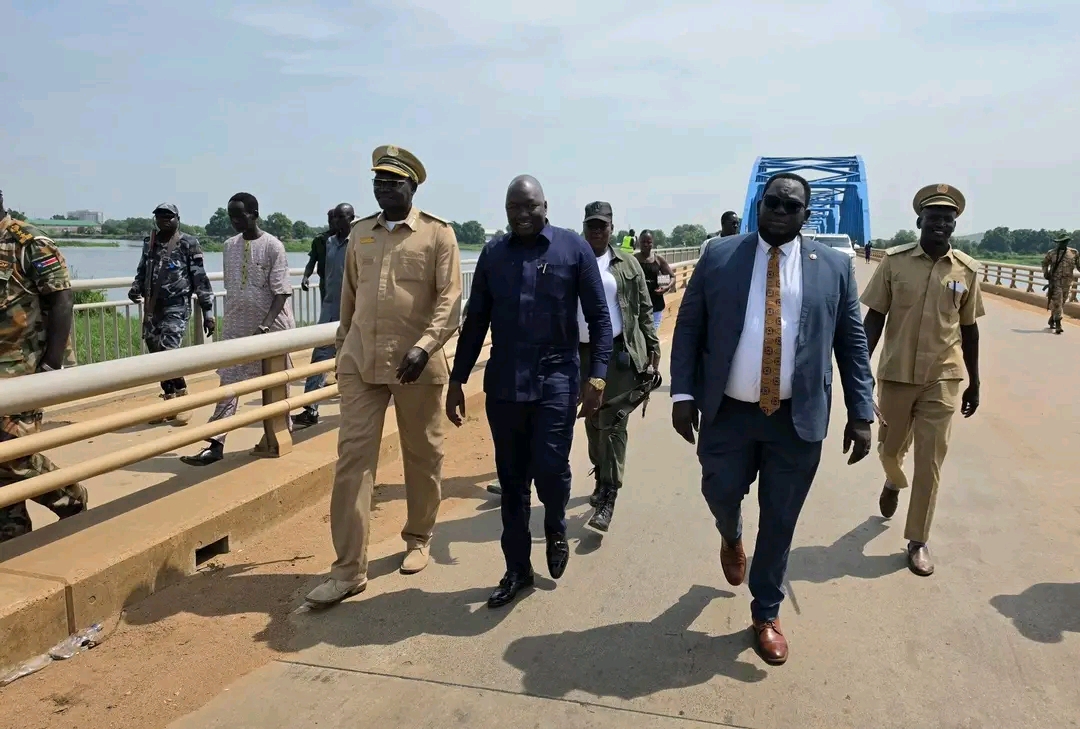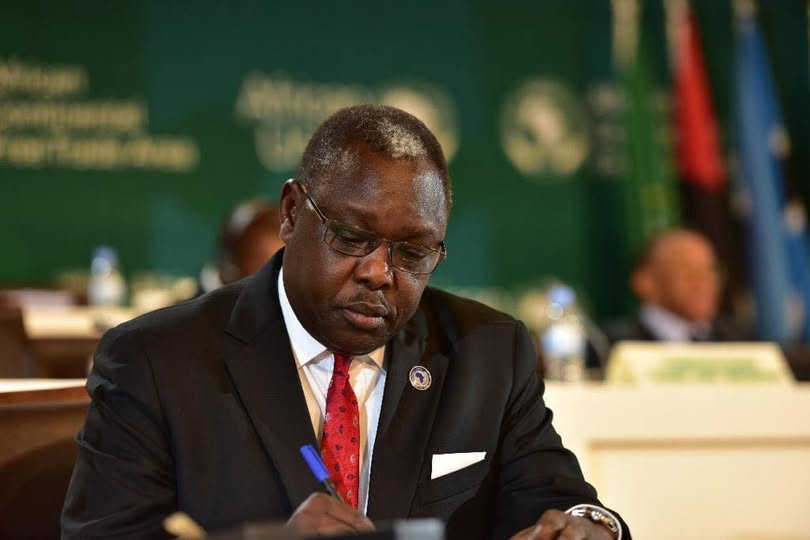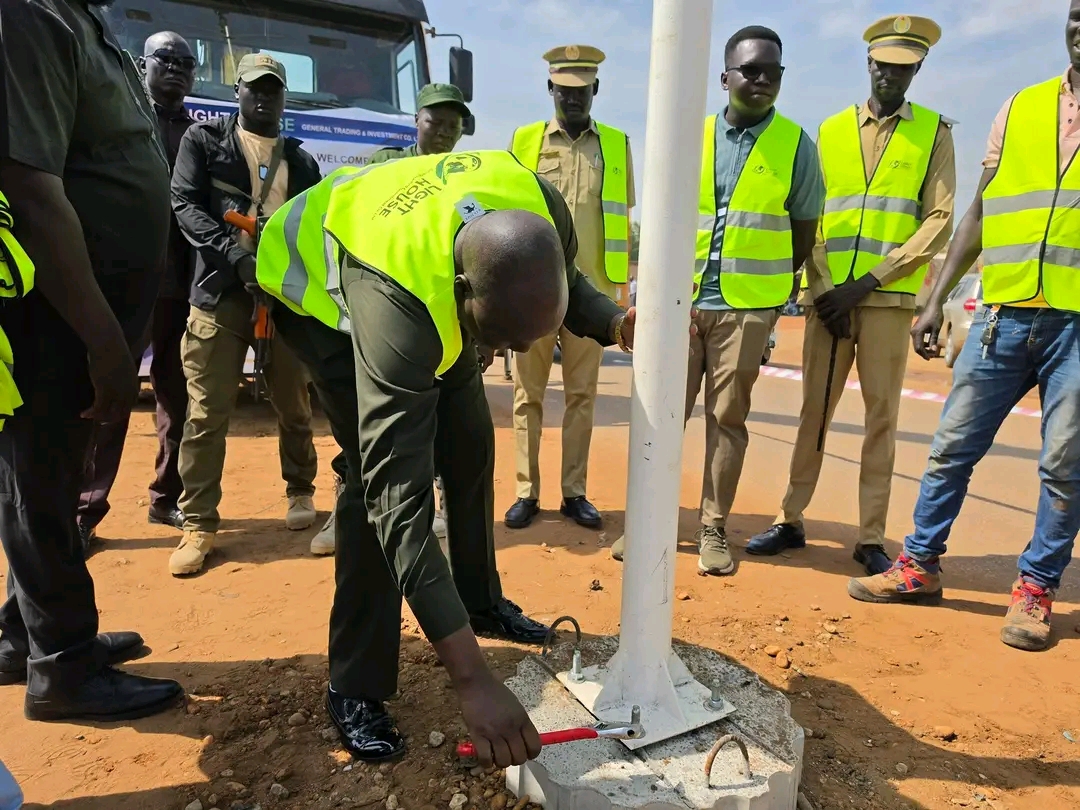

A delegation from the Government of Eastern Equatoria State (EES), led by Governor Louis Lobong Lojore, has formally raised concerns over the State’s exclusion from recently approved national road projects.
The delegation met the National Minister of Roads and Bridges, Peter Lam Both, in Juba, following a 20 February 2026 Council of Ministers resolution that endorsed three major road projects under the government’s newly adopted Minerals-for-Roads initiative.
Speaking during the meeting, Governor Lobong said residents of Eastern Equatoria were “shocked and disappointed” to learn that none of the State’s major highway corridors featured in the approved list.
He stressed that the omission undermines national connectivity, noting that Eastern Equatoria borders three neighbouring countries and serves as a key gateway for regional trade.
The Governor outlined several priority road corridors requiring urgent government attention, including the Hiyala–Tseretenya road, Torit–Magwi–Pogee–Ngomoromo, Kapoeta–Boma–Raad, Narus–Lotimore–Nkuwa, Mogiri–Lafon–Imehejek, CMP 15–Chukudum–Lotukei (Moyosukun), as well as the Juba–Nadapal and Juba–Nimule highways.
He appealed for equitable inclusion of Eastern Equatoria in the national road development agenda, arguing that improved infrastructure would not only enhance service delivery but also stimulate cross-border trade and broader economic growth.
In response, Minister Lam welcomed the delegation and commended the State government for engaging constructively with national authorities.
He clarified that the three projects approved by the Council of Ministers had already been in the ministry’s pipeline before his appointment, with key documentation signed earlier.
The Minister explained that the projects will be implemented under a new framework in which contractors are compensated through mineral extraction rights—particularly gold deposits located along project corridors—rather than direct cash payments.
He added that the government is in the process of procuring specialised equipment to detect gold deposits and establishing a trained mining police unit to strengthen regulation and oversight.
Addressing concerns specific to Eastern Equatoria, Lam noted that some roads in the State had previously attracted development partner support.
He cited the Juba–Nadapal road, which was backed by the World Bank but stalled due to border-related tensions, and the Kapoeta–Raad road, linked to the African Development Bank.
In a message to the people of Eastern Equatoria, the Minister assured that the State has not been overlooked.
He emphasized that Eastern Equatoria hosts significant deposits of gold and other minerals and said future phases of the Minerals-for-Roads initiative is expected to consider projects within the State.
Lam pledged that his ministry will lobby for additional companies or expand existing engagements to ensure Eastern Equatoria benefits from upcoming road construction programmes, urging citizens to remain patient and well informed as the government leverages mineral resources to advance national infrastructure and sustainable development.