
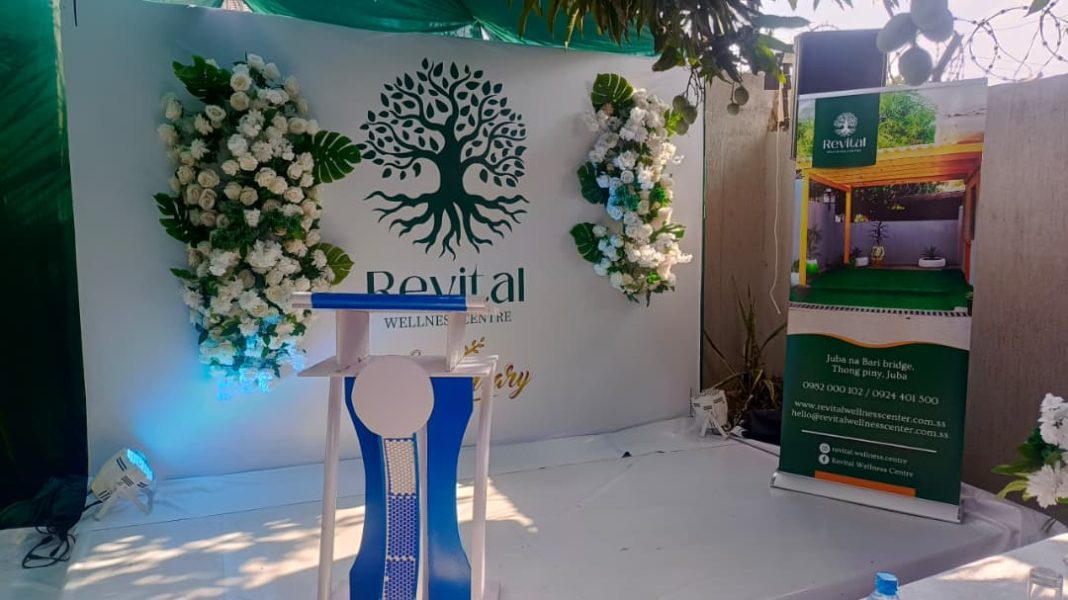
The manager of Revital Wellness Center, Isaiah Akuot Ajak, has called for increased investment in mental health services in South Sudan, warning that trauma and psychological distress remain widespread across communities after years of conflict and economic hardship.
Speaking during the center’s first anniversary celebration in Juba, Ajak said the country continues to face a severe shortage of trained mental health professionals despite a growing demand for counseling and psychological support.
According to available estimates, South Sudan currently has only about five psychiatrists, including two foreign specialists.
Ajak noted that one South Sudanese psychiatrist recently left the country in search of better opportunities abroad due to limited support and resources for specialists.
“South Sudan is facing a serious shortage of mental health professionals,” Ajak said.
“Yet the demand for counseling and psychological support is increasing every day.”
He added that more than 35 trained psychologists are currently working across the country, alongside counselors and psychotherapists who are trying to address the rising mental health needs of communities.
Founded in 2024 and officially launched on February 28, 2025, Revital Wellness Center provides counseling, psychotherapy, trauma-informed care, family therapy, and support services for survivors of gender-based violence and individuals struggling with addiction.
Ajak linked many of the mental health challenges facing citizens to poverty, unemployment, and delayed payment of salaries, which he said continue to create significant psychological stress for families.
“Non-payment of salaries and low income are also major mental health issues,” he said.
“When people work but cannot meet their basic needs, it creates deep stress and trauma.”
He also warned that social stigma continues to prevent many people from seeking professional help.
“Mental health stigma is still a major challenge,” Ajak said. “Many people fear being seen entering a counseling center because they worry about how society will judge them.”
Health professionals attending the event emphasized the need for stronger collaboration between public institutions and private health providers to expand mental health services across the country.
Dr. Gift Gibson Natana of Juba Teaching Hospital congratulated the center for contributing to mental health care and encouraged partnerships aimed at improving service delivery.
Meanwhile, Dr. Rama Moses from the Central Equatoria State Ministry of Health said mental health services remain extremely limited, with most specialists concentrated in Juba and only a few facilities offering structured psychological care.
He noted that many communities rely heavily on psychosocial support programs run by humanitarian organizations such as Médecins Sans Frontières.
A former client of the center, Kaunda David, described the facility as a place of hope and recovery, urging the management to expand outreach programs to reach vulnerable people who cannot afford treatment.
Also speaking at the event, Dr. Helena Akon, a physiotherapist at Iteru Medical Center, highlighted the importance of partnerships in strengthening healthcare delivery and improving access to specialized services, including physiotherapy and mental health support.
On behalf of the Revital Wellness Center team, Dr. William Deng Allony, a Doctor of Physical Therapy at the facility, thanked partners and guests for their continued support since the center’s establishment.
He said the facility was created to address limited access to specialized services such as physical therapy, counseling, psychology, and mental health rehabilitation.
“Our facility primarily serves vulnerable individuals people facing mental health challenges and those living with physical disabilities,” Deng said.
Despite operating for only one year, he noted that the center has already made progress in supporting individuals and families seeking treatment.
“We strive to provide comfort, strength, and compassion to those who need it most,” he added, saying the team remains committed to delivering quality care and responding to the growing health needs of the community.
Ajak urged the government and development partners to prioritize mental health services as part of the country’s recovery and development agenda, stressing that proper counseling and treatment can help communities heal and rebuild after years of crisis.