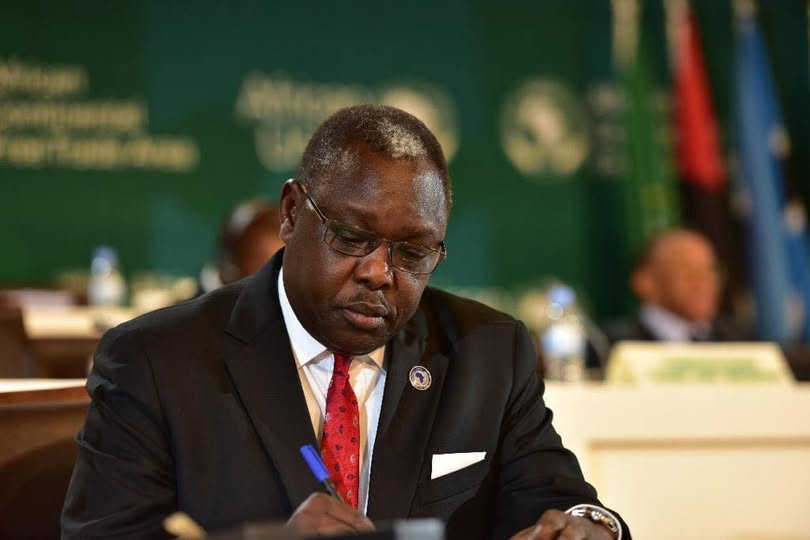
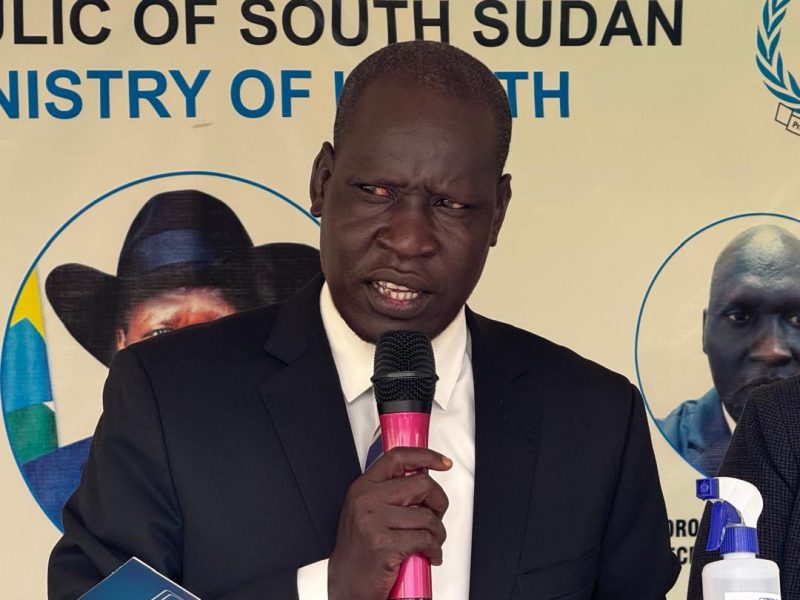
South Sudan’s newly appointed Health Minister, Luke Thompson Thoan Teny, has unveiled an ambitious ten-point reform agenda aimed at reviving the country’s struggling health system, pledging urgent action, accountability, and results-driven leadership.
In his inaugural remarks, Teny, a lawyer by profession, vowed to serve with integrity and full dedication to improving the health and well-being of citizens.
“At this critical moment in our nation’s history, we are called not just to lead but to act,” he said. “My immediate and non-negotiable priority is to revive health service delivery across our country.”
At the heart of his reform agenda is the revitalization of the Boma Health Initiative, a flagship program designed to bring essential healthcare services closer to communities, particularly in remote areas.
Teny said restoring trust in the health system and ensuring no citizen is left behind would guide his leadership.
He issued a strong warning to health officials, stressing that under his leadership, failure in service delivery would not be tolerated.
“I do not want to see a single hospital closed. I do not want to see any facility failing to provide services. I do not want to see any pharmacy without essential, life-saving medicines,” he declared. “Our people depend on us, and we must not fail them.”
Teny emphasized that leadership within the Ministry of Health would now be judged by tangible outcomes rather than positions. “Real results. Visible results.
Measurable results in the lives of our people,” he said, calling on staff at all levels from national headquarters to the most remote health facilities to rise to the challenge.
The minister outlined ten key priorities that will guide the transformation of the health sector.
These include strengthening primary healthcare systems, improving maternal and child health services, investing in the health workforce, and ensuring the consistent availability of essential medicines and vaccines.
He also pledged to improve health financing through increased investment and transparency, intensify efforts to combat diseases such as malaria, tuberculosis, and HIV, and rebuild health infrastructure to expand access and improve quality of care.
Other priorities include strengthening data systems and digital health to support evidence-based decision-making, enforcing governance and accountability with zero tolerance for corruption, enhancing emergency preparedness, and rebuilding trust between health institutions and communities.
“Integrity is not negotiable,” Teny stressed, adding that professionalism and coordination would be central to his leadership approach.
The minister reaffirmed the importance of partnerships with international and regional actors, including UN agencies, development partners, and financial institutions.
He said collaboration would be guided by transparency, mutual respect, and a shared commitment to improving health outcomes.
“We value the support of our partners, and we will ensure that it is used responsibly and effectively,” he said, while cautioning against repeating past failures, including challenges experienced at the National Public Health Reference Laboratory.
The ceremony also featured remarks from the outgoing Minister of Health, Sarah Cleto Rial, who reflected on her tenure with gratitude and acknowledged the resilience of ministry staff.
She congratulated Teny on his appointment, describing it as a well-earned vote of confidence from the president, and urged continued commitment to strengthening the sector.
“This moment marks the close of one chapter and the beginning of another,” she said. “I am grateful for the opportunity to serve and to contribute to the health and well-being of our nation.”
Cleto highlighted the challenges faced during her tenure, including disease outbreaks such as cholera and other public health emergencies, noting that progress was made possible through the dedication and professionalism of health workers.
“You have worked through emergencies, reforms, shortages, and long nights,” she said. “You have shown resilience in the face of challenges and creativity in the face of constraints.”
She praised ministry staff as the “heartbeat” of the institution, emphasizing that their commitment enabled the ministry to continue delivering services despite difficult circumstances.
As he concluded his remarks, Teny described the current period as a defining moment for South Sudan’s health sector—one that requires a shift from promises to action.
“This is a moment to move from words to action, from plans to results, from positions to responsibility,” he said.
He called on ministry officials, partners, and stakeholders to unite behind a shared vision of reform, expressing confidence that collective efforts would restore public trust and deliver meaningful improvements.
“The health of our people is the foundation of our nation’s stability, dignity, and future,” he said. “Together, we will restore confidence in our health system. Together, we will deliver real results.”