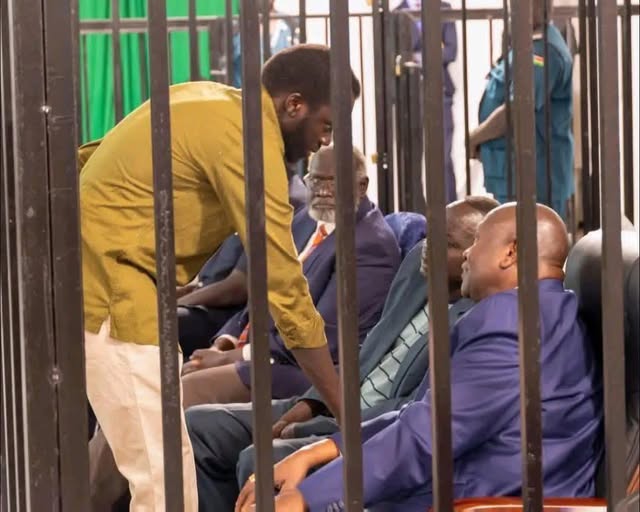
The Special Court hearing the case over the Nasir incident convened its 65th session on Thursday at Freedom Hall, with proceedings dominated by a tense cross-examination of the prosecution’s final witness a digital forensics expert whose testimony is central to the case.
Here are the key takeaways from the day’s hearing:
1. Focus shifts to digital evidence
The defense continued its cross-examination of Peter Calvin Rafadi, a South African digital forensics analyst who prepared a report submitted by the prosecution.
His findings are largely based on alleged WhatsApp communications linked to Gatwech Lam Puoch, one of the accused in the case.
2. Messages not directly sent by the accused
A key moment emerged when Rafadi confirmed that some of the messages presented as evidence were not directly sent by Gatwech Lam.
Instead, they were extracted from a WhatsApp group identified as “Gajiok Community Association,” where the accused was said to be an active participant.
3. Uncertainty over group members
Under questioning, Rafadi admitted he could not identify most members of the WhatsApp group, noting that many phone numbers were not saved with names on the device analyzed.
This raised further questions from the defense about the reliability and traceability of the digital evidence.
4. No verified link to white army leader
The court also heard that there was no confirmed communication between Gatwech Lam and the late White Army leader, Tor Gile Thoan, based on the extracted messages.
This point appeared to weaken attempts to establish direct coordination between key figures linked to the Nasir incident.
5. Debate over interpretation of messages
Rafadi maintained that certain messages including one allegedly celebrating the fall of an SSPDF base were shared by the accused in the group.
However, the defense challenged whether participation in a group chat could be taken as proof of intent or involvement in alleged crimes.
6. Questions over “Keyword” evidence
Another contentious issue was Rafadi’s reliance on keyword searches, particularly the term “Nasir,” to extract relevant messages.
He argued that repeated references pointed to a pattern of planning, including links to earlier incidents in 2024.
The defense, however, pressed him to explain the connection between those earlier messages and the March 2025 events, suggesting the link may be speculative.
7. Mention of civil society link
The court heard that Gatwech Lam had at one point communicated in the group with activist Edmund Yakani, asking him to verify certain information.
While Rafadi cited this as evidence of interaction, its relevance to the charges remains unclear.
8. Trial adjourned
Presiding judge James Alala Deng adjourned the session to Friday, April 10, when cross-examination is expected to continue.
Why it matters
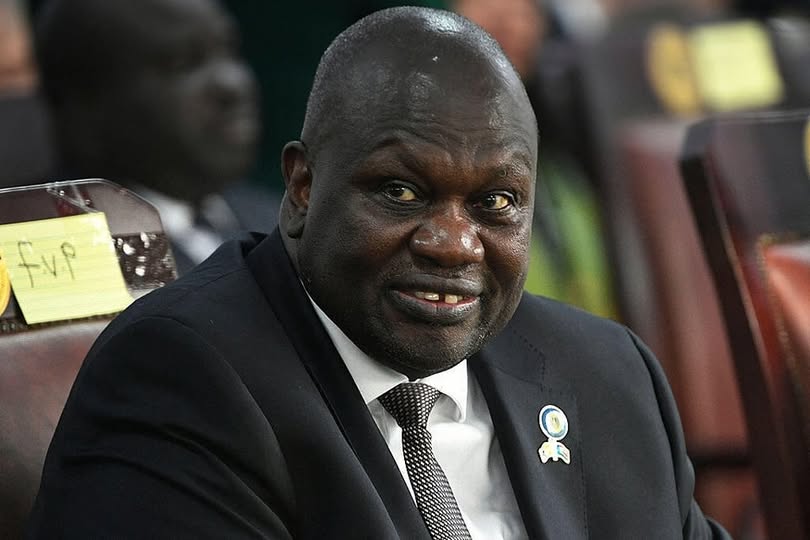
The Nasir trial involving senior figures from the SPLM/A-IO, including First Vice President Riek Machar is one of the most politically sensitive cases in recent years.
Wednesday’s session highlighted growing tensions over the credibility of digital evidence, a factor that could prove decisive as the court weighs its final judgment.