The World Food Programme (WFP) and the European Union have officially handed over newly constructed feeder roads in Aweil West County, Northern Bahr el Ghazal State, in a move aimed at improving connectivity and strengthening livelihoods for rural communities.
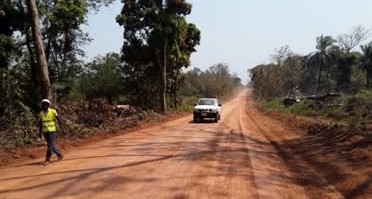
The handover covers 26 kilometres of roads linking Marialbai to Chelkou and Pantit to Anyuopjang.
The routes are expected to benefit more than 150,000 people by easing access to markets, schools, and health facilities particularly during the rainy season when many parts of the county become difficult to reach.
The project was funded by the European Union under its Global Gateway Strategy and implemented by WFP over a five-year period.
It forms part of a wider infrastructure initiative that has rehabilitated nearly 70 kilometres of feeder roads across Northern Bahr el Ghazal, targeting improved mobility and economic activity in underserved areas.
Speaking at the handover ceremony in Aweil, the European Union’s Ambassador to South Sudan, Pelle Enarsson, described the roads as a critical investment in the country’s future.
He noted that improved infrastructure would unlock agricultural potential, enhance trade, and strengthen resilience, while calling on local authorities to ensure proper maintenance of the roads.
Northern Bahr el Ghazal Deputy Governor, Dr. Tong Lual Ayat, welcomed the development, saying it reflects the impact of sustained partnership between the government and development actors.
He added that such projects are already improving daily life for communities and creating opportunities for further expansion of essential services.
South Sudan continues to face significant infrastructure challenges, with a limited road network and vast rural areas that are often cut off during the rainy season.
With the majority of the population living outside urban centres, feeder roads like those completed in Aweil West are considered vital to improving access and supporting long-term development.
WFP Acting Country Director Adham Effendi emphasized that the roads go beyond physical infrastructure, describing them as lifelines that reduce isolation, lower transport costs, and improve access to essential services.
He added that such investments also contribute to food security and social cohesion.
The feeder roads are part of a broader European Union-funded project valued at €22.1 million, implemented by WFP across multiple states.
The initiative aims to enhance resilience by strengthening livelihoods, improving food systems, and fostering connectivity in rural communities.