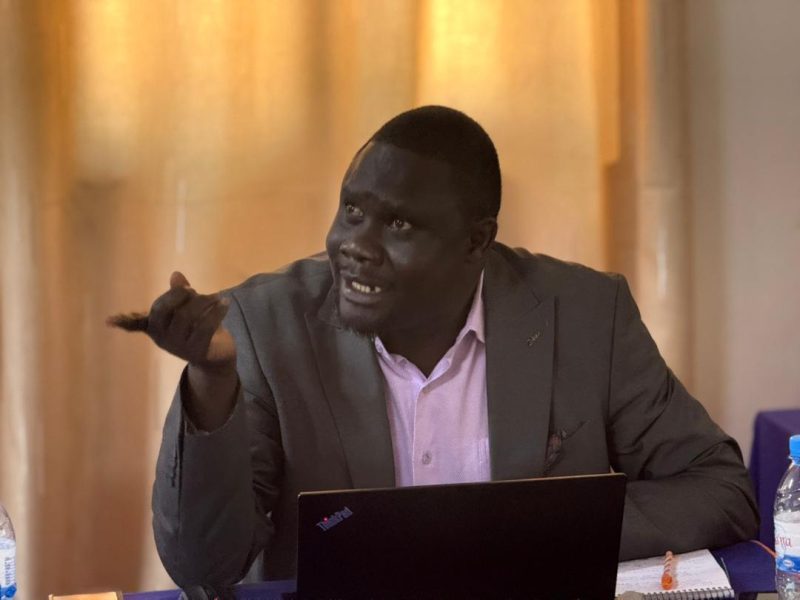
A South Sudanese civil society organization has called on President Salva Kiir Mayardit to ensure full legal compliance, transparency, and inclusivity in the ongoing discussions surrounding proposed amendments to the Revitalized Agreement on the Resolution of the Conflict in South Sudan (R-ARCSS).
In a letter dated April 29, the Institute of Social Policy and Research (ISPR), led by Executive Director Boboya James Edimond, urged the President to exercise leadership that reflects public interest and protects the integrity of the peace agreement.
The appeal comes amid growing concern over the amendment process, which civil society actors say risks undermining key provisions of the agreement that guide the country’s transition toward peace and democratic governance.
ISPR welcomed President Kiir’s recent decision to halt parliamentary debate on the proposed amendments, describing it as a positive step toward restoring public confidence.
However, the organization stressed that the pause should lead to a more inclusive process involving all stakeholders, including civil society, signatory parties, and international partners.
“The voices of the South Sudanese people, civil society, and international partners are not in opposition to leadership they are essential in strengthening it,” the letter stated.
The group further raised concern over what it described as limited consultation in advancing the amendments, warning that exclusion of key actors, including the Reconstituted Joint Monitoring and Evaluation Commission (RJMEC), could weaken implementation of the peace agreement.
It also cautioned against the removal or alteration of key provisions, including Articles 8.2 and 8.3, which uphold the supremacy of the agreement during the transitional period.
According to ISPR, any such changes could risk undermining the legal foundation of the peace process.
“Elections are not an event they are a process,” the letter noted, emphasizing that credible elections must be built on legal compliance, trust, and broad participation.
The civil society group warned that exclusionary decision-making could erode confidence in the peace process and strain relations with international partners who continue to support South Sudan’s transition.
ISPR concluded by urging renewed commitment to national unity and inclusive dialogue, saying it remains ready to support government efforts aligned with democratic principles and the public interest.
As debates over the amendments continue, observers say the process will be a key test of the government’s commitment to maintaining the fragile peace framework and advancing toward credible elections.