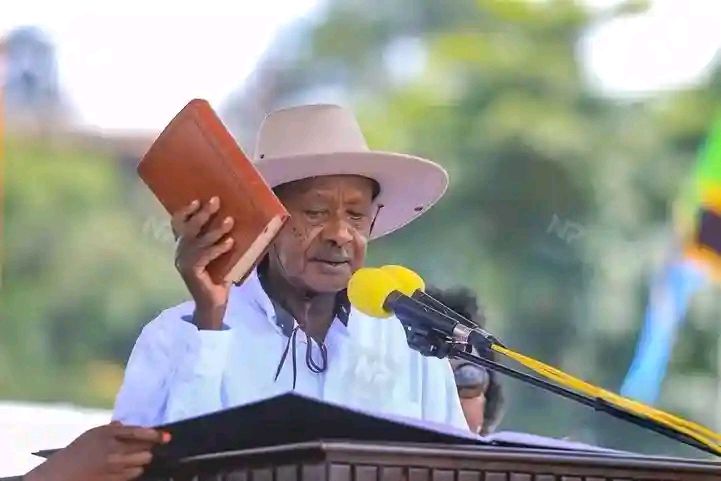
Ugandan President Yoweri Museveni was officially sworn in for another five-year term, extending his decades-long rule over the East African nation until 2031.
The inauguration ceremony, held in the capital Kampala, was attended by regional leaders, senior government officials, diplomats, security chiefs, ruling party supporters, and invited guests from across Africa and beyond.
Museveni, who first took power in 1986 after leading a guerrilla war, pledged to continue pursuing economic transformation, regional stability, infrastructure development, and security during his new term in office.
In his inaugural address, the veteran leader thanked Ugandans for renewing his mandate and reiterated his government’s commitment to industrialization, job creation, and strengthening regional cooperation within the East African Community.
The 81-year-old leader remains one of Africa’s longest-serving presidents, having governed Uganda for nearly four decades.
His continued stay in power has drawn both praise from supporters who credit him for restoring stability and criticism from opposition groups and rights activists who accuse his administration of shrinking democratic space and suppressing dissent.
Security was heavily deployed across Kampala during the swearing-in ceremony, with major roads leading to the venue placed under tight control as thousands of supporters gathered to witness the event.
Several regional heads of state and foreign delegations attended the ceremony, highlighting Uganda’s strategic role in regional politics, peacekeeping, trade, and security matters in the Great Lakes and Horn of Africa regions.
Museveni’s new term comes as Uganda faces mounting pressure to address unemployment, rising living costs, corruption concerns, and demands for political reforms ahead of the next electoral cycle.
The Ugandan leader has repeatedly defended his continued leadership, arguing that his experience and policies are necessary to maintain stability and guide the country’s economic progress.