Seventeen foreign embassies and the European Union have rejected proposed unilateral amendments to South Sudan’s 2018 Revitalized Peace Agreement, warning that changes made outside consensus could undermine the country’s fragile peace process and weaken the legitimacy of the transitional government.
In a joint statement issued on Tuesday, the diplomatic missions urged South Sudan’s leaders to immediately return to dialogue and fully adhere to the peace agreement signed in 2018 to end years of civil conflict.
“The Peace Agreement remains the basis of legitimacy for the transitional government in South Sudan,” the statement said. “Unilateral changes to the Agreement are not in accordance with the letter and spirit of the Agreement and will not bring peace to South Sudan.”
The statement was jointly signed by the embassies of Australia, Canada, Cyprus, Denmark, Finland, France, Germany, Ireland, Japan, the Netherlands, New Zealand, Norway, Portugal, Slovenia, Sweden, Switzerland, the United Kingdom, and the United States, together with the European Union delegation.
The unusually coordinated diplomatic warning comes amid growing tensions within the transitional government over proposed amendments to the peace accord ahead of elections expected in December 2026.
Earlier this month, lawmakers aligned with President Salva Kiir tabled controversial amendments before parliament, prompting opposition legislators to boycott proceedings.
Opposition parties argued that the proposed changes violated procedures outlined in the peace agreement and were introduced without consultation among signatories.
Among the proposed amendments is the removal of provisions establishing the supremacy of the peace agreement over national legislation and the Transitional Constitution a move critics say could weaken protections built into the accord.
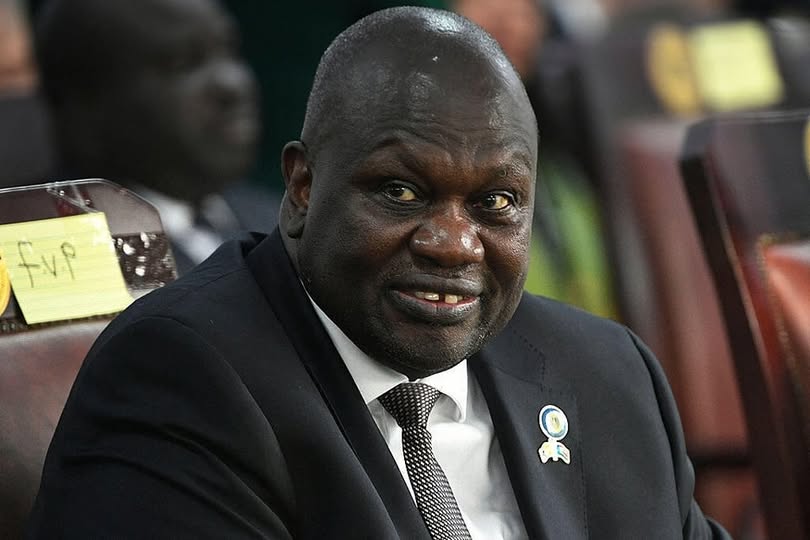
The Sudan People’s Liberation Movement-In Opposition (SPLM-IO), led by First Vice President Riek Machar, has rejected the amendments, insisting that all signatory parties must be consulted before any changes are made to the agreement.
Concerns have also been raised by the Reconstituted Joint Monitoring and Evaluation Commission (RJMEC), the body tasked with overseeing implementation of the peace accord.
RJMEC has warned that amendments to the agreement require consensus among all parties to preserve trust and stability within the transitional arrangement.
Political tensions have intensified since Machar’s detention in March 2025 over allegations linking him to violence in Nasir County.
He was later suspended from office and is currently facing treason charges before a special court established by the government last year.
Members of the international community have repeatedly called on South Sudan’s leaders to resume inclusive political dialogue, release political detainees, and accelerate implementation of key provisions of the peace agreement, including security reforms and preparations for credible elections.
Many say the latest diplomatic intervention reflects growing international concern that divisions within the unity government could jeopardize efforts to steer the country toward its first democratic elections since independence in 2011.