African diplomats have called on South Sudan’s transitional government to release political detainees and ensure an inclusive national dialogue ahead of elections scheduled for December, as the African Union (AU) steps up efforts to support the country’s fragile peace process.
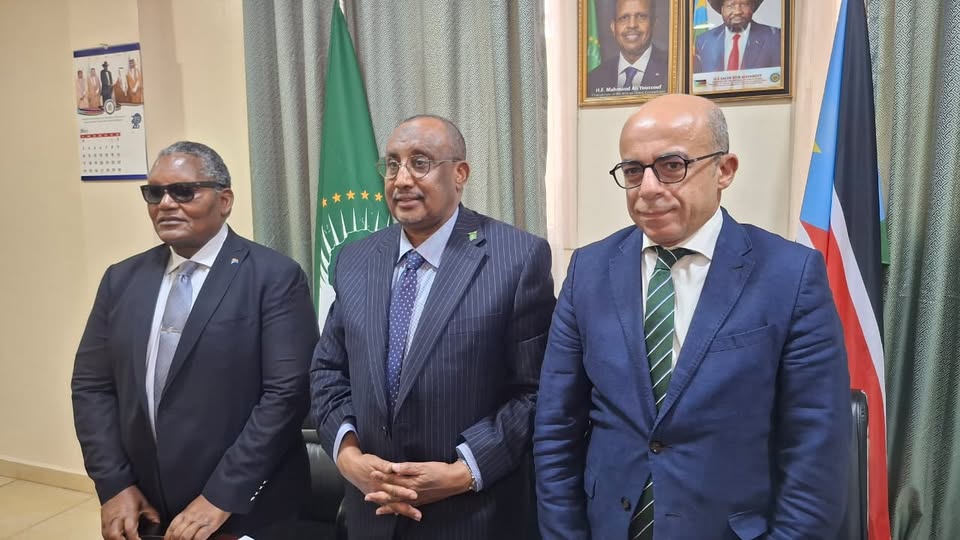
The appeal was made during a press conference held in Juba on Sunday ahead of Africa Day celebrations, where senior African diplomats emphasized the need for political openness, stability and full implementation of the 2018 revitalized peace agreement.
Speaking to journalists, South Africa’s Ambassador to South Sudan, Mahlodi Samuel Muofhe, said the unconditional release of political detainees remains one of the key resolutions adopted by the African Union Ad Hoc High-Level Committee on South Sudan, commonly known as the C5.
“Political detainees should be released unconditionally. I think that was the main thing as far as C5 is concerned. I think that is still the call,” Muofhe said.
South Africa currently chairs the AU C5 mechanism, which was established to support implementation of South Sudan’s peace agreement and assist the country in preparations for democratic elections.
The 2018 peace deal ended five years of civil war between forces loyal to President Salva Kiir Mayardit and First Vice President Riek Machar.
However, implementation of key provisions of the agreement has continued to face delays amid political tensions and insecurity.
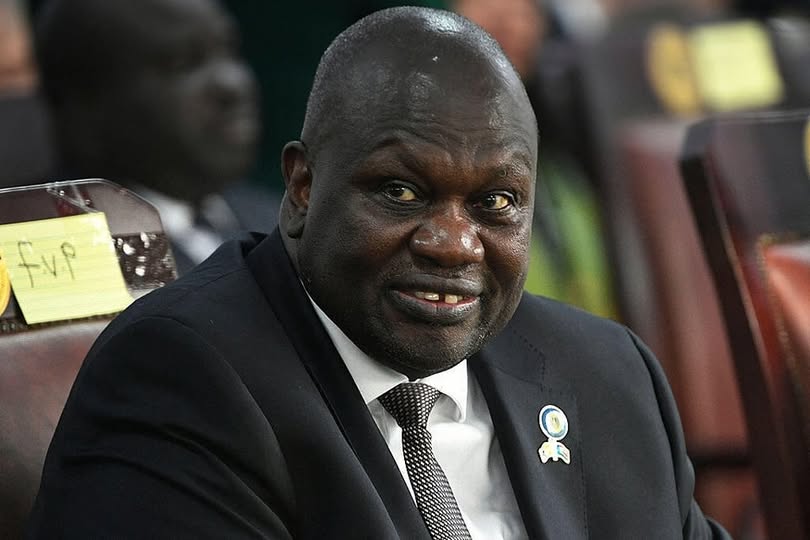
Machar, one of the principal signatories to the peace agreement, is currently under detention in Juba, a development that has raised concern among regional and international actors over the future of the peace process.
Muofhe said the AU Peace and Security Council had also stressed the importance of broad political participation during its recent engagements in South Sudan.
According to him, credible elections can only be achieved through an inclusive political environment that allows participation by all political parties and stakeholders.
“South Sudan must ensure that it embarks on an inclusive dialogue process involving all political parties in South Sudan,” he said.
He added that the AU C5 remains committed to helping South Sudan create conditions necessary for peaceful and democratic elections, while encouraging dialogue among rival political groups.
“We hope that as it does, it will also ensure that effective, inclusive dialogue of all parties in South Sudan takes place,” Muofhe added.
Meanwhile, the African Union Commission’s Special Representative to South Sudan, Abdiwali Mohammed Ali, said the continental body has intensified diplomatic engagement in recent months in support of peace and stability in the country.
Ali noted that South Sudan recently hosted several high-level AU delegations, including members of the AU C5, former Tanzanian President Jakaya Kikwete and representatives of the AU Peace and Security Council.
He further revealed that South Sudan is expected to receive a visit from the AU Panel of the Wise as part of ongoing regional efforts to support dialogue and political stability.
“This is the amount of attention that South Sudan is getting. AU is pushing very hard for South Sudan to achieve peace and stability,” Ali said.
Ali expressed optimism about South Sudan’s future, saying the country has enormous potential if lasting peace and stability are achieved.
“Once this country achieves peace and stability, I’m definitely sure South Sudanese will be the Singapore of the Horn of Africa,” he stated.
He said the African Union expects South Sudan to hold its first elections since independence in 2011 and establish a new political dispensation by February next year.
During the same event, Egypt’s Ambassador to South Sudan, Hazem Mamdouh Fawzy, highlighted the importance of regional cooperation on water security and sanitation under this year’s Africa Day theme, which focused on sustainable water availability and safe sanitation systems across the continent.
Fawzy called on African countries to cooperate on shared natural resources in accordance with international law to promote development and prosperity.
The remarks from African diplomats come at a time of growing concern over delays in the implementation of the revitalized peace agreement, with fears that unresolved political disputes and insecurity could undermine preparations for the planned elections.
South Sudan has previously postponed elections several times due to insecurity, financial constraints and disagreements among political parties over key aspects of the peace process.