In the crowded markets of Juba, beneath rows of iron-sheet stalls and dusty roadside shops, the sounds of trade carry through the morning heat women calling out prices, motorcycles weaving through traffic, and customers bargaining over vegetables, clothes, and cooking oil.
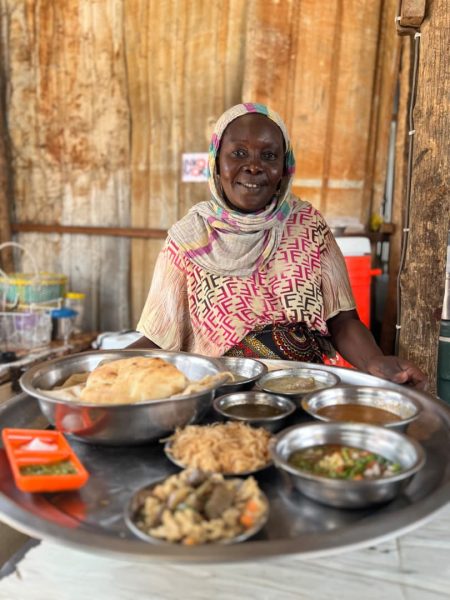
Among the traders is Najuwa Hamad Bujun, a Sudanese mother and trained nurse who fled the war in Sudan with her children, carrying little more than a few personal belongings and uncertainty about the future.
“When we arrived, everything felt unknown,” she says quietly, standing beside cooking pots inside her small Sudanese restaurant in Juba. “I did not know how we would survive.”
Like thousands of Sudanese refugees who crossed into South Sudan after fighting erupted in Sudan, Najuwa arrived searching for safety.
But beyond the immediate humanitarian needs of food and shelter came another urgent question: how to rebuild a life.
At first, she started selling Sudanese tea and simple meals to support her family. The business was small, operating from a modest roadside stall with limited equipment and little capital.
Today, her business has expanded into food delivery services and groundnut oil production, employing 12 women from both refugee and host communities.
For Najuwa, entrepreneurship became more than survival.
“It restored my confidence,” she says. “When you lose your home and your country, you also lose part of yourself. Working again helped me feel human again.”
Across South Sudan, stories like hers are becoming increasingly common.
As conflict continues to displace families across the Horn of Africa, many refugees are turning to small businesses not only to survive, but to rebuild dignity, independence, and stability.
In markets across Juba and refugee-hosting towns, displaced women are opening restaurants, tailoring shops, beauty salons, grocery stalls, and mobile money businesses.
Some sell vegetables and second-hand clothes. Others bake bread, make handicrafts, or provide transport services.
Aid agencies say the shift reflects a growing recognition that long-term displacement requires more than emergency relief.
Organizations working with refugees increasingly argue that economic inclusion access to business opportunities, financial services, and markets is essential for helping displaced people regain self-reliance.
One of the organizations supporting refugee entrepreneurs in South Sudan is Inkomoko, which provides training, mentorship, and financial support to small businesses.
According to the organization, nearly 5,000 entrepreneurs in South Sudan have received support within the past two years, including refugee-led and women-led businesses.
The initiative has reportedly helped create more than 1,000 jobs.
William Ngabonziza, Managing Director of Inkomoko South Sudan, says economic opportunity is becoming an important pathway toward recovery for communities affected by displacement.
“When people can earn, save, borrow, trade, and build businesses, they begin rebuilding stability for themselves and their families,” he says.
For refugee women, however, the path to entrepreneurship is rarely easy.
Many arrive with limited savings, no formal documentation, and little access to loans or banking services. Others struggle with language barriers, trauma, or balancing childcare responsibilities while trying to earn an income.
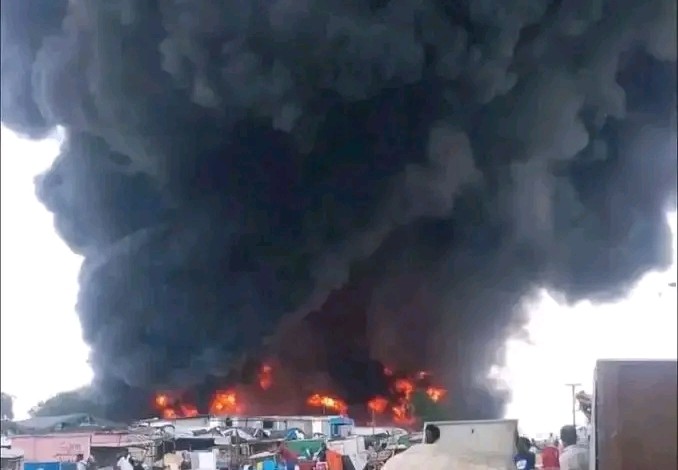
In late 2025, a devastating fire tore through Customs Market in Juba, destroying Najuwa’s restaurant alongside dozens of other businesses.
For many displaced traders, such losses can mean returning to dependency and starting again from nothing.
But Najuwa rebuilt.
“We cried after the fire,” she recalls. “But we decided we would not stop.”
Support networks among refugee women often become critical during such moments. Traders lend each other money, share storage space, exchange customers, and help restart businesses after setbacks.
Experts say this informal business networks are quietly strengthening local economies while also improving social cohesion between refugees and host communities.
Meanwhile, South Sudan is also witnessing gradual changes in financial inclusion for displaced populations.
Earlier this year, the country recorded its first bank account opened using a refugee identification document a step advocates describe as a breakthrough for economic participation.
The move now allows some refugees access to mobile money services, digital transactions, and agency banking systems previously difficult to obtain.
Telecommunication companies and financial institutions are increasingly expanding services into refugee-hosting communities, recognizing growing demand for mobile banking and small business services.
Advocates believe such changes could help refugees transition from aid dependency toward economic participation.
Still, humanitarian agencies warn that challenges remain severe.
South Sudan continues to face economic instability, high inflation, unemployment, and pressure on already limited public services. Refugee women often operate in fragile environments where a single crisis illness, flooding, fire, or insecurity can wipe out years of progress.
Yet despite the uncertainty, many continue to push forward.
Inside her restaurant, Najuwa now trains younger women who recently arrived from Sudan, teaching them cooking, customer service, and basic business skills.
She says helping others rebuild has become part of her purpose.
“When women work together, we survive together,” she says.
Ahead of World Refugee Day, aid organizations and development partners are increasingly calling on governments and private companies to view displaced communities not only through the lens of crisis, but also through resilience and economic potential.
For women like Najuwa, rebuilding after war is about far more than income.
It is about reclaiming dignity, restoring hope, and creating a future in a place where survival once seemed impossible.