Women and residents of Joppa West Block A on the outskirts of Juba say they are living through fear, hunger, and growing insecurity as criminal gangs, rape cases, and lack of basic services continue to devastate the community.
For many families, daily life has become a struggle for survival.
Residents say the area suffers from chronic shortages of clean water, poor healthcare services, unemployment, and rising violence, leaving women and children among the most vulnerable.
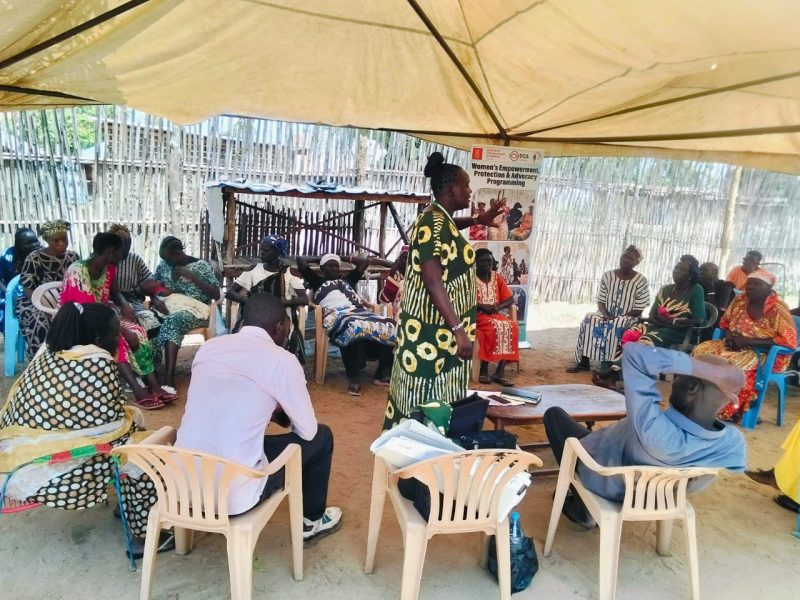
“We are living like people who are not in the same Juba City,” said Joice, a resident of Joppa West Block A, during a community engagement meeting organized by Global Voices Organisation (GVO).
Despite being located near the capital, residents say they feel abandoned and forgotten by authorities.
Women in the community described nights filled with fear as criminal gangs locally known as “Niggas” continue to terrorize residents through robberies, beatings, and violent attacks.
Community members say the gangs often operate openly, especially at night, forcing families to lock themselves indoors in fear.
“These gangs are beating people, robbing residents, and creating fear in the community,” Joice explained. “The government has tried many times to intervene, but they disappear for some time and later come back again.”
For women and girls, the insecurity has created an even deeper crisis.
Residents reported increasing cases of rape and gender-based violence (GBV), saying many survivors suffer in silence because of stigma, fear, and lack of proper support systems.
Some women said they no longer feel safe moving alone, especially during evening hours or when searching for water and food.
Community members also expressed frustration over what they described as a collapse of trust in local security structures.
According to residents, a police point that had previously been established in the area allegedly failed to provide meaningful protection and instead became a source of fear for some community members.
“We no longer report cases there because people lost trust in them,” Joice said. “Now we take cases to Kubri Haboba or Munuki Police Stations.”
Residents say access to clean water remains one of the community’s biggest challenges.
Most households rely on unsafe wells and collected rainwater during the rainy season. During dry periods, families depend almost entirely on water tankers, which often fail to arrive regularly.
“When the water tankers do not come, life becomes very difficult for us,” Joice said.
The lack of safe water has worsened health conditions in the area, with malaria, typhoid, flu, and persistent cough affecting many households.
Although Gurei Primary Health Care Centre (PHCC) serves nearby communities, residents say the facility frequently lacks medicines and medical supplies.
“You can spend the whole day at the health center only to be told there are no drugs,” another resident lamented.
For serious illnesses and emergency cases, residents are forced to travel to Juba Teaching Hospital a journey many families say is both expensive and difficult.
The growing hardships have left many women carrying the burden of caring for sick children while also struggling to provide food and basic needs for their families.
Speaking during the community engagement, Keji Viola George, Advocacy Officer at Global Voices Organisation, said the intervention followed a protection risk assessment conducted in Gudele and Joppa areas under a one-year project implemented in partnership with DCA.
“We found out that there are many GBV cases happening in the community,” Keji said.
According to her, previous support systems for survivors of gender-based violence had collapsed after humanitarian partners withdrew because of funding shortages.
“There were partners previously responding to GBV issues, but due to lack of funding, the support stopped, leaving many survivors without assistance,” she explained.
Keji said the organization had now introduced awareness sessions to educate residents on gender-based violence, referral pathways, and available support mechanisms for survivors.
“We took community members through the referral pathways and also introduced methods such as suggestion boxes where residents can report protection concerns happening in their communities,” she said.
She added that many residents had openly shared painful experiences of violence, insecurity, and neglect during the engagement sessions.
“We are happy that the community has shared different forms of gender-based violence happening in the area and the many challenges they are going through,” Keji stated.
Despite the hardships, residents say the involvement of civil society organizations has given them renewed hope that their voices may finally be heard.
“With your coming, we now believe our voices will be heard,” Joice told representatives of GVO. “We know you will carry our concerns to the outside world so that people can respond and support us.”
Community members are now appealing to the government, humanitarian agencies, and well-wishers to urgently intervene by improving security, expanding healthcare services, ensuring access to clean water, and supporting survivors of violence.
For many women in Joppa West Block A, the crisis is no longer only about poverty.
It is about safety, dignity, survival, and the desperate hope that somebody will finally listen.