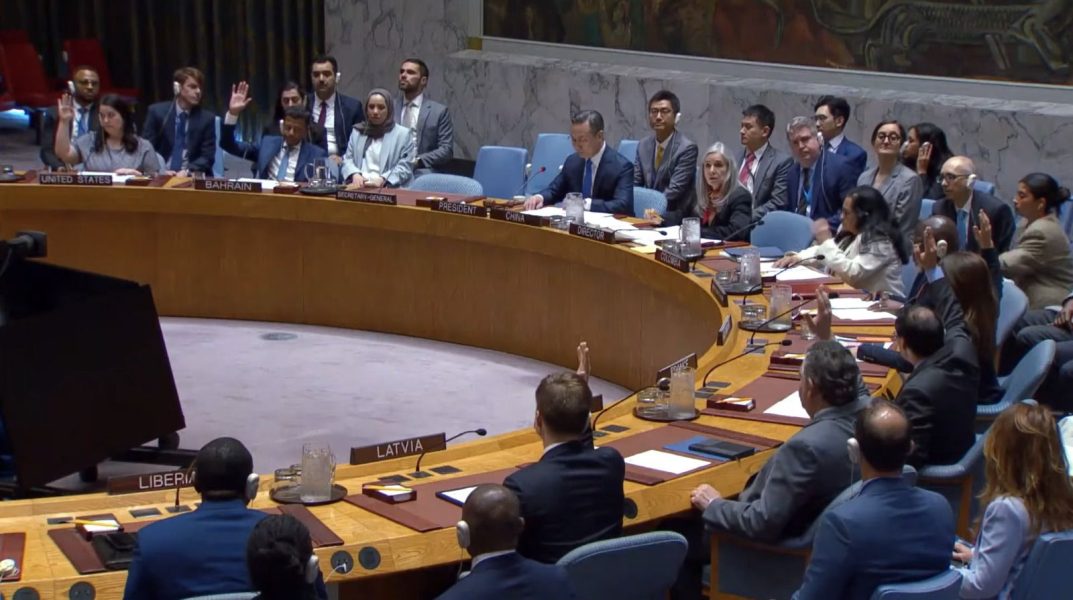
The United Nations Security Council on Friday renewed sanctions on South Sudan for another year, keeping in place an arms embargo and targeted restrictions as frustration deepens over the country’s stalled peace process and worsening political tensions.
The decision, adopted through Resolution 2821, came after months of growing concern among international powers over delays in implementing the 2018 peace agreement and rising fears that the fragile transition could slide further into instability.
While the vote passed with the required support, divisions inside the council were visible.
Six countries abstained, including the three African members of the Security Council — the Democratic Republic of Congo, Liberia and Somalia alongside China, Russia and Pakistan.
But despite the abstentions, the sanctions were extended without major changes, signaling that key international actors still believe South Sudan has failed to meet conditions required for the restrictions to be lifted.
Moments after the vote, the United States delivered one of its strongest public criticisms yet of South Sudan’s leadership.
Addressing the council, U.S. Deputy Representative for Special Political Affairs Ambassador Jennifer Locetta openly blamed President Salva Kiir and other senior leaders for what Washington described as a lack of political will to move the peace process forward.
“Let’s be clear,” she said. “This lack of progress is due to a lack of political will by President Kiir, as well as other South Sudanese leaders.”
The remarks reflected mounting impatience from Washington, which has repeatedly warned that delays in reforms, political crackdowns and continued insecurity are eroding confidence in the transitional government.
The United States accused South Sudan’s leaders of failing to implement key provisions of the peace agreement, including unifying armed forces, preparing for elections and drafting a permanent constitution.
Washington also criticised the detention and trial of a senior political figure linked to the peace deal, arguing that meaningful dialogue cannot happen while opposition figures face arrests and intimidation.
Locetta urged South Sudan’s leaders to return to direct dialogue, release detainees and publicly commit to ending political violence.
She also accused the country’s ruling elite of repeating the same forms of exclusion and marginalisation that South Sudanese leaders once condemned under Sudan’s former rulers in Khartoum before independence in 2011.
“Through bad governance and misuse of revenue, that marginalization continues,” she told the council.
The renewed sanctions mean South Sudan will remain under a U.N. arms embargo, while targeted travel bans and asset freezes against designated individuals will continue for another year.
The mandate of the Panel of Experts monitoring the sanctions regime was also extended until July 2027.
The sanctions were first imposed in 2015 during the country’s brutal civil war, which erupted after political rivalry between President Kiir and First Vice President Riek Machar descended into widespread violence.
Although the 2018 peace agreement formally ended the war, implementation has repeatedly stalled, with missed deadlines, delayed elections and continued outbreaks of violence across parts of the country.
Diplomats say the latest Security Council vote sends a clear message that patience within the international community is wearing thin as South Sudan’s transition drifts further behind schedule.