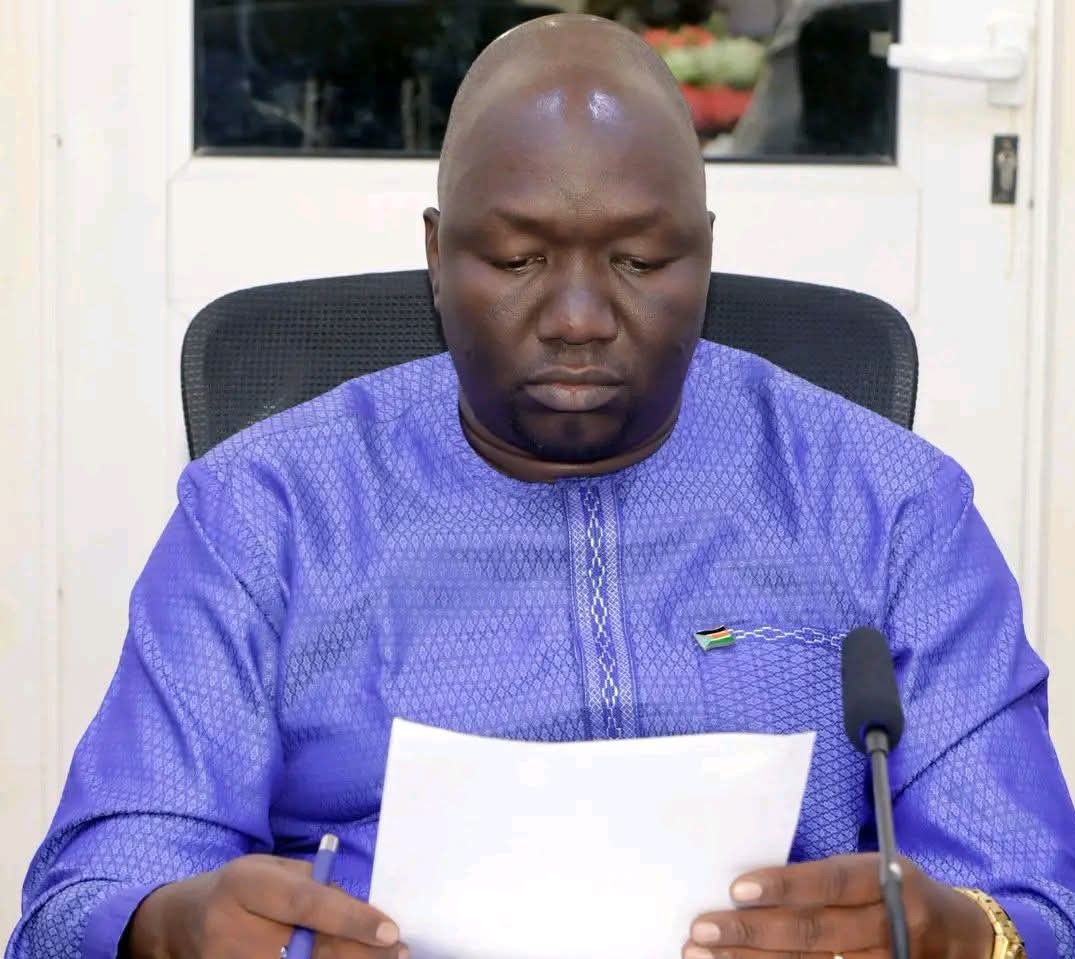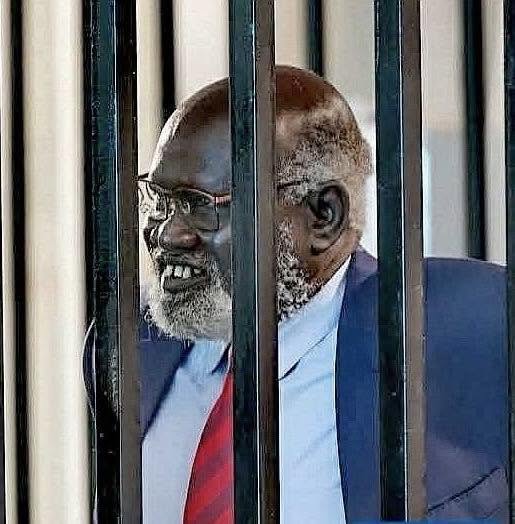
The third accused in the ongoing Nasir trial, Member of Parliament Gatwech Lam Puoch, on Thursday told the court that his actions regarding tensions in Nasir County were part of his constitutional responsibilities as an elected representative and were aimed at preventing violence rather than inciting it.
Taking the stand during the 87th session of the trial involving First Vice President Dr. Riek Machar and several SPLM-IO members, the 67-year-old legislator from Nasir County, Upper Nile State, began presenting his defense against charges brought by prosecutors.
In his opening testimony, Puoch rejected allegations linking him to criminal activities connected to the Nasir incident, arguing that the case against him is largely based on statements he made in his capacity as a member of the Transitional National Legislative Assembly and on evidence presented by a digital forensic expert regarding alleged WhatsApp communications.
The lawmaker dismissed attempts by investigators and prosecutors to associate him with messages and a press conference related to the security situation in Nasir, maintaining that his interventions were intended to calm tensions in the area.
Addressing the court, Puoch emphasized that he had been elected by the people of Nasir and was duty-bound to represent their interests at the national level.
“I am an elected representative of the people of Nasir County. I have served in Parliament for more than fifteen years, entrusted by my constituents to be their voice. I do not need permission from anyone to speak on issues affecting Nasir.
The people of Nasir have placed their trust in me, and I will continue to speak on their behalf as long as I remain their representative,” he told the court.
Puoch argued that concerns surrounding the movement of barges to Nasir and reports of possible disarmament operations in early 2025 created anxiety among residents, prompting lawmakers from the affected areas to seek ways of easing tensions before the situation escalated.
According to his testimony, the press conference cited by prosecutors was intended to appeal for dialogue and allow members of parliament from affected constituencies to engage directly with local communities.
“Our demand was straightforward and peaceful. We appealed to the leadership of the country to allow representatives from the affected areas to engage with their constituencies, address growing fears, and counter rumours. Our intention was not to incite conflict but to prevent one,” he said.
The MP further argued that his conduct was protected under the constitutional responsibilities of lawmakers, which include representing constituents, expressing views on matters of public concern, and exercising oversight over the executive branch.
He told the court that his actions were guided by the Transitional Constitution, parliamentary regulations, and the 2018 Revitalized Peace Agreement, which he described as the key frameworks governing his work as a legislator.
Puoch also placed the Nasir incident within the broader context of delays in implementing the peace agreement, noting that repeated extensions of the transitional period had raised concerns among citizens and political actors about the pace of reforms.
He further alleged that public statements made by senior government officials following the outbreak of violence contributed to heightened tensions and shaped public perceptions of the incident before investigations had been completed.
The court adjourned proceedings until Monday, June 15, when Puoch is expected to continue presenting his defense testimony.