
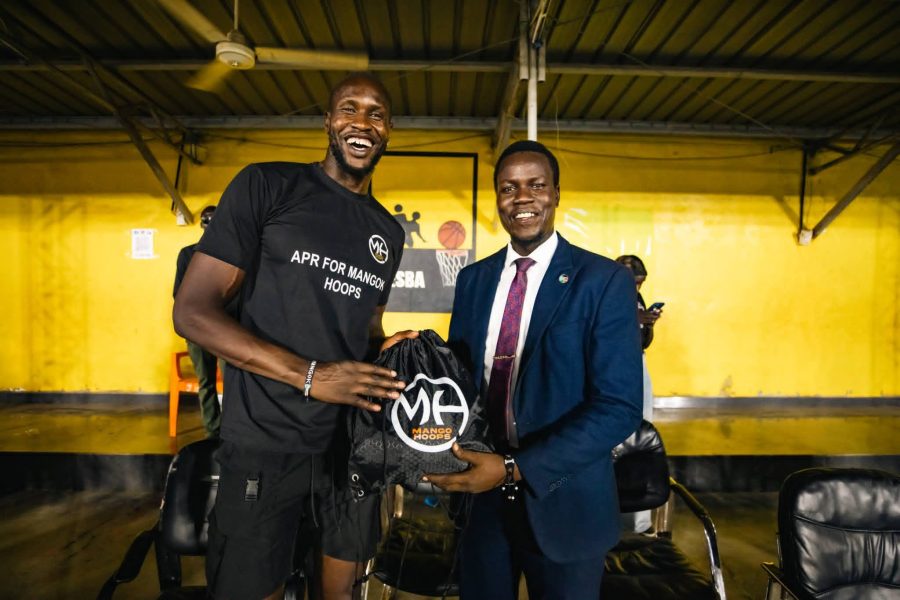
For three days, the sound of bouncing basketballs, cheering spectators, and words of encouragement filled the courts of Juba as South Sudanese basketball star and coach Mangok Mathiang returned home to host a basketball clinic aimed at inspiring young people and giving back to the community that shaped him.
The initiative, organized through Mango Hoops, brought together hundreds of aspiring basketball players from across Juba and beyond, offering them an opportunity to learn skills, compete, and interact with one of South Sudan’s most accomplished basketball figures.
More than just a sporting event, the clinic served as a powerful message of hope, unity, and opportunity for young South Sudanese at a time when many faced social and economic challenges.
Standing before participants during the closing ceremony, an emotional Mathiang reflected on his journey from South Sudan to international basketball and his long-held dream of returning home to inspire the next generation.
“Basketball has been great to me,” Mathiang told the young athletes.
“To just be here in front of everybody, especially in my home country, means a lot to me. This is a dream come true. It is something I have been thinking about since I was in high school, living by myself in America after leaving my family behind.”
His words resonated deeply with the young players gathered on the court, many of whom see basketball as a pathway to a brighter future.
Mathiang said one of the greatest joys of the clinic was witnessing the enthusiasm and determination of young South Sudanese athletes.
“To see so many young talents come out here and keep their dreams alive no matter where they come from is inspiring,” he said.
“Our goal was simply to come here and give you hope. Keep hope alive not only for yourselves but for our country. You are our next generation. You are our future.”
He encouraged participants to remain focused on their goals and assured them that South Sudan’s current generation of basketball professionals would continue working to create opportunities for those coming behind them.
“We will continue trying to pave the way and open doors for you,” he said. “And I already know that once those doors are opened, you will run through them and achieve even greater things.”
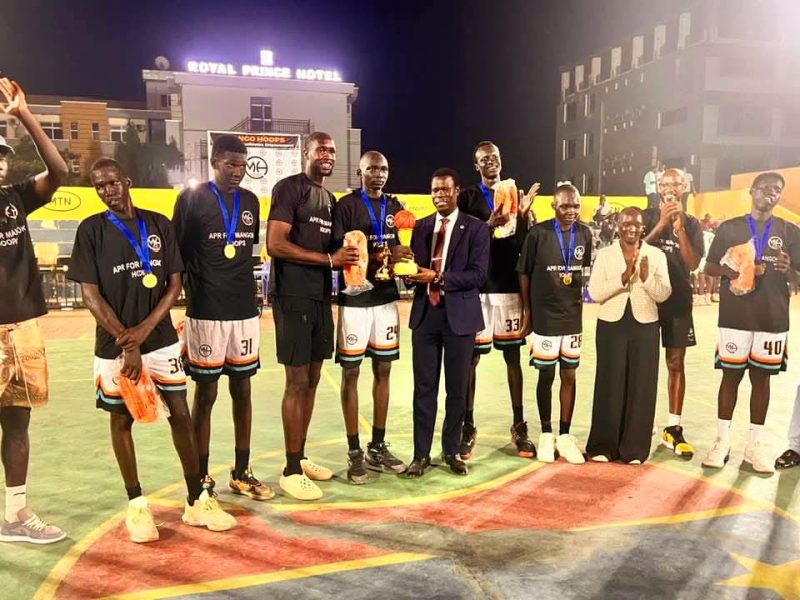
The clinic concluded with competitive games and awards, with Mathiang expressing excitement about identifying future stars who could one day represent South Sudan on the global stage.
“I am looking forward to seeing a few MVPs and defensive players emerge from this tournament,” he said.
“Thank you for being part of this journey with me.”
Basketball as a Tool for Social Change
The significance of the clinic extended far beyond athletic development.
Secretary General, Scopas Ladu from Central Equatoria State Basketball Association(CESBA) praised the initiative for its role in addressing social challenges affecting young people.
Speaking during the event, Scopas commended Mathiang and his team for investing in youth development and creating positive alternatives for young people.
Ladu noted that sports have the power to keep youth away from harmful activities that can negatively impact their futures.
“By organizing this basketball clinic, Mangok and his team are helping many young people stay away from dangerous activities and drugs that destroy lives,” he said.
He described the clinic as an example of how successful South Sudanese athletes can use their achievements to uplift their communities.
According to Bush Buse, Mathiang’s commitment to giving back is particularly admirable because he has chosen to reinvest the benefits of his success into developing young talent.
“The little that he earned from basketball is being given back to the community,” Bush said.
“This tournament is part of that contribution. He has travelled and succeeded, yet he has returned home to help others.”
Bush revealed that Mathiang and his colleagues have already conducted similar outreach activities in other parts of the country, including Rumbek, and have participated in international basketball development initiatives.
He called upon South Sudanese players competing in the National Basketball Association (NBA) and professional leagues around the world to follow Mathiang’s example.
“I wish all South Sudanese basketball players, whether they are in the NBA or playing overseas, would imitate what Mangok and his friends have done,” he said.
“This is the kind of leadership our young people need.”
Inspiring Future Champions
Throughout the event, speakers repeatedly emphasized the importance of discipline, hard work, and commitment.
Bush encouraged participants to view the clinic as a stepping stone toward achieving their dreams.
“This is an inspiration to young aspiring basketball players,” he said.
“One day, you can become like Mangok. You can become like the international basketball stars we have today. But you must commit yourself, work hard, practice consistently, eat properly, and avoid bad habits.”
He urged young athletes to stay away from behaviors that could derail their ambitions, including substance abuse and other harmful influences.
“If you avoid those things, you can become successful,” he said.
“Imagine becoming an international basketball player. It is a blessing. You will be able to support your family, your community, your country, and even contribute to the world.”
For many young South Sudanese, basketball has increasingly become a source of inspiration and possibility.
South Sudan’s national basketball team has achieved remarkable success in recent years, capturing international attention and creating new opportunities for aspiring athletes.
The rise of South Sudanese players in international leagues has also demonstrated that talent from the world’s youngest nation can compete at the highest levels of the sport.
For participants at the clinic, the presence of someone like Mathiang offered tangible proof that success is achievable through dedication and perseverance.
Many young athletes spent hours practising drills, listening to coaching sessions, and participating in friendly competitions designed to improve their skills and confidence.
Organizers said the objective was not only to identify talent but also to instil values such as teamwork, leadership, discipline, and resilience.
Expanding Basketball Development Across Central Equatoria
Minister Bush Buse, attending the event, highlighted plans to expand basketball infrastructure and opportunities throughout Central Equatoria State.
He also said authorities are working closely with the Central Equatoria State Basketball Association to increase access to sporting facilities and organize more youth programs.
Bush said efforts are underway to develop additional basketball courts in different communities.
“As a government, particularly through the Ministry of Culture, Youth and Sports, we are working hard with the Central Equatoria State Basketball Association to develop more basketball courts,” he explained.
“We are also thinking about expanding these activities to Terekeka and other counties.”
Officials believe that increasing access to sports facilities will help create opportunities for young people while strengthening community engagement and social cohesion.
Investment in sports infrastructure has become increasingly important as basketball continues to grow in popularity across South Sudan.
The country’s success on the international stage has generated enthusiasm among young people, many of whom now dream of representing South Sudan in future competitions.
South Sudan’s Basketball Identity
Bush also reflected on the growing international recognition South Sudan has received through basketball.
He noted that wherever he travels, people increasingly associate South Sudan with the sport.
“Today, when I travel abroad and say that I am South Sudanese, people immediately think about basketball,” he said.
“They say, ‘Oh, the basketball players.’”
He joked about South Sudan’s reputation for producing exceptionally tall athletes, recalling experiences during international travel.
“I remember being the tallest person when I visited Nepal,” he said, drawing laughter from the audience.
“But when I come back home, there are people who are even taller than me.”
He encouraged young people to take advantage of the natural attributes and growing opportunities available to them through basketball.
“Let us benefit from this momentum,” he said.
“Basketball has put South Sudan on the map, and we should continue building on that success.”
Beyond Competition: Promoting Unity
Perhaps the most powerful message delivered during the clinic was the importance of national unity.
South Sudan has experienced years of conflict and division, but speakers emphasized that sports can serve as a unifying force that brings people together regardless of tribe, background, or region.
Bush said the tournament demonstrated how basketball can help break down barriers and foster mutual understanding.
“The essence of this game is bringing people together,” he said.
“It helps us build friendships and strengthen our identity as South Sudanese.”
He urged young people to reject tribalism and embrace unity.
“We are now beyond our tribes,” he said.
“This hatred will not help us. Tribalism will not help us.”
According to Hon.Bush, one of the clinic’s greatest achievements was creating an environment where young people from different communities could interact, learn from one another, and work together toward common goals.
“This game has achieved the objective of uniting South Sudanese,” he said.
Participants spent three days competing, learning, and forming friendships that organizers hope will continue long after the event has ended.
Mental Strength and Success
As the clinic drew to a close, Ladu shared a personal lesson he learned while attempting a basketball shot during the event.
The experience, he said, reminded him of the importance of mental focus.
“When I tried to score, the first attempt was difficult,” he said.
“But then I settled down and realized something important: if you want to win, you must first be mentally settled.”
He explained that stress and anxiety often prevent people from performing at their best, whether in sports or everyday life.
“When you are stressed, it becomes difficult to succeed,” he said.
“But when you are calm and focused, winning becomes much easier.”
The message aligned with the broader themes of the clinic, which emphasized resilience, self-belief, and determination.
For many participants, these lessons may prove just as valuable as the basketball skills they learned on the court.
A Legacy of Hope
As the final games concluded and awards were distributed, organizers, players, and spectators reflected on the impact of the three-day event.
What began as a basketball clinic evolved into a celebration of hope, community, and national pride.
For Mathiang, the clinic represented the fulfilment of a dream he had carried with him since leaving South Sudan as a young student pursuing opportunities abroad.
Now, after achieving success on the international stage, he has returned home determined to help others follow a similar path.
His message to the youth was simple but powerful: keep believing, keep working, and keep hope alive.
That message echoed throughout the courts of Juba as young athletes packed their bags and prepared to return home.
Some left with trophies. Others are left with new skills, friendships, and memories.
But perhaps the greatest prize was the renewed belief that their dreams are possible.
As South Sudan continues building its reputation as a basketball nation, initiatives like the Mango Hoops Basketball Clinic demonstrate the transformative power of sports.
By investing in young people, promoting unity, and creating opportunities for future generations, organizers hope to ensure that basketball remains not only a game but also a pathway toward a brighter future.
For the hundreds of young athletes who participated, the clinic served as a reminder that success begins with hope and that hope, when nurtured, can change lives.
