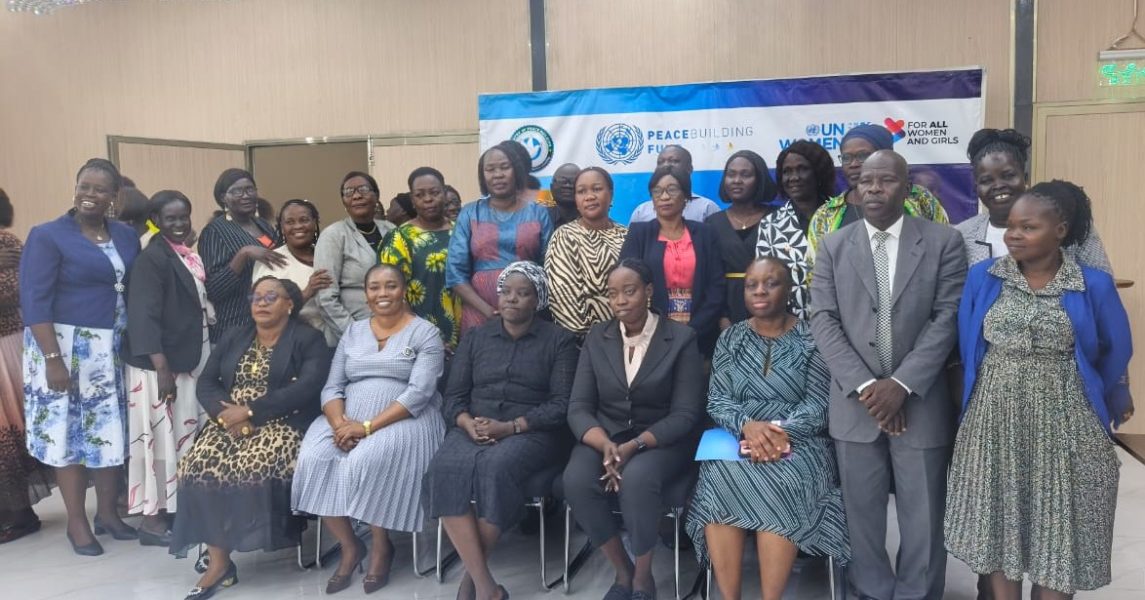
Women Members of Parliament from across South Sudan have begun a three-day leadership and electoral preparedness training aimed at strengthening their capacity to participate effectively in the country’s anticipated elections and assume greater political leadership roles.
The workshop, organized by UN Women in partnership with the Women’s Parliamentary Caucus and the Ministry of Gender, Child and Social Welfare, with financial support from the United Nations Peacebuilding Fund.
The training brings together women legislators to sharpen their leadership, campaign management, public speaking, advocacy, voter engagement, and coalition-building skills.
The training comes as South Sudan continues preparations for its long-awaited democratic elections, with organizers emphasizing the importance of ensuring women are fully equipped to compete for leadership positions and contribute meaningfully to the country’s democratic transition.
Speaking during the opening session, Hulda Ouma Otieno, Deputy Country Representative of UN Women South Sudan, reaffirmed the organization’s commitment to advancing women’s political participation and leadership across the country.
She said elections provide an important opportunity to strengthen democratic governance, but also present significant challenges for women aspiring to political office.
“When women participate meaningfully in political processes, societies benefit. Institutions become stronger, governance becomes more inclusive, and development reflects the perspectives of all citizens,” Otieno said.
She noted that although South Sudan has made notable progress by adopting a constitutional provision guaranteeing women at least 35 percent representation in public institutions, several barriers continue to hinder women’s full participation in politics.
According to Otieno, limited access to campaign resources, unequal political opportunities, and restricted leadership space within political parties remain among the major challenges facing women candidates.
She commended South Sudan’s commitment to affirmative action, describing the 35 percent quota as a significant achievement that many countries in the region continue to struggle to implement.
“As a Kenyan, we are watching South Sudan with great interest because we continue to face challenges in implementing our own two-thirds gender rule. We hope South Sudan can demonstrate how meaningful implementation can be achieved,” she said.
Otieno further encouraged women parliamentarians to aspire beyond reserved seats and actively compete for senior political and executive positions, saying women have repeatedly demonstrated their ability to lead effectively across Africa and globally.
Chairperson of the Women’s Parliamentary Caucus, Hon. Viola Samuel Satti, described the workshop as timely, noting that discussions about elections are becoming increasingly prominent across the country.
She urged participants to begin preparing themselves well in advance, saying political success requires planning, commitment, and continuous engagement with voters.
“Everywhere people are talking about elections. That is why we are here—to prepare ourselves,” Satti said.
She emphasized that the constitutional guarantee of 35 percent affirmative action should not be viewed as an automatic entitlement, but rather as an opportunity that women must actively work to secure through effective leadership and political participation.
“The 35 percent affirmative action is not something that will simply be given to us. We have to work hard for it,” she said.
Satti explained that throughout the three-day training, participants will receive practical guidance on campaign planning, manifesto development, public communication, constituency outreach, fundraising strategies, and navigating different electoral pathways available to women candidates.
She expressed appreciation to the United Nations Peacebuilding Fund and the Ministry of Peacebuilding for supporting the initiative, saying their partnership demonstrates continued investment in women’s political empowerment and peaceful democratic processes.
She encouraged women legislators to remain prepared regardless of when elections are eventually conducted.
“Whether elections come tomorrow or later, women of South Sudan must be ready,” she said.
Satti also highlighted the country’s youthful population, stressing that effective political leadership will play a crucial role in creating opportunities for young people, strengthening democratic governance, and promoting lasting peace.
Officially opening the workshop, the Undersecretary in the Ministry of Gender, Child and Social Welfare, Hon. Adeng Andrew Leek, described women’s political participation as both a constitutional obligation and a cornerstone of democratic governance.
She said South Sudan’s transition toward democratic elections requires stronger institutions, inclusive leadership, and sustained public confidence in the electoral process.
“Elections are not merely about casting ballots. They are about strengthening democratic institutions, promoting peaceful political participation, and ensuring public confidence in the electoral process,” Leek said.
The undersecretary reaffirmed the government’s commitment to implementing the 35 percent affirmative action provided for in both the Transitional Constitution and the Revitalized Peace Agreement, saying inclusive governance remains essential for sustainable peace and national development.
She also called on lawmakers to prioritize key gender-related legislation currently before Parliament, including the Affirmative Action Bill, the Anti-Gender-Based Violence Bill, the Family Law Bill, and the Women’s Enterprise Development Fund Bill.
According to Leek, passage of the proposed legislation would strengthen legal protection for women, promote gender equality, expand economic opportunities, and reinforce democratic governance across South Sudan.
She further urged women parliamentarians to maintain close engagement with their constituencies despite existing security and logistical challenges, emphasizing that public trust is built through consistent interaction with citizens.
“The legitimacy of Parliament comes from the trust and confidence of the people,” she said.
Leek encouraged legislators to remain visible in their communities, listen to citizens’ concerns, and ensure those concerns are reflected in national laws and policies.
She added that women leaders serve as role models capable of inspiring more girls and young women to pursue careers in politics and public service.
“The strongest leaders are not those who appear only during election campaigns, but those who remain present before, during, and after elections, serving their communities consistently,” she said.