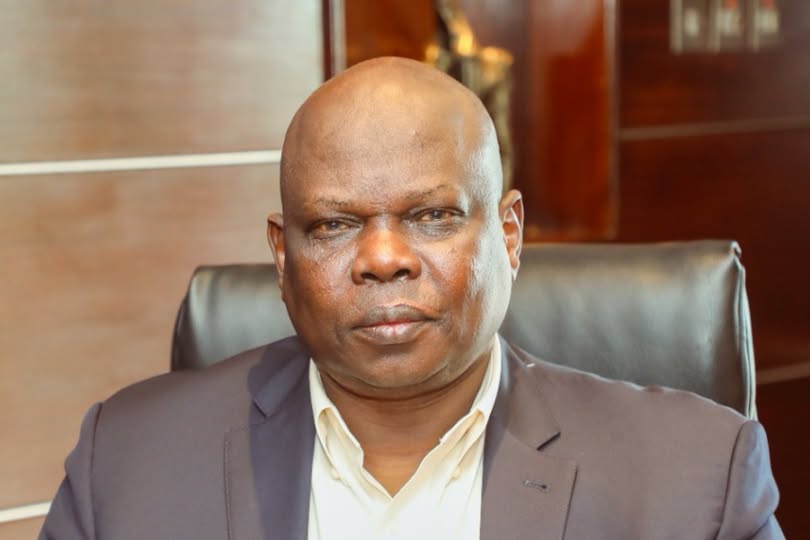
The United People’s Alliance (UPA), a coalition of South Sudanese opposition movements led by Gen. Pagan Amum, has urged the African Union (AU) not to treat the proposed Interparty Dialogue as a substitute for a genuinely inclusive national political process.
In an open letter dated 15 July and addressed to the African Union High-Level Representative for South Sudan, former Tanzanian President Jakaya Mrisho Kikwete, the alliance argued that South Sudan is at a critical crossroads and requires a broader political settlement that includes all national stakeholders.
“The proposed Interparty Dialogue, in its current form, cannot deliver lasting peace,” the letter states. “Likewise, elections conducted under the prevailing political and security conditions are unlikely to produce democratic legitimacy or national stability.”
The opposition coalition called on the African Union to champion what it described as a genuinely inclusive National Political Dialogue, saying such a process offers the only credible pathway toward sustainable peace and democratic transition.
According to the UPA, the proposed Interparty Dialogue is limited to the incumbent government and political parties that are signatories to the Revitalized Agreement on the Resolution of the Conflict in South Sudan (R-ARCSS), while excluding key national constituencies.
The alliance argued that opposition groups outside the peace agreement, civil society organisations, churches, women’s and youth groups, traditional leaders, academia, persons with disabilities, members of the diaspora and other independent voices have been left out of the process.
It also noted that several principal leaders of the peace agreement are currently detained or facing trial, raising questions about whether meaningful dialogue among the agreement’s parties can take place.
“A process led primarily by parties responsible for implementing a struggling peace agreement cannot objectively resolve its shortcomings while excluding those most affected by its failures,” the letter said.
The UPA further argued that a dialogue conducted within territory controlled by one party to the conflict could not guarantee the confidence or security required for genuine negotiations.
The coalition urged the African Union, the Intergovernmental Authority on Development (IGAD) and the wider international community not to regard the current Interparty Dialogue as either a substitute for a national political dialogue or as a procedural step towards elections.
The alliance said it supports democratic elections in principle but insisted that South Sudan has yet to establish the constitutional, political, institutional and security conditions necessary for a credible vote.
Among the concerns raised were the absence of a fully unified national army under a single professional command, the lack of a permanent constitution, incomplete census and voter registration processes, and the continued displacement of millions of citizens.
The coalition also pointed to restrictions on political freedoms, including limitations on freedom of assembly, expression and political competition, arguing that such conditions undermine the credibility of any electoral process.
It warned that holding elections before addressing these challenges could produce disputed results, weaken public confidence and increase the risk of renewed instability.
Instead of proceeding with the current political process, the UPA proposed an African Union-backed National Political Dialogue bringing together all political parties and armed movements, including non-signatories to the peace agreement, as well as civil society organisations, faith-based institutions, traditional leaders, women, youth, academia, persons with disabilities, the South Sudanese diaspora and other national stakeholders.
The alliance said the dialogue should be conducted on neutral ground where participants can freely express their views without fear and where security is guaranteed for all delegates.
It also called for the involvement of regional and international partners, including IGAD, the United Nations, the Troika and the European Union, to support the process and help ensure its neutrality, credibility and implementation.
Appeal to the African Union
The UPA said the African Union, under the leadership of its High-Level Representative Jakaya Kikwete, remains the most credible institution to facilitate an inclusive national political process.
It appealed to the AU Peace and Security Council, IGAD and the United Nations Security Council to strengthen their support for such a dialogue through political backing, diplomatic engagement and adequate resources.
In its concluding appeal, the alliance urged international partners not to endorse the proposed Interparty Dialogue in its current form and instead support an inclusive political settlement before elections are held.
“The people of South Sudan have endured decades of conflict and immense suffering,” the letter said. “They deserve a peace process that belongs to all South Sudanese not one limited to a narrow group of political elites.”
The UPA said it remains ready to participate “constructively and in good faith” in any political process that is inclusive, nationally owned and aimed at achieving lasting peace and democratic governance in South Sudan.