
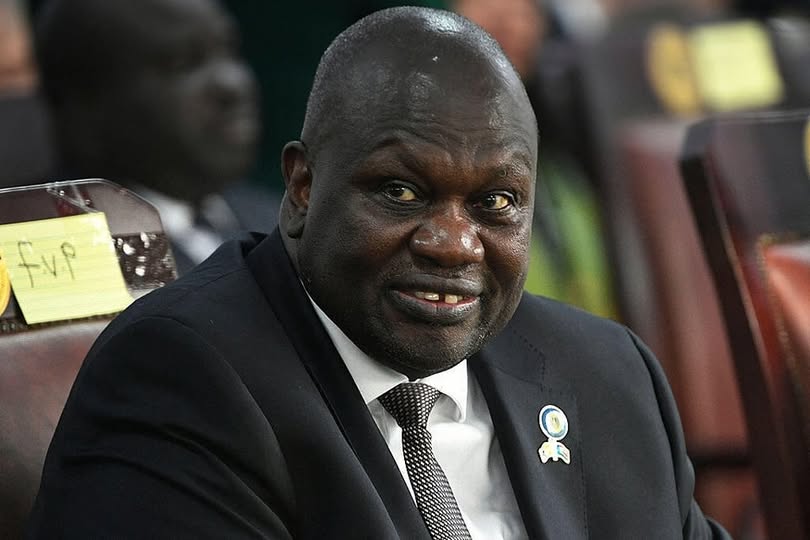
Lawyers representing suspended First Vice President Dr. Riek Machar told a court on Wednesday that security officials prevented them from meeting their client despite obtaining judicial approval to consult him ahead of his planned defense testimony.
The complaint was raised during the 104th session of Machar’s trial at Freedom Hall in Juba, where the defense team informed the court that it had secured permission on August 3 to visit Machar at his residence and prepare his defense statement.
According to the lawyers, the planned consultation did not take place because security personnel stationed at the residence denied them access, despite the court’s authorization.
The defense argued that the inability to meet their client had hindered preparations for his testimony and raised concerns over his right to communicate with legal counsel during the proceedings.
The lawyers asked the court to take note of the incident, saying compliance with judicial orders was essential to ensuring a fair trial and allowing the defense to adequately prepare its case.
The prosecution did not immediately respond in court to the allegation, and the judges did not issue an immediate ruling on the matter during Wednesday’s session.
Machar, leader of the opposition faction of the Sudan People’s Liberation Movement-in-Opposition (SPLM-IO), has been under detention since earlier this year and is facing charges linked to the security situation in Nasir County.
He has denied wrongdoing through his legal representatives.
The case, which has drawn national and international attention, continues before the court as both the prosecution and defense present their arguments.
Wednesday’s proceedings focused on procedural matters relating to the defense’s preparations ahead of Machar’s expected testimony.
The trial is scheduled to continue, with the court expected to determine the next steps after considering the defense’s complaint over access to its client.