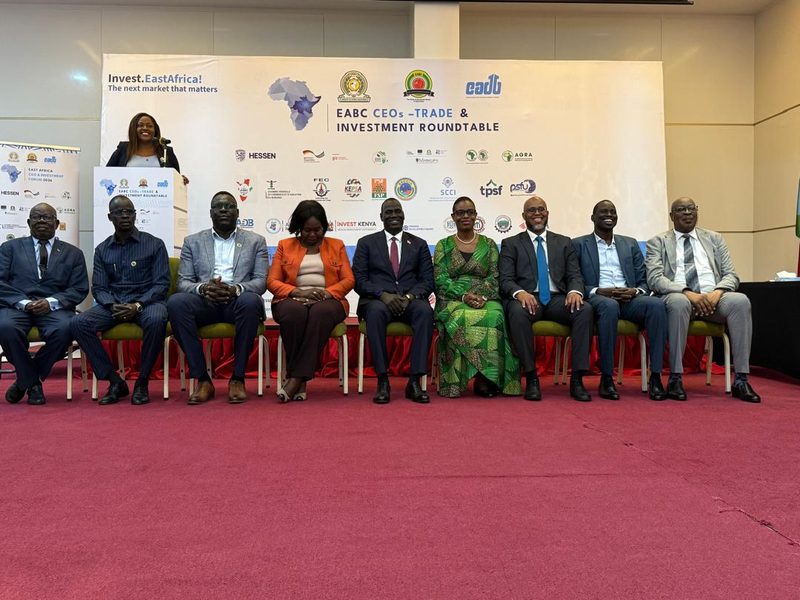
South Sudan has been urged to accelerate the implementation of its East African Community (EAC) commitments and position itself as a regional hub for investment, production, manufacturing and trade.
The call was made during the EABC CEO’s Trade and Investment Roundtable, held in Juba convened by the East African Business Council (EABC) in partnership with the South Sudan Chamber of Commerce, Industry and Agriculture (SSCCIA) and GIZ.
The event brought together government officials, business leaders, financial institutions and regional stakeholders to identify practical measures for expanding trade and investment opportunities in South Sudan and across the EAC market.
Speaking at the opening of the roundtable, Annette Mutawe Ssemuwemba, Deputy Secretary General of the EAC Secretariat, called on both government and the private sector to move faster in implementing commitments made under the regional bloc.
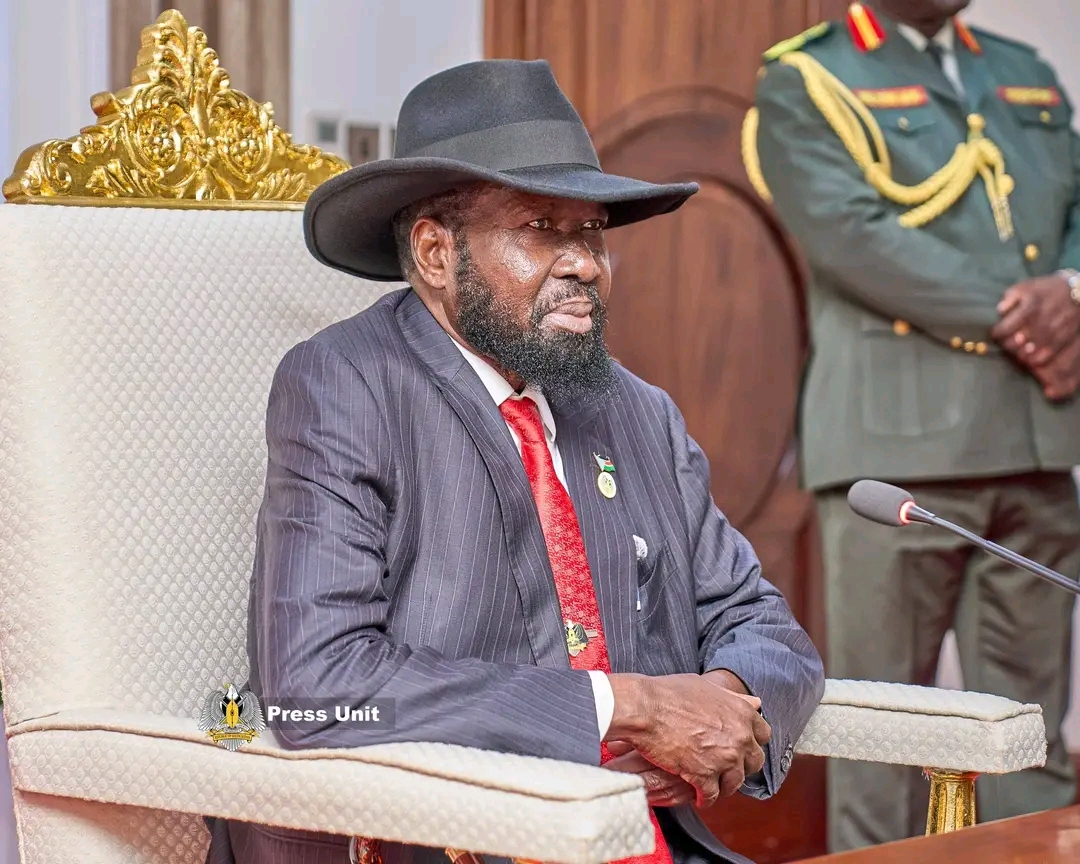
She welcomed President Salva Kiir Mayardit’s assent to the EAC Treaty on 22 April 2026, describing it as an important step in South Sudan’s regional integration process.
Ms Ssemuwemba pointed to recent progress in strengthening the country’s legal and institutional framework, including the EAC Treaty Establishing Act, 2026, customs reforms and the Nimule–Elegu One Stop Border Post.
She urged South Sudan to deepen implementation of the EAC Customs Union, Single Customs Territory, Common External Tariff, Rules of Origin and Common Market commitments.
The EAC official said predictable policies, harmonised procedures, improved trade facilitation and the removal of non-tariff barriers would be critical to reducing the cost of doing business and attracting investors.
She also highlighted the need to integrate services such as transport, finance, insurance, ICT, tourism and professional services into the regional market.
Amb. John Lual Akol Akol, Chairperson of the EABC, called for stronger cooperation between government and the private sector to remove obstacles limiting trade and investment.
“We must move from regional commitments to practical action by removing barriers, improving connectivity and creating an environment where businesses can trade, invest and grow across East Africa,” he said.
He identified non-tariff barrier resolution, tax and regulatory harmonisation, improved transport and border procedures, access to finance and stronger regional value chains as key priorities.
EABC Executive Director Ahmed Farah said South Sudan’s membership of the EAC gives businesses access to a regional market of more than 331 million people, with a combined economy estimated at about US$357 billion.
“South Sudan’s future cannot be imported. It must be produced, financed and built here, and then traded across East Africa,” Mr Farah said.
He urged businesses and policymakers to use the country’s high demand for imported goods as an opportunity to identify areas where local production and investment could replace imports.
Among the sectors identified were livestock, agriculture, fisheries, manufacturing, construction materials, logistics, tourism, finance and digital services.
Mr Farah also called for increased investment in irrigation, agricultural processing, storage and value addition as part of efforts to diversify South Sudan’s economy.
Business representatives said greater access to finance would be necessary if South Sudanese companies are to take advantage of the wider EAC market.
Mr Farah encouraged businesses to become more investment-ready while calling on financial institutions to expand access to working capital, equipment financing, insurance, leasing and digital payment services.
Dr Woda Jeremiah Odok, a member of the East African Legislative Assembly representing the South Sudan EALA Chapter, said Parliament also had an important role in aligning national laws with EAC frameworks.
She called for greater harmonisation of tax and business laws, improved trade statistics and stronger systems for reporting and resolving non-tariff barriers.
She also urged faster implementation of one-stop border posts, pre-arrival customs clearance and the Authorised Economic Operators Programme.
Access to finance and digital payment systems, particularly for women traders, was also highlighted alongside investment in roads, border infrastructure, manufacturing, energy and digital connectivity.
Representing the Ministry of EAC Affairs, John Deng, Acting Director General for Social and Political Affairs, said South Sudan had waived Alien Pass registration requirements for EAC citizens.
He encouraged businesses to report non-tariff barriers, including unlawful roadblocks and other impediments affecting regional trade corridors.
Private sector sees opportunity in regional integration
Kur Nyok Deng, Secretary General of the SSCCIA, called for closer cooperation between government and businesses to identify constraints and develop practical policy solutions.
He said the Chamber was committed to working with the government, EABC and EAC institutions to translate regional integration into investment, employment and economic growth.
SSCCIA Deputy Chairperson and Secretary General Hon. Wieu Wieu Mou said regional integration could help South Sudanese businesses access larger markets while attracting investment and creating jobs.
He identified agriculture, manufacturing, energy, infrastructure, transport, logistics and services as areas with significant potential, while pointing to high transport costs, infrastructure gaps, limited access to finance and border challenges as barriers requiring attention.
The discussion also highlighted opportunities in tourism, including South Sudan’s national parks and the Boma–Badingilo Migratory Landscape.
Panelists said South Sudan’s next decade in the EAC should focus on implementation, production, value addition, investment and exports, rather than simply importing goods from neighbouring markets.
For South Sudan, participants said, deeper regional integration could provide a pathway towards economic diversification, value addition, job creation and a stronger role in East Africa’s trade and investment networks.