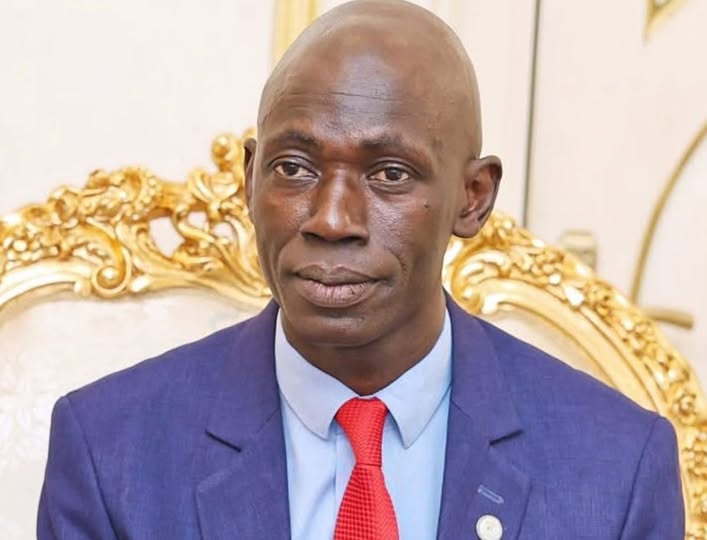
South Sudan civil society leader Edmund Yakani has called on the African Union (AU) and the Intergovernmental Authority on Development (IGAD) to turn their decisions on the country’s peace process into concrete action as the transitional period moves towards elections planned for December 2026.
Yakani, the Executive Director of the Community Empowerment for Progress Organization (CEPO), made the call ahead of parallel meetings by the AU’s Ad Hoc Committee on South Sudan, known as the AUC5, and IGAD leaders on 16 September.
He said the two regional bodies should use the meetings to follow up on commitments to develop a political strategy for South Sudan and an election roadmap.
“Sometimes African Union and IGAD make decisions and they don’t translate their decisions into action,” Yakani said, urging the organisations to ensure their previous resolutions are implemented.
He said the AU and IGAD should also support an inclusive inter-party dialogue that brings together South Sudanese political groups and addresses disagreements over implementation of the 2018 peace agreement.
Yakani called for the dialogue to build a broad internal political consensus before engaging parties that are not signatories to the agreement.
He said any political process aimed at moving South Sudan from conflict to peace must be inclusive and should establish conditions for credible elections.
Why AU and IGAD matter
IGAD has played a central role in South Sudan’s peace process since the outbreak of civil war in December 2013.
The regional bloc led negotiations between the government and opposition groups and helped broker earlier ceasefire arrangements before supporting the process that produced the 2018 Revitalised Agreement on the Resolution of the Conflict in South Sudan (R-ARCSS).
The R-ARCSS was signed on 12 September 2018 and provided for a transitional government followed by elections.
Its implementation has, however, faced repeated delays, political disputes and security challenges.
The African Union has also been involved as a regional guarantor and through its Peace and Security Council, which has repeatedly called for implementation of the agreement, political dialogue and measures to prevent a return to large-scale conflict.
The AU has also maintained high-level engagement on the transition, including through its AUC5 mechanism and its High Representative for South Sudan, former Tanzanian President Jakaya Kikwete.
The AUC5 brings together South Africa, Algeria, Chad, Nigeria and Rwanda and works with the AU and regional actors on South Sudan’s peace and political transition.
Yakani said AU and IGAD involvement remains important as South Sudan works towards elections, but urged the organisations to move beyond statements and ensure their decisions produce practical results.
“We need to have a good agreed-upon condition for holding election as scheduled for December 2026,” he said.
His call comes as South Sudan’s political transition remains under pressure, with outstanding peace-agreement provisions, political disagreements and security concerns continuing to shape preparations for the planned elections.
The AU has previously called for inclusive dialogue, implementation of the 2018 agreement and credible elections as part of efforts to prevent further instability.