
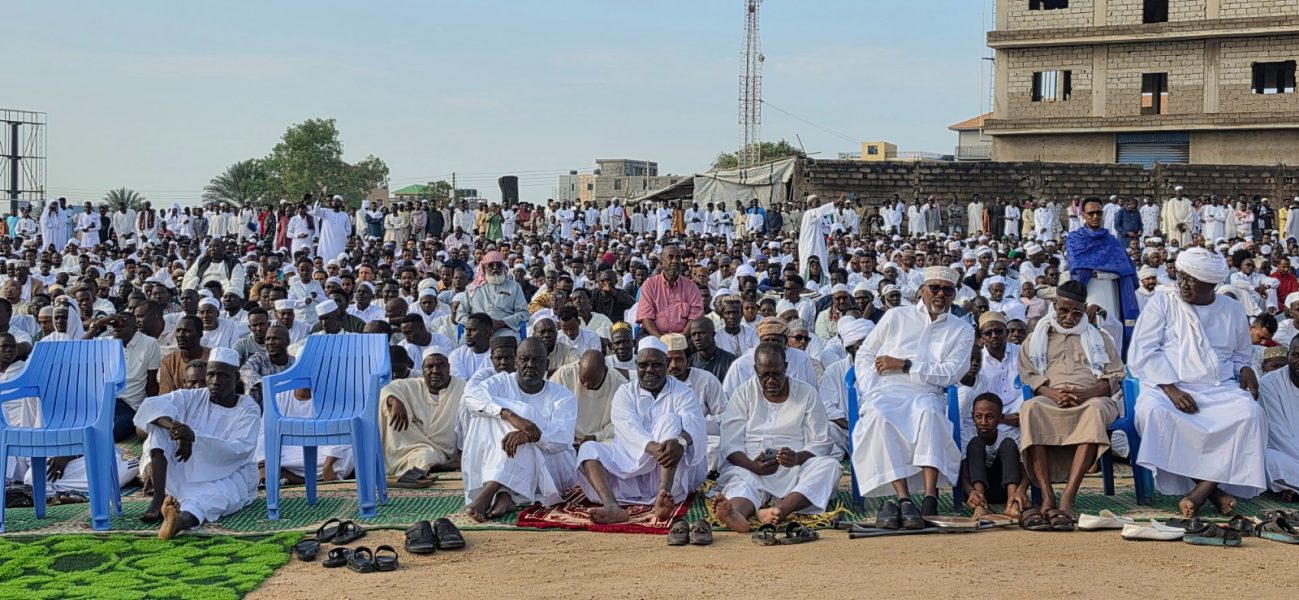
Thousands of worshippers gathered in mosques and open prayer grounds across South Sudan to mark the end of Ramadan, as religious leaders used the moment to deliver a message that unity, compassion, and discipline practiced during the fasting month must not end with Eid.
From the capital Juba to other towns, sermons and speeches focused more on what comes next. Faith leaders urged communities to hold on to the values that brought people closer together over the past month.
Speaking after Eid prayers, Dr. Sallem Alhaj Abdalla Baballa said Ramadan brought noticeable changes to people’s daily lives.
He explained that during the month, people become more connected, focusing on prayer, charity, and community rather than personal interests.
“Ramadan brings people together in a way that is difficult to maintain throughout the rest of the year,” he said. “Families reconnect, neighbors support each other, and mercy becomes part of everyday life.”
However, he noted that many of these habits begin to fade once the month ends, as people return to work and their normal routines.
He stressed that the most important task now is to preserve the spirit of mercy and unity cultivated during Ramadan.
Other religious leaders echoed similar messages in their sermons, emphasizing that Eid is not only a celebration but also a reminder to sustain the discipline learned during the fasting period.
They encouraged people to continue praying, supporting others, and staying connected with family and community.
Yahya Mohammed Osman, a senior official at the Sudanese Embassy in Juba, also addressed the gathering, extending greetings to both Muslims and non-Muslims.
He described Eid as a time for tolerance, brotherhood, and peaceful coexistence among different cultures and religions.
He further called on Sudanese and South Sudanese communities to remain united, highlighting the deep historical and social ties shared between them.
He said people in both countries deserve to live in peace, stability, and security, and urged continued cooperation.
“The challenges are great, but they can be overcome with solidarity and cooperation,” he said, adding that unity between Sudan and South Sudan is key to overcoming difficulties and building a better future.
Large crowds attended the prayers and celebrations, sending what speakers described as a strong message of unity.
People from diverse backgrounds came together, reflecting the idea that Ramadan transcends borders and differences.
Religious leaders also reminded worshippers that fasting is not only about abstaining from food, but about transforming behavior, learning patience, exercising self-control, and caring for others.
As Eid celebrations continued, many expressed hope that the values of Ramadan, peace, kindness, and respect, will carry on into daily life.
“Eid is a day of joy,” one speaker said. “But it is also a reminder that what we practiced during Ramadan should continue.”
