
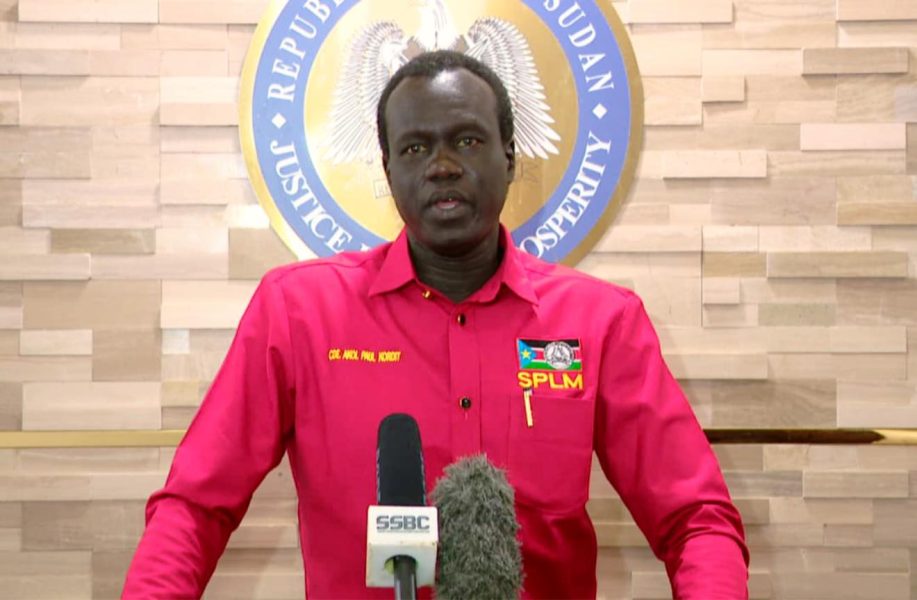
The Sudan People’s Liberation Movement (SPLM) has announced that it is finally opening its doors to dialogue with all opposition groups.
The shift comes after years of political friction, stalled negotiations, and prolonged national uncertainty that have weighed heavily on the country’s journey toward lasting peace.
The announcement followed a high-level consultative meeting chaired by President Salva Kiir Mayardit at the State House on Friday.
Party leaders described the gathering as a strategic and forward-looking session aimed at revitalizing the SPLM ahead of the highly anticipated December 2026 general elections.
SPLM Secretary General Dr. Akol Paul Kordit said the party is now embracing a more inclusive and reconciliatory approach, aligning with the Chairman’s directives to modernize and reposition the movement as the country approaches the end of its transitional period.
He said he has already presented time-bound strategic plans centered on party transformation, peace consolidation, and broader political engagement.
Dr. Akol emphasized that the SPLM’s new direction includes engaging all opposition groups armed, political, and community-based—through open dialogue and structured consultation.
The goal, he said, is to pave the way for a sustainable and inclusive peace that reflects the aspirations of citizens who have long endured cycles of conflict and socioeconomic hardship.
“For the SPLM to lead this nation into a peaceful election, we must open our political space,” he noted.
“This is the moment to rebuild trust, reconnect with our people, and uphold the founding values of the liberation movement.”
Party officials echoed the sentiment, saying the renewed outreach signals a more deliberate push by the SPLM to strengthen internal structures while creating a national environment conducive to credible elections.
They argue that inviting opposition groups into dialogue is not only a political gesture but also a necessary step toward stabilizing the country ahead of 2026.
For many observers, the SPLM’s decision marks a long-awaited shift that could reduce political tensions and close the chapter on years of national “drama,” as citizens often describe the recurring disputes that stalled reforms and deepened suffering.
As South Sudan inches closer to the planned elections, all eyes are now on how the SPLM’s extended hand will be received and whether this new tone of openness will translate into tangible, lasting peace on the ground.