
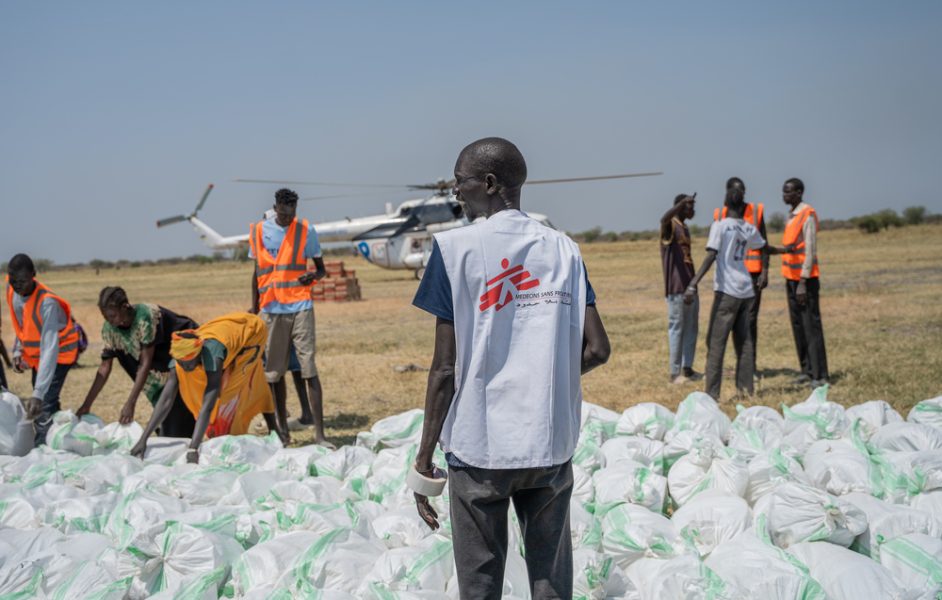
A surge in humanitarian assistance is underway in parts of Jonglei and Upper Nile states, as Médecins Sans Frontières (MSF) steps up emergency operations to support thousands of people displaced by ongoing insecurity, flooding, and limited access to basic services.
In Chuil, a remote area of Jonglei state, MSF has significantly expanded its healthcare response, upgrading a local health facility to increase its capacity to 60 beds.
The move is aimed at addressing a growing influx of patients in urgent need of care, particularly women, children, and those suffering from malnutrition and trauma-related injuries.
Medical teams are now providing a range of critical services, including emergency treatment, maternal and reproductive healthcare, and nutrition support for children at risk of severe acute malnutrition.
The upgraded facility also serves as a stabilization centre for patients with life-threatening conditions, many of whom arrive after long and difficult journeys through swamps and flood-affected terrain.
Access to healthcare remains a major challenge in the region, with entire communities cut off during the rainy season.
To bridge this gap, MSF has deployed mobile clinics that travel by boat across rivers and swampy areas to reach isolated settlements such as Yakuach, Tanakuacha, and Pathiel.
“These communities are extremely difficult to access, especially during the floods, but the needs are immense,” MSF teams said in a field update. “Our mobile clinics are often the only source of healthcare for many families.”
Alongside medical assistance, MSF has also scaled up the distribution of essential relief items to help displaced families cope with harsh living conditions.
More than 1,500 households have received supplies including mosquito nets, blankets, soap, jerry cans, sanitary materials, plastic sheeting, and sandbags to reinforce shelters against flooding.
Humanitarian partners say the distributions are a vital lifeline for families who have lost homes, livelihoods, and access to clean water and sanitation.
With limited infrastructure and rising humanitarian needs, aid agencies are warning that sustained support will be required in the coming months.
The delivery of relief supplies has been made possible with logistical support from the South Sudan Logistics Cluster, which has facilitated the transportation of critical items into hard-to-reach areas. The collaboration has enabled MSF to overcome access constraints and scale up its response more rapidly.
More distributions are expected in the coming weeks, as humanitarian agencies continue to assess needs on the ground and respond to emerging challenges.
South Sudan remains one of the world’s most fragile humanitarian contexts, with millions of people in need of assistance due to a combination of conflict, climate shocks, and economic hardship.
In remote areas like Chuil and Ulang county, the expansion of emergency services is seen as a crucial step in preventing further deterioration of an already dire situation.
