
By Keji Janefer
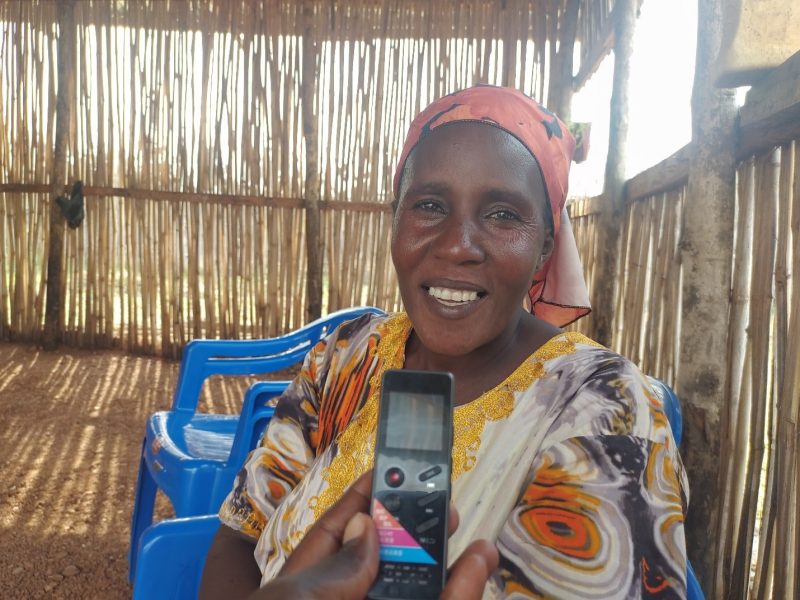
Mama Dar Al-Salam Ahmed sits inside a bamboo hall in Block 2, Gurei North, where women gather to unburden themselves and rebuild their lives through storytelling. In South Sudan, peace is often debated in political halls, yet some of the country’s most effective peacebuilders work far from these spaces.
They are women using their voices, lived experiences, and moral authority to heal communities fractured by years of conflict.
Mama Dar, a community mediator and manager of the Gurei North Women and Girls’ Friendly Space, relies on storytelling an art older than war itself.
Her journey began in childhood, caring for her siblings after losing her mother, planting a lifelong commitment to helping others.
“Growing up I had a dream to help people have peace,” she recounts, explaining to SZN how she empowers other women to champion peace in their communities.
Her the focus now is on developing young people and fostering a culture of peace that will continue into future generations.
“My focus now is to groom the young generation and plant in them the spirit of peace that will extend to the generation that comes after them.”
At the center, she leads storytelling circles that help women and young people release trauma, confront painful memories, and learn from one another. Inside homes, churches, and the bamboo hall in Gurei North, silence gives way to healing.
“Our work focuses on supporting our girls, our mothers, and our youth to have peace in the community. This is the heart of everything we do,” she says.
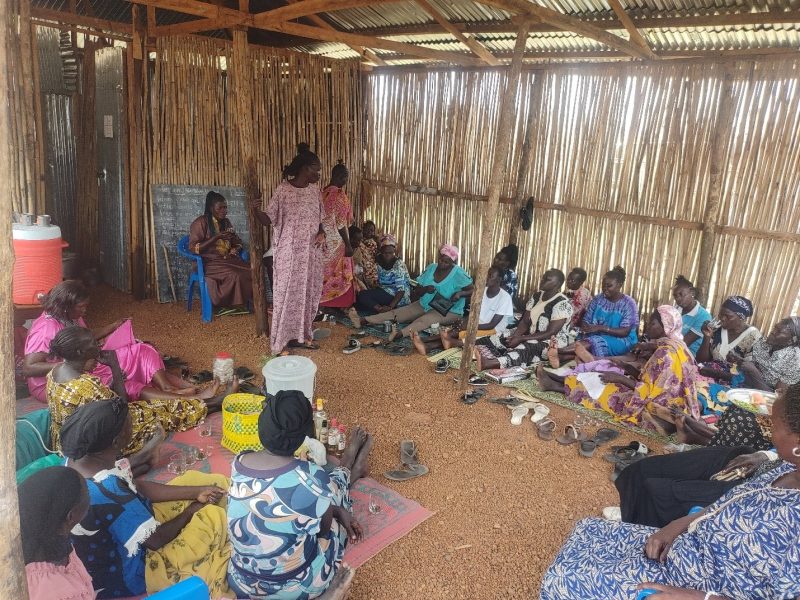
Participants describe the circles as safe spaces where emotional burdens finally ease. One 25-year-old survivor of gender-based violence recalls being beaten and abandoned by her husband before women at the center rallied around her.
“They contributed money for my treatment and counseled me and when I shared my story, I was relieved. Sometimes when you hear others’ stories, you realize yours is lighter,” she says.
The initiative progress effect extends beyond the center’s walls. According to Luka Igga, Deputy Chief of Block 2, the women’s work has shifted community behavior.
“Before the dialogue sessions, we had many problems violence, misunderstandings, boys carrying weapons, family conflicts,” he explains.
“Now we see reduced violence and people understanding each other.”
Women also engage with young men known locally as ‘niggas’ youth who often roam with pangas and struggle with crime.
Through conversations, mothers and older women encourage them to abandon harmful behaviors and rethink the paths they are on.
These dialogues have led to fewer household fights, fewer youth clashes, and strengthened trust between neighbors.
While women have long been sidelined from formal peace processes, young women are increasingly stepping forward.
Diko J. Isaac, Chairperson of Plan International’s Youth Advisory Panel, says conflict shaped her understanding of peacebuilding.
“I witnessed the 2013 and 2016 wars. Some of my friends never came back to school. I used to think peace was a man’s business until I learned about the Katiba Banat, the women who fought during the liberation struggle. It showed me that peace is our collective role,” she says.
In Western Bahr el Ghazal, community member Juliette Lino says women have always been peacekeepers, even without recognition.
“By nature, women are peace builders. God created us caring and mindful of others,” she says.
“But culturally, women were denied public spaces. We grew up being told to stay silent.”
This silent resilience has placed women at the heart of community mediation crossing frontlines during conflict, rebuilding trust, and fostering reconciliation in ways often overlooked by national processes.
Organizations like Women for Justice and Equality (WOJE) are amplifying these grassroots efforts.
Executive Director Zabib Musa Loro offers a clear, grounded analysis of the movement one rooted in years of direct work with communities across Juba and beyond.
“Women’s voices are essential in any initiative promoting peace in this country,” she says. “Yet their contributions remain undocumented and undervalued.”
WOJE trains community ambassadors, facilitates peace dialogues, and leads trauma-informed discussions on non-violence, gender-based violence (GBV) prevention, and child protection.
Musa explains that the work starts at the grassroots.
“We create safe spaces, sit with women in their communities, and talk about their roles as peace actors at home and in society,” she says.
She added “From these groups, we identify leaders who later form their own groups and develop action plans. Some now speak on radio and in schools. They have become agents of change.”
In Luri Payam, home-to-home visits uncovered stories of women quietly resolving conflicts.
In Juba, a dialogue that led by a women leader Mama Dar Al-Salam and her team facilitated under a tree brought together community and niggas, transforming the relationship among the youth and the community.
“The niggas were actually free to tell us that you know what it’s because you have come as mothers and you are talking to us but this so call chiefs and police, they keep harassing us. They call us bad people. They call us bad names so we don’t want to talk to them” Musa recalls.
Despite this progress, Musa says significant barriers remain. Security personnel often disrupt community conversations.
Economic pressures force women to choose between daily survival and peace meetings. And Central Equatoria assumed to be stable remains one of the most insecure areas in the country.
At the national level, Musa is concerned about delayed policy action.
“The National Action Plan on Women, Peace and Security must be finalized,” she says. “Policies should give women real ownership, not token spaces.”
She argues that laws mean little if they never reach the grassroots.
“Women need to understand what these policies say in practice where their rights are protected and how they can participate. Without that, the policies stay on paper.”
WOJE’s long-term vision includes establishing a permanent women’s learning and leadership center, expanding mentorship, and strengthening women’s economic independence which Musa calls “a critical element of sustainable peace.”
Across South Sudan, reports by UN agencies and local organizations echo what these women already know: peace begins in homes, markets, churches, and community spaces not just negotiating rooms.
Through storytelling circles, mediation efforts, youth dialogues, and persistent advocacy, women like Mama Dar, Zabib Musa, and countless others are stitching together the fragile threads of community trust.
Their message is simple: peace is not only negotiated it is lived, nurtured, and built, one conversation at a time.
This story is reported with a grant from Journalists for Human Rights under the ‘Tackling Mis/Disinformation Project,’ funded by the Peace and Stabilization Program of the Government of Canada.
