
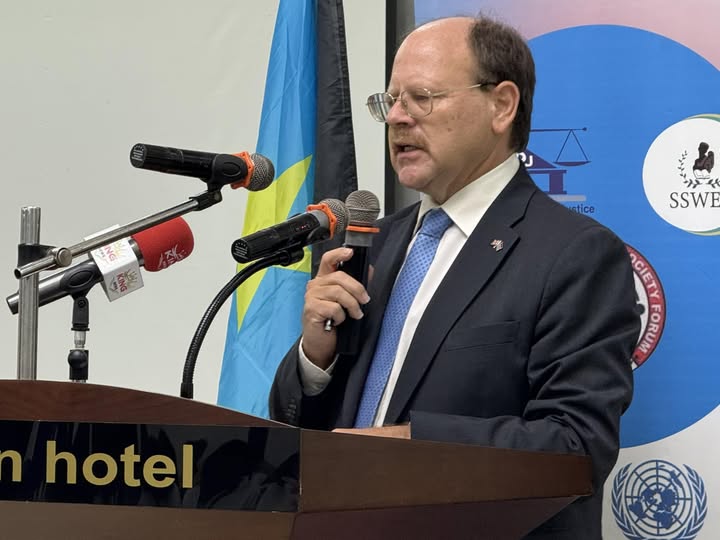
The United Kingdom’s Ambassador to South Sudan, David Ashley, has issued a stark warning over escalating violence across the country, urging political leaders to embrace genuine national dialogue or risk deepening humanitarian and economic collapse.
Speaking at the closing session of the National Stakeholders’ Dialogue on Friday, Ashley condemned renewed fighting that has displaced nearly 500,000 people since January, saying the human toll and destruction of livelihoods had reached an alarming level.
“Peace is an urgent necessity morally and economically,” he said, noting that cases of sexual and gender-based violence have continued to rise while clashes between signatories to the revitalized peace agreement have spread to multiple states. “South Sudan, quite literally, cannot afford more war.”
Ashley warned that each outbreak of violence undermines public services that are already on the brink of failure.
He pointed to the destruction of health and education facilities and the loss of crops and cattle, calling the conflict a direct attack on the nation’s future.
The envoy referenced his visits this week to Kator Primary Health Care Centre and Al Sabah Children’s Hospital, where he announced an additional $26 million in UK support to the health sector.
But what he witnessed malnourished children battling malaria and severe hunger underscored, he said, the stark consequences of misplaced national priorities.
“Every dollar or SSP wasted on bombs and bullets, on guns and gunships, is one less to use against South Sudan’s real enemies: poverty, hunger, disease,” Ashley told participants, echoing remarks he shared earlier with the media.
The ambassador also warned that global aid budgets are under strain, and international assistance is likely to decline next year. With six million people currently facing severe food insecurity, he stressed that the government must manage public revenues transparently and channel resources toward essential services.
Ashley urged South Sudan’s leaders and all stakeholders to use dialogue, reconciliation, and an open civic space to end the cycles of violence that continue to grip the country.
“Children, not conflict, should be the focus of government efforts,” he said.
Despite the challenges, the ambassador reaffirmed the United Kingdom’s long-term commitment to South Sudan, pledging continued support for health, education, humanitarian relief, civil society, human rights, and peacebuilding efforts.
“The United Kingdom will not give up on South Sudan,” Ashley said, calling on national actors, regional blocs, and international partners to “champion the cause of peace.”