
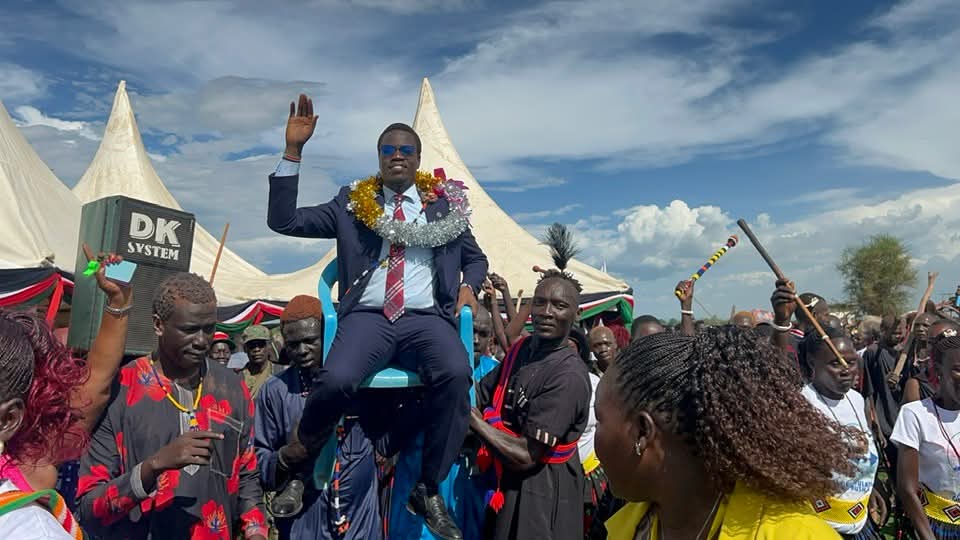
It was not a coronation, but it certainly felt like one.
The dusty plains of Kworijik transformed into a stage of celebration as thousands from the Mundari community and beyond gathered in a spectacle that blended culture, pride, and unmistakable pageantry all in honor of their “son,” Bush Buse.
From the moment he arrived, the mood was electric. Traditional songs echoed across the fields, drums beat in rhythmic welcome, and elders, youth, and dignitaries formed a sea of color and movement.
Bulls symbols of wealth, respect, and deep cultural gratitude were presented in numbers, underscoring just how significant the occasion was.
If leadership comes with expectations, then Buse was receiving them in their highest cultural form.
“It felt like welcoming a king,” one attendee said with a grin, watching as groups took turns performing dances in his honor. “Today, Kworijik is not just celebrating a minister we are celebrating our own.”
The event followed Buse’s recent appointment as Central Equatoria State Minister of Culture, Youth and Sports, a role that has already stirred excitement, particularly among young people eager for opportunity and change.
But beyond the celebration, there was a message and Buse made sure it was heard.
Standing before the crowd, visibly moved by the turnout, he struck a tone that balanced gratitude with responsibility.
“Our strength lies in unity and peaceful coexistence,” he declared, his voice carrying across the gathering. “We must stand together Bari, Pojulu, Kakwa, Kuku, Yangwara all of us as one people.”
The crowd responded with cheers, but he wasn’t finished.
In a speech that mixed vision with urgency, Buse laid out his plans for youth empowerment, promising to establish vocational training centers that would equip young people with practical skills from carpentry and welding to digital technology and culinary arts.
“We must create opportunities that keep our young people engaged and productive,” he said. “This is how we fight unemployment and build our future.”
And then came the part that drew both applause and curiosity sports.
With enthusiasm, Buse spoke of building basketball courts across Terekeka County, painting a picture of local youth rising from village courts to global arenas.
“Why not?” he asked. “One day, our young people can play at the FIBA World Cup even the NBA.”
Laughter and cheers rippled through the crowd, but the message was clear: ambition was no longer out of reach.
Yet perhaps his most striking moment came when he turned inward, defining the kind of leader he intends to be.
“I am here for service delivery, not for money,” Buse said firmly. “I come to take action preaching peace, rejecting hatred and corruption, and working to build schools, hospitals, and opportunities for our people.”
For many in attendance, those words mattered just as much as the celebration itself.
Leaders from across Central Equatoria State echoed their support, with members of the state cabinet pledging to work alongside Buse to deliver on his agenda.
While acknowledging the weight of overseeing culture, youth, and sports, they expressed confidence in his ability to meet the challenge.
As the sun dipped lower, the celebrations continued—songs, dances, and blessings filling the air. Elders offered prayers, youth posed for photos, and gifts were presented in a final show of solidarity.
But long after the drums fade, what may endure is not just the image of a man welcomed like royalty but the expectation that comes with it. In Kworijik, they did not crown a king. They placed their hopes on one.