Civil society organizations in South Sudan have expressed concern over the limited participation of women in political leadership and the potential risks that could undermine their involvement as the country prepares for its anticipated national elections.
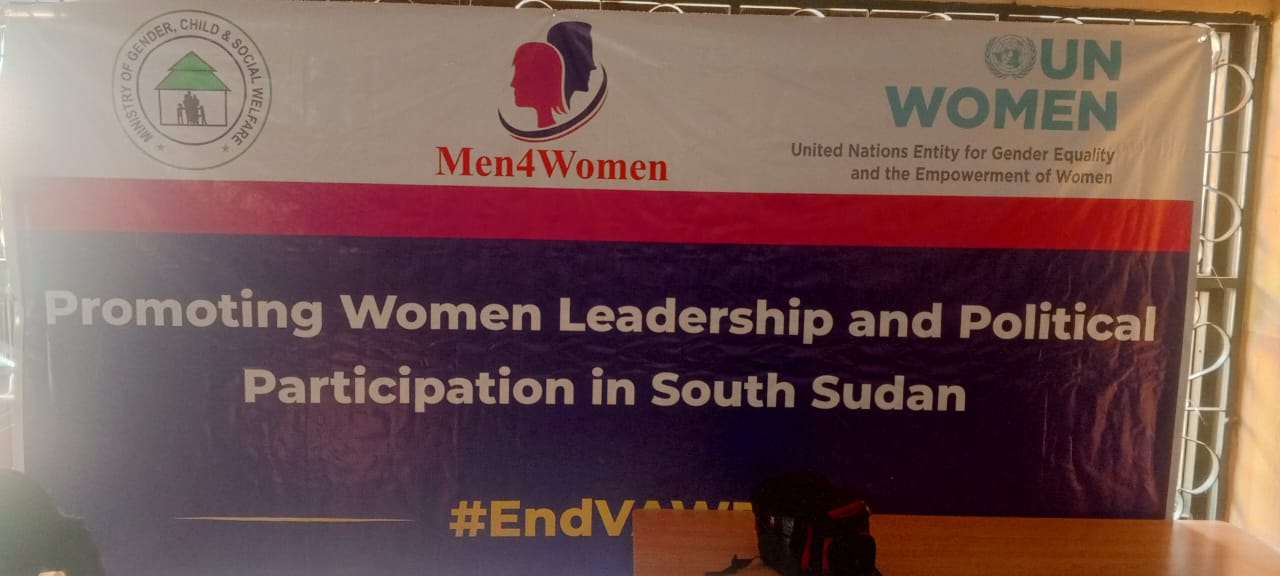
The concerns were raised during a press briefing held in Juba by representatives of the Gender Observatory Platform, a civil society initiative that monitors gender equality and women’s political participation in the country.
Speaking at the briefing, Thomas Lemi, Monitoring and Evaluation Assistant at Men for Women, said the platform is closely tracking developments related to women’s representation and the implementation of the 35 percent affirmative action quota provided under the peace agreement.
“Thank you very much for turning up for this press briefing. My name is Thomas Lemi, and I serve as the Monitoring and Evaluation Assistant for Men for Women,” he said while presenting the findings.
Lemi explained that the Gender Observatory focuses on promoting gender equality and strengthening women’s participation in political processes, particularly through monitoring the implementation of the 35 percent affirmative action quota and supporting voter education efforts.
He noted that although progress has been made in recent years, women in South Sudan continue to face significant barriers to political participation, including limited representation in decision-making positions, social and cultural obstacles, and political violence.
According to the observatory’s findings, women currently hold about 33.3 percent of positions at the national executive level and roughly 32 percent of seats in the National Legislative Assembly.
While these figures show improvement compared to earlier years, they still fall short of the 35 percent quota outlined in the Revitalized Agreement on the Resolution of the Conflict in South Sudan.
Representation remains particularly low at the state level, where governorship positions are still entirely held by men.
The observatory also noted that women’s participation in political party leadership remains limited, with only about 6.5 percent of registered political parties in the country being chaired by women.
Lemi further warned that misinformation, electoral violence, and the exclusion of vulnerable groups could pose serious challenges to credible and inclusive elections if not addressed in advance.
He stressed that women candidates and voters are often disproportionately affected by political intimidation, harassment, and violence during election periods, which can discourage their active participation in political processes.
The observatory also raised concerns about the participation of marginalized groups such as internally displaced persons, persons with disabilities, and rural communities, who may face difficulties accessing accurate electoral information and participating in the voting process.
Globally, women remain underrepresented in political leadership despite gradual progress. As of September 2025, only 29 countries have women serving as heads of state or government, with just 32 female leaders worldwide.
Women currently hold approximately 22.9 percent of cabinet positions globally and about 27.2 percent of parliamentary seats.
Only a handful of countries have achieved or surpassed 50 percent women’s representation in parliament, including Rwanda, Cuba, Nicaragua, Mexico, Andorra, and the United Arab Emirates.
Across Africa, the pace of progress remains slow. Women’s representation in parliaments increased slightly from 25 percent in 2021 to about 26 percent in 2024, raising concerns about the continent’s ability to achieve gender parity by 2030 under the United Nations Sustainable Development Goal 5.
Lemi emphasized that voter education will play a crucial role in ensuring inclusive and peaceful elections in South Sudan.
He urged stronger collaboration between the National Elections Commission, civil society organizations, and the media to ensure that voters receive accurate information about electoral procedures, rights, and responsibilities.
“The National Elections Commission carries the primary responsibility for leading voter education efforts,” he said, adding that coordinated awareness campaigns would help reduce misinformation and encourage broader participation in the electoral process.
Civil society groups say strengthening women’s participation in politics will not only promote gender equality but also contribute to more inclusive governance and sustainable peace in South Sudan as the country moves toward its long-awaited elections.