National non-governmental organizations implementing the Pathways to Self-Reliance project have reported significant progress in strengthening community resilience and promoting locally driven development across South Sudan through climate-smart livelihoods and community-led response initiatives.
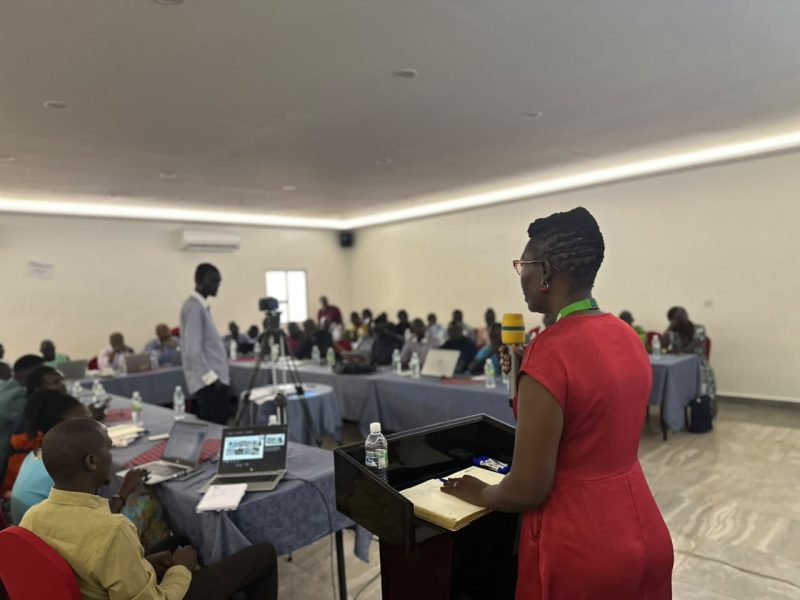
The progress was highlighted during a project review meeting organized by the Community Resilience Consortium (CRC), a coalition of national organizations led by Together in Transformational Initiatives (TiTi Foundation).
The consortium is implementing a three-year initiative aimed at empowering communities to identify and address their own development and humanitarian challenges while reducing dependence on external assistance.
The project is being implemented in Central Equatoria, Eastern Equatoria, Northern Bahr el Ghazal, Western Bahr el Ghazal, and Unity states, focusing on climate-smart livelihood interventions and Survivor and Community-Led Response (SCLR) approaches.
Speaking during the review meeting, TiTi Foundation Executive Director Gloria Soma said the consortium was established to strengthen the role of local organizations in humanitarian action while ensuring communities remain at the center of decision-making processes.
According to Soma, the SCLR model allows communities to determine their own priorities and implement solutions based on local knowledge and resources rather than relying solely on externally designed interventions.
“We are seeing communities taking ownership of their development. They identify their challenges, propose solutions, and lead implementation while organizations provide technical support and facilitation,” she said.
Soma noted that communities supported through the project have undertaken a range of locally identified initiatives, including the construction of water points, roads, bridges, and other infrastructure aimed at improving livelihoods and access to essential services.
In Unity State, Child’s Destiny and Development Organization (CHIDDO) reported improvements in household livelihoods following the distribution of seeds, agricultural tools, and training on improved farming practices.
CHIDDO Executive Director Doing Garwech Kuol said the intervention has enabled vulnerable households to increase agricultural production while adopting climate-resilient farming techniques designed to withstand environmental shocks such as flooding and irregular rainfall.
“Communities are already benefiting from the support provided. Farmers have planted crops using improved methods and are beginning to see positive outcomes from their efforts,” Kuol said.
He emphasized that strengthening local food production is critical to promoting self-reliance and reducing dependence on humanitarian aid.
In Lokiliri Payam of Central Equatoria State, Mother and Child Development Aid (MaCDA) supported residents through community-led planning processes that enabled them to identify priority projects addressing local challenges.
Project Officer Ambago Amos Abass said community members selected the installation of a grinding mill as one of their key priorities after identifying the difficulties women and families faced traveling long distances to process grain.
“The grinding mill has helped reduce transportation costs, save time, and improve safety for women and girls who previously had to travel to distant trading centers,” Abass explained.
He added that the intervention also incorporated awareness sessions on gender-based violence and protection issues to strengthen community well-being and social cohesion.
Meanwhile, in Magwi County of Eastern Equatoria State, Heartright Development Foundation (HDF) has been supporting communities through livelihood and anticipatory action activities targeting returnees, internally displaced persons, and host communities.
HDF Executive Director Amude Victoria said the project has helped vulnerable households access agricultural inputs, climate-smart farming knowledge, and practical skills to improve food security and resilience.
She noted that the interventions have become increasingly important as communities continue to face pressure from population movements and climate-related challenges.
Other consortium leaders, including representatives from the Centre for Development Initiative (CDI) and Global Voices Organization South Sudan (GVO-SS), emphasized that community ownership remains essential for achieving sustainable development outcomes.
They argued that when communities lead planning and implementation processes, projects are more likely to respond to local needs, strengthen resilience, and deliver long-term benefits.
As the initiative enters its second year, consortium members expressed optimism that the Pathways to Self-Reliance project will continue to expand opportunities for vulnerable households, strengthen livelihoods, and support communities in building sustainable solutions to their own challenges.
The consortium maintains that investing in local leadership, climate-smart livelihoods, and community-led responses provides a practical pathway toward greater resilience and self-reliance for communities across South Sudan.