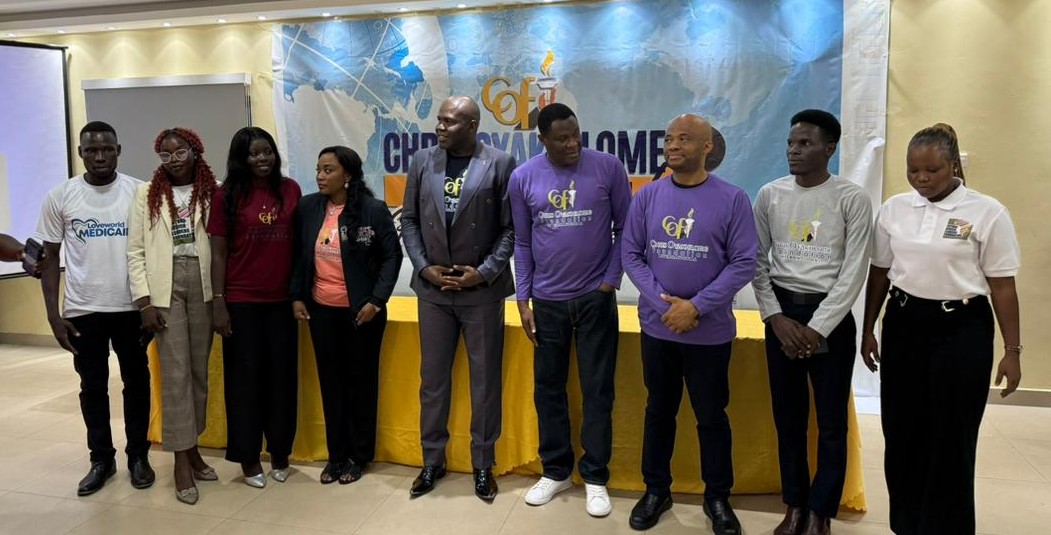
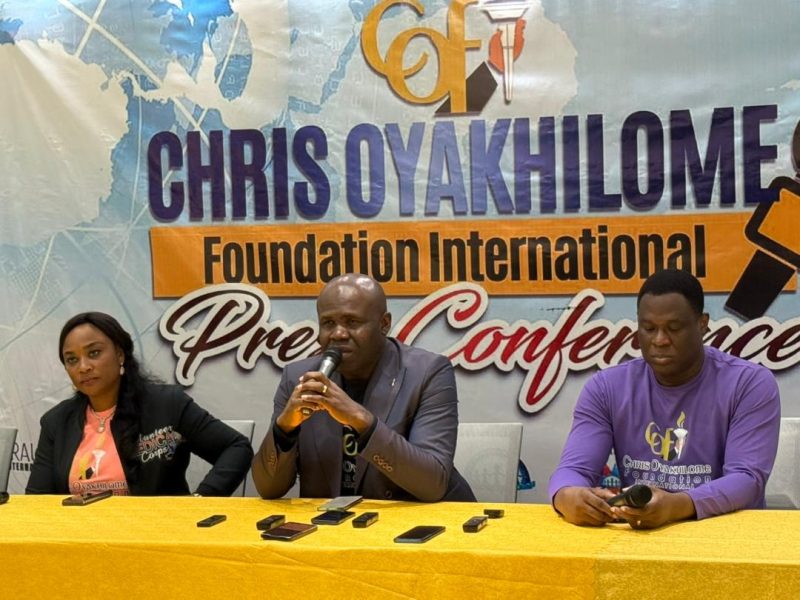
The Chris Oyakhilome Foundation International (COFI) has officially launched its humanitarian and development mission in South Sudan, unveiling plans to support vulnerable communities through healthcare, education, relief assistance, and youth empowerment programs.
Speaking during a press conference in Juba, foundation leaders described the initiative as the beginning of a long-term commitment to helping transform lives and restore hope across the country.
Pastor Arinze Emmanuel, the foundation’s Minister of Humanitarian Affairs, said COFI is a global faith-based humanitarian organization focused on emergency response, education, healthcare outreach, refugee support, and youth empowerment in several countries across Africa and beyond.
He said the organization sees enormous potential in South Sudan despite years of conflict and hardship.
“South Sudan is one of the nations with the greatest potential,” Pastor Arinze said. “We are here because we believe in the future of this country and its young people.”
According to him, the foundation has already engaged government institutions, including the Office of the First Lady, the Ministry of Humanitarian Affairs, and the Ministry of Finance to strengthen cooperation and partnership.
Pastor Arinze revealed that the organization plans to begin relief interventions in camps and vulnerable communities in Juba through the distribution of relief supplies, educational materials, medical assistance, and community support programs.
He also announced a youth empowerment initiative targeting at least 1,000 young people in its first phase through skills training, entrepreneurship, mentorship, and economic empowerment programs.
Speaking on healthcare programs, Pastor Amaka Daniel said medical outreach remains one of the key pillars of the foundation’s mission.
She highlighted the work of partner organizations under COFI, including Trauma Care International Foundation and Volunteer Medical Corps, which provide free healthcare services and emergency response support in different countries.
Pastor Amaka said the foundation intends to strengthen emergency response systems in South Sudan through first aid and CPR training, medical outreach activities, and community healthcare support.
“We want to bring quality healthcare closer to the people,” she said.
She also highlighted the Vision 10,000 initiative, which has provided free eye care services to more than 22,000 beneficiaries globally through eye screening and treatment programs.
In addition, she said the organization supports rehabilitation services and provides prosthetic limbs for people living with disabilities, especially those affected by war and trauma.
Regional Pastor Louis Osade praised South Sudan’s progress and resilience despite years of instability, saying the country continues to move forward.
“What I saw years ago is not what I see today,” he said. “South Sudan is growing and developing.”
Pastor Louis also emphasized the importance of education, noting that Inner City Mission Schools under the foundation already provide free international-standard education to vulnerable children in several African countries.
He confirmed plans to establish similar educational initiatives in South Sudan in partnership with the government and local stakeholders.
Pastor Daniel Kuesmekwera said South Sudan’s youthful population presents a major opportunity for national transformation if properly supported through education, mentorship, and empowerment.
“The future of South Sudan lies in its youth,” he said.
He also praised the government for its willingness to cooperate with the foundation in implementing the planned programs.
Meanwhile, SIS ROSE, a Future African Leaders Foundation ambassador, called on young people to become active contributors to national development.
She said many South Sudanese youth possess talent and creativity but lack opportunities and mentorship.
According to her, more than 15,000 young people benefited from humanitarian and youth empowerment initiatives conducted in 2025, including IT training programs in juvenile correction centers.
“One of the biggest problems our young people face is not lack of talent,” she said. “What many of them need is someone to believe in them.”
The event concluded with renewed calls for partnership and commitment to supporting South Sudan through humanitarian relief, healthcare, education, leadership development, and youth empowerment initiatives.