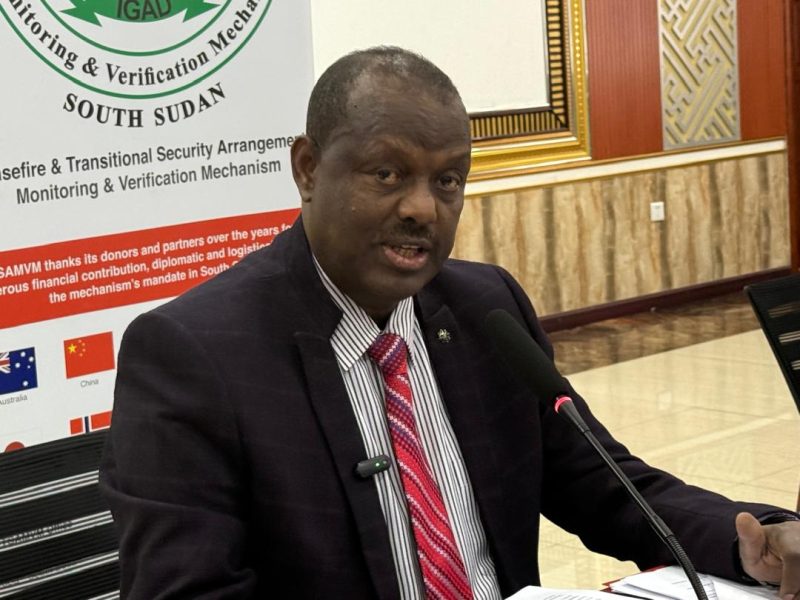
The Ceasefire and Transitional Security Arrangements Monitoring and Verification Mechanism (CTSAMVM) has reduced its monitoring and verification teams from six to three due to severe funding shortages.
The latest development raises concerns over its ability to effectively oversee the ceasefire at a time of escalating violence across South Sudan.
CTSAMVM Chairperson Teshome Anagawe Ayana said the financial crisis forced the closure of monitoring and verification teams in Yei, Bentiu and Yambio at the end of January 2026.
He described the move as a necessary but troubling consolidation driven by dwindling resources.
The remaining teams, now based in Juba, Malakal and Wau, have been assigned expanded geographic responsibilities.
The Juba team will monitor the entire Greater Equatoria region, while the Malakal team will cover Upper Nile, Jonglei, Unity State, the Greater Pibor Administrative Area and the Ruweng Administrative Area.
The Wau team has been tasked with overseeing Greater Bahr el Ghazal, Lakes and Warrap states.
“This consolidation comes at a time when monitoring demands are increasing,” Ayana warned, noting that reduced field presence could limit the mechanism’s capacity to respond swiftly to ceasefire violations.
According to CTSAMVM, the ceasefire monitoring body recorded 407 alleged violations between August 2025 and January 2026, reflecting a surge in violence in several parts of the country.
Many fear that the reduction in monitoring teams could further weaken accountability and undermine efforts to stabilize the fragile peace process unless urgent funding support is secured.