
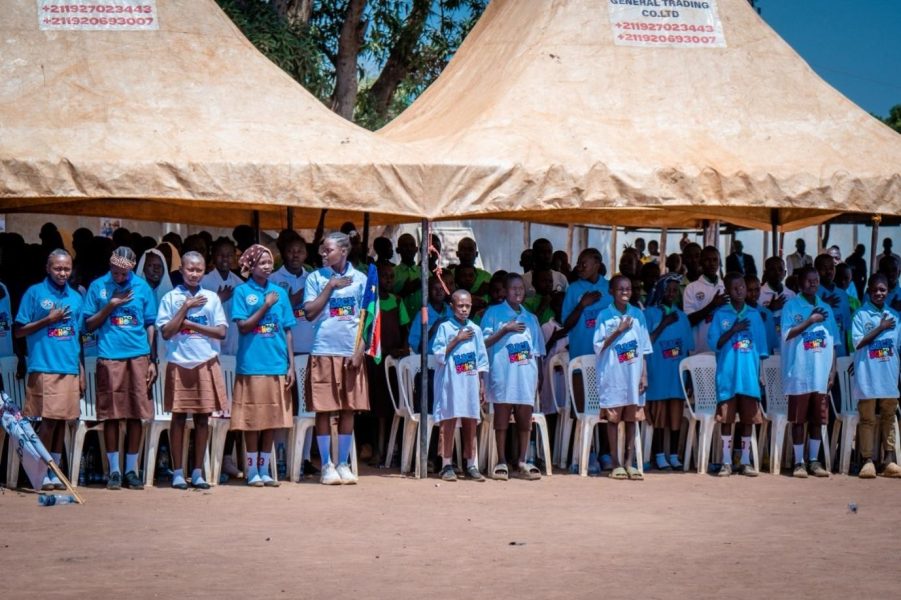
International partners have urged the government of South Sudan to significantly increase investment in education as the country begins nationwide campaign to return millions of out-of-school children to classrooms.
Government officials and development partners launched the Back to Learning Campaign in Wau on Monday, calling on communities, parents and authorities to ensure children enrol and remain in school.
South Sudan has one of the world’s highest numbers of children out of school. According to UNICEF, an estimated 2.8 million children in the country are currently not attending classes, with girls disproportionately affected.
The Back to Learning campaign aims to bring these children back into classrooms across the country, with a particular focus on vulnerable groups including displaced children, girls and children living with disabilities.
UNICEF says the initiative combines community mobilisation with practical support for schools.
Activities include awareness campaigns encouraging parents to enrol children, the distribution of learning materials, support for teachers and efforts to make schools safer and more inclusive.
Speaking at the launch, UNICEF Representative Noala Skinner said the campaign comes at a time when years of conflict and economic hardship have repeatedly disrupted children’s education.
“Education is not simply about classrooms and textbooks. It’s about protection, dignity, opportunity and hope,” Skinner said.
“In South Sudan, too many children have had their learning disrupted by conflict, displacement, economic hardship and climate shocks.”
She warned that children who remain out of school face growing risks.
“Each year out of school increases the risk of child labour, early marriage, exploitation and lost potential,” she said. “The longer a child stays out of school, the less likely it is that he or she will return.”
The Back to Learning initiative is led by the government with support from UNICEF and other international partners. The programme focuses on enrolling out-of-school children, rehabilitating classrooms, providing learning materials and training teachers, particularly in communities affected by conflict and displacement.
Previous phases of the campaign have helped hundreds of thousands of children access education and supported the establishment of temporary learning spaces across the country.
But development partners say long-term progress will depend on stronger domestic investment.
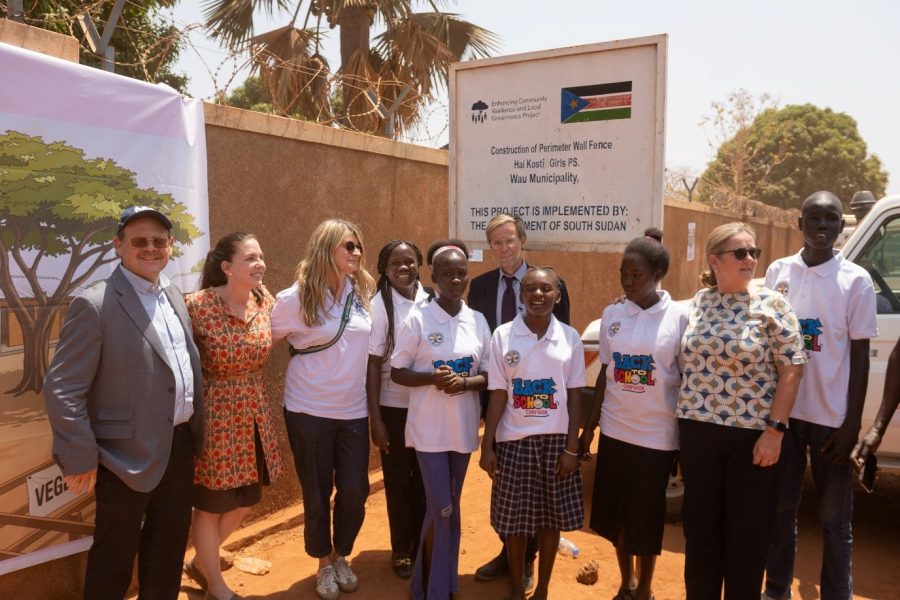
Deputy Head of the European Union delegation Lothar Jaschke said education remains the most important investment any country can make in its future.
“Nothing is more important for building a nation than education,” Jaschke said. “Education is the foundation upon which the house stands.”
However, he warned that government spending on the sector remains critically low.
“Budget execution for education last year was reported to be less than two percent of total government spending. That is shocking and it really needs to increase,” he said.
He added that paying teachers regularly is essential to keeping schools functioning.
“It is crucially important to pay teachers’ salaries to avoid empty classrooms,” he said.
Joanne Minns, Canada’s ambassador to South Sudan, said insecurity, displacement and a shortage of trained teachers continue to limit access to quality education across the country.
“South Sudan’s children deserve a stable, well-resourced education system that can support their future and the country’s long-term development,” she said.
Minns described the Back to Learning campaign as a national commitment to ensure that every child has access to schooling.
“It’s a promise that schools are open, that learning continues and that no child is left behind, regardless of gender, ability or circumstance,” she said.
Meanwhile, the United Kingdom’s ambassador to South Sudan, David Ashley, said millions of children remain outside the education system despite years of donor assistance.
“We know that far too many children are still out of school something like three million,” Ashley said.
“Many children start school but then drop out because of long distances, overcrowded classrooms, a lack of learning materials and a shortage of teachers.”
Ashley said education remains one of the most powerful tools for building long-term peace and stability in the country.
“For this country the priority should not be conflict, bombs or bullets but children and supporting the education of the future generations of South Sudan,” he said.
South Sudan’s Minister of General Education and Instruction, Kuyok Abol Kuyok, acknowledged the role played by international partners and said the government is working to expand access to education.
“Through your support we have been able to improve access to girls’ education from about 30 percent to almost one-to-one with boys,” he said.
“In some states such as Western Equatoria and Northern Bahr el Ghazal there are even more girls than boys in primary school.”
The minister also announced plans to resume capitation grants for government primary schools this year.
“This year we are going to pay capitation grants for all government primary schools because we know what capitation grants do for our schools,” he said.
He added that regular payment of teachers remains central to improving the quality of education.
“Without paying salaries for teachers, we will not have quality education in our schools,” he said.
Education partners say the campaign also relies heavily on community engagement to identify children who have dropped out of school and encourage families to send them back.
Ohuro Simon, education coordinator for Help a Child South Sudan, said the initiative remains a critical effort to address the country’s large number of out-of-school children.
“Back to Learning remains a critical national initiative that mobilises communities, families and leaders to ensure that children, especially those who are out of school, return to the classroom and remain there,” he said.
However, he warned that funding gaps and the closure of some donor programmes risk reversing gains made in school enrolment.
“We are seeing enrolment dropping in some schools after the end of key programmes such as school meals,” he said.
“Without continued donor support and government commitment, it will be difficult to close the education gaps we continue to experience.”
At Kosti Girls Nursery and Primary School in Wau, students said the campaign offers hope for children struggling to remain in school.
“I want to become a doctor one day, so I must study hard,” said 12-year-old student Maria James, noting that many girls in her community drop out early because of poverty.
Another student, 13-year-old Rose Daniel, said returning to school after missing classes during displacement was difficult but necessary.
“School is where we learn how to build our future,” she said.
Officials say the campaign will continue across the country in the coming months, with community outreach activities aimed at identifying out-of-school children and encouraging families to send them back to school