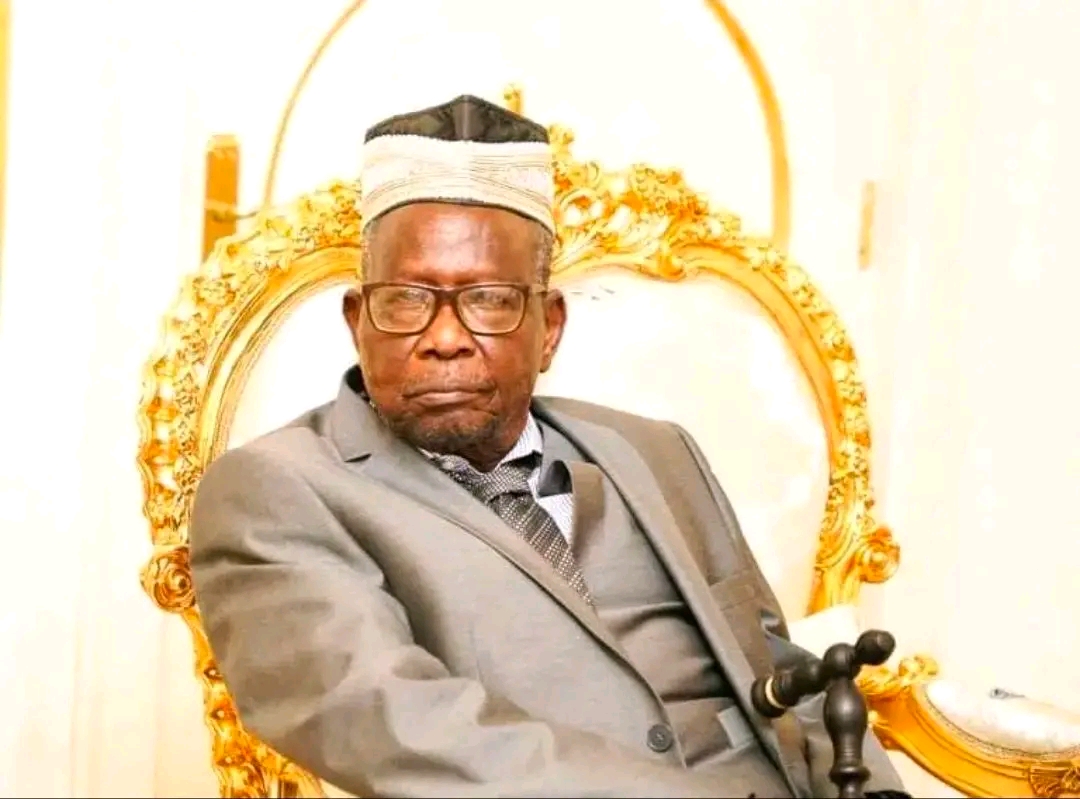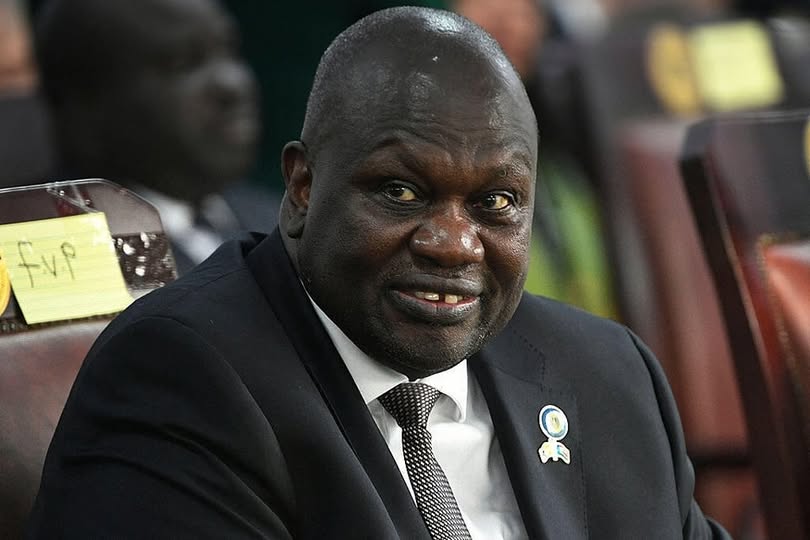
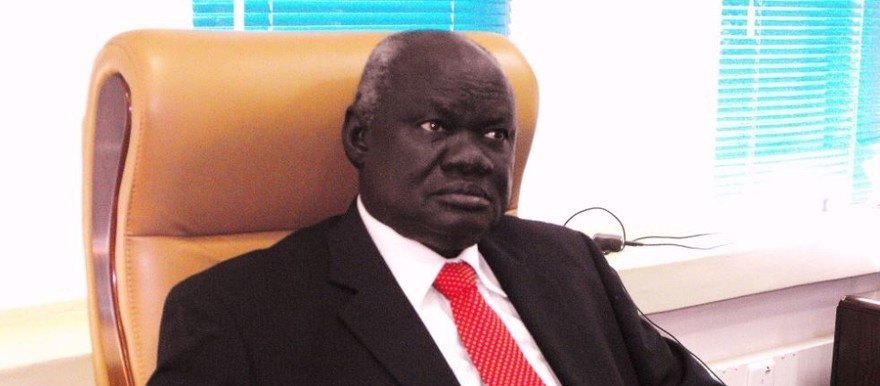
Former Higher Education Minister Gabriel Changson Chang has unveiled a new political movement, marking a fresh chapter in his long and shifting political career and signaling a formal break from the Federal Democratic Party (FDP).
Changson surfaced this week at the High-Level Consultation Meeting on South Sudan held in Dar es Salaam, Tanzania, where he appeared under a new political banner known as the People’s Resistance Front (PRF).
During the regional consultations, he was officially introduced as the chairman of the newly formed movement.
The meeting, convened by former Tanzanian President Jakaya Mrisho Kikwete in his capacity as the African Union High Representative for the Horn of Africa and the Red Sea, brought together several South Sudanese opposition groups and political stakeholders to discuss the country’s prolonged conflict and the future of the peace process.
In a statement released after the consultations, the PRF confirmed its participation in the talks and stressed that Changson attended in his official capacity as chairman of the People’s Resistance Front, rejecting claims linking him to the leadership of the FDP.
“The FDP, as an independent entity, maintains its own leadership and institutional identity, separate from that of the PRF,” the statement said.
The announcement effectively confirms Changson’s departure from the Federal Democratic Party, a movement that has faced internal divisions and leadership wrangles in recent years.
The FDP, which is part of the South Sudan Opposition Alliance (SSOA), has been battling internal disputes since 2024 following the controversial dismissal of its Secretary-General, Changkuoth Bichiok Reth, from parliament.
Tensions within the party later escalated, with a faction allied to Changkuoth announcing that it had removed Changson from the party leadership.
Changson himself was dismissed from his role as Minister of Higher Education in 2025 and replaced by Madut Yel Biar, a development that further weakened his political standing within the transitional government arrangement.
In his remarks during the Dar es Salaam consultations, Changson reportedly outlined what he described as the root causes of South Sudan’s conflict, pointing to governance failures, political exclusion, weak institutions, and the absence of meaningful reforms.
He also criticized the implementation of the Revitalized Agreement on the Resolution of the Conflict in South Sudan (R-ARCSS), arguing that the peace deal has failed to address deeper structural issues driving instability in the country.
The newly formed PRF says it advocates for an inclusive and people-centered political process, with priorities including security sector reforms, transitional justice, institutional restructuring, and democratic governance.
However, questions remain over the exact nature and direction of the new movement. It is still unclear whether the People’s Resistance Front intends to operate solely as a peaceful political opposition organization or pursue armed resistance as part of its agenda.
It also remains unknown whether Changson has relocated outside South Sudan ahead of the unveiling of the movement.
Over the years, Gabriel Changson has remained one of South Sudan’s most politically active and controversial figures, frequently shifting alliances and participating in different opposition formations and peace initiatives.
His latest political move is likely to reshape dynamics within opposition politics as the country continues to grapple with delayed reforms and uncertainty over the implementation of the peace agreement.