Gender-based violence (GBV) levels remain alarming in Unity State, with hundreds of women, men, and children continuing to suffer from abuse, rape, and domestic violence despite ongoing awareness and prevention efforts.
Recent data from the State Ministry of Health indicate that 371 GBV cases were recorded this year across the state including 91 girls, 80 men, and 71 boys, reflecting persistent challenges that affect the most vulnerable groups, particularly women and girls.
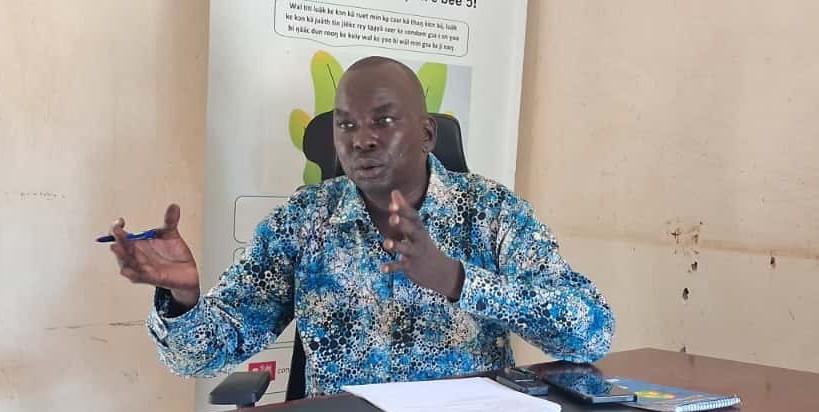
“Some GBV cases arise from domestic violence or rape during local clashes. We continue to educate people that equality starts at home, men and women must share responsibilities,” said Michael Guo Puot, Acting Director for Reproductive Health in Unity State.
Guo noted that access to essential health and protection services has improved even in hard-to-reach and flood-affected areas such as Rubkona County, thanks to joint efforts by the State Ministry of Health and its humanitarian partners.
“The situation was very bad before women could not reach health facilities because of insecurity and poor roads,” he said.
“Now, we can send boats or vehicles to transport women in labor or survivors of violence to health centers. This has saved many lives.”
Mobile health teams are providing outreach services in Kaljak, Nianti, Naurangwar, Panjan, and Top, communities often isolated during the rainy season.
These health center offer reproductive health services, psychosocial counseling, and emergency care for survivors.
Awareness campaigns are being conducted through churches, schools, and local community meetings, focusing on ending gender-based violence and promoting gender equality.
Health workers are also involving men and boys as allies for positive masculinity and gender justice.
“Family planning is not a crime; it is a right and a form of treatment. We advise men to support their wives and daughters in accessing reproductive health services. It’s about health, not shame,” Guo explained
He added that more couples are now embracing family planning and condom use to prevent unplanned pregnancies and sexually transmitted infections.
Despite challenges such as poor roads, limited resources, and recurring floods, Unity State continues to make steady progress in reducing GBV and improving reproductive health services.
Increased security has also enabled wider outreach and distribution of emergency reproductive kits.
“Before, there were many deaths because services were unavailable,” Guo said.
“Now, with trained staff, mobile teams, and better access, women and girls are surviving and receiving the help they need.”
He emphasized the need for continued investment in health infrastructure, logistics, and community education to sustain the progress made so far.
“Communities are benefiting, families are supported, and our state is improving. Every woman and girl deserves to live free from violence and access quality, dignified healthcare,” he added.
The Unity State Government, in collaboration with Health Link South Sudan and Cordaid, with financial and technical support from the UNFPA South Sudan Country Office, is scaling up lifesaving GBV prevention and response services alongside reproductive health programs across the state.