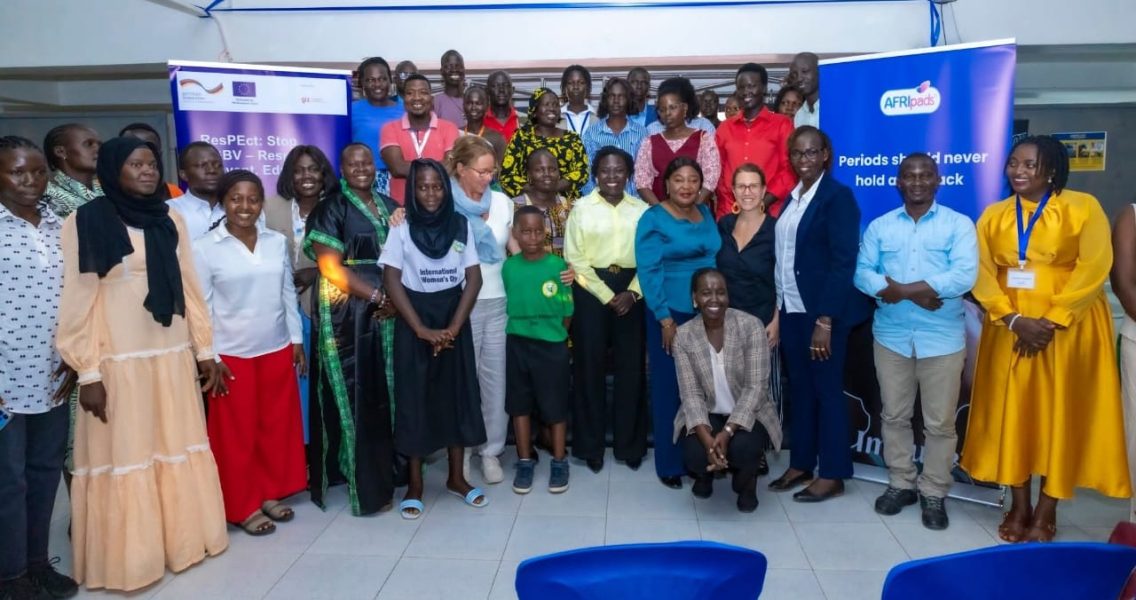
The Central Equatoria State Ministry of Gender, Child and Social Welfare has renewed calls for stronger action to address menstrual stigma and improve menstrual health management across South Sudan, warning that cultural taboos and limited access to hygiene products continue to affect the education and wellbeing of many girls.
The appeal was made during the premiere of a menstrual health film organized by GIZ and partners at the UniPod innovation hub of the University of Juba, where government officials, development partners, students and civil society representatives gathered to discuss challenges surrounding menstrual health and girls’ education.
Speaking at the event, the ministry’s Director General, Nunu Diana Alison, said menstruation remains a sensitive topic in many communities, often preventing girls and women from participating fully in education and public life.
“Menstruation is still surrounded by stigma in many of our communities. While awareness has improved over the years, many girls continue to experience shame and discrimination because of a natural biological process,” Diana said.
She reflected on her years of advocacy through the “Keep Her in School” campaign, which she led between 2012 and 2015 to promote menstrual hygiene awareness and girls’ education.
According to Diana, progress has been made in opening discussions around menstrual health, but many girls, particularly in rural areas, continue to face significant challenges.
Recalling a recent visit to Kuda in Dolo Payam, she shared an experience that highlighted the persistence of menstrual stigma.
“I recently visited Kuda in Dolo Payam where a young girl asked me to hide the sanitary pad I was giving her because she feared others would see it. That showed me the stigma is still very much alive,” she said.
Diana noted that cultural taboos often make it difficult for girls to discuss menstruation openly, even within their own families.
She recounted her own experience growing up with her grandfather, saying she struggled to explain why she needed money each month to purchase sanitary products.
“Many girls still find it difficult to talk about menstruation with their parents or guardians. We must create an environment where girls feel safe and supported to discuss these issues without fear or embarrassment,” she said.
The Director General called for schools to establish stronger support systems for girls, including designated female mentors who can provide counseling, emergency sanitary products and guidance on menstrual health management.
“Schools should have support structures where girls can seek help when they experience menstrual challenges. No girl should miss class because she lacks sanitary products or fears being stigmatized,” Diana said.
She also emphasized the importance of investing in water, sanitation and hygiene facilities, saying access to clean water and safe toilets is essential for girls to manage menstruation with dignity.
The ministry further urged media organizations to play a greater role in promoting accurate information and challenging misconceptions surrounding menstruation.
“The media has a critical role to play in breaking myths and changing perceptions. By telling these stories and sharing accurate information, we can help normalize conversations about menstruation,” she added.
Diana called on development partners, civil society organizations and community leaders to expand awareness campaigns and educational initiatives beyond urban centers to reach remote communities where stigma remains deeply rooted.
She also shared a personal story about experiencing an unexpected menstrual leak during a public conference, explaining how speaking openly about the incident later encouraged many women to share similar experiences.
“When we openly discuss these experiences, we help other girls and women realize that menstruation is normal. These conversations build confidence and help remove the shame associated with it,” she said.
Concluding her remarks, Diana reaffirmed the government’s commitment to working with partners to improve menstrual health services and create supportive environments for girls and women across the country.
“As a government, we remain committed to working with partners to ensure girls and women have access to information, menstrual hygiene products, and supportive environments where menstruation is no longer treated as a source of shame,” she said.