Residents of Goroyo, a community located on the outskirts of Juba, are appealing for urgent government and humanitarian intervention to establish a health facility and schools as families continue to endure severe daily hardships caused by a lack of basic social services.
Community leaders and women say the absence of a Primary Health Care Centre (PHCC) has left residents vulnerable, especially pregnant women, children, and patients requiring emergency treatment.
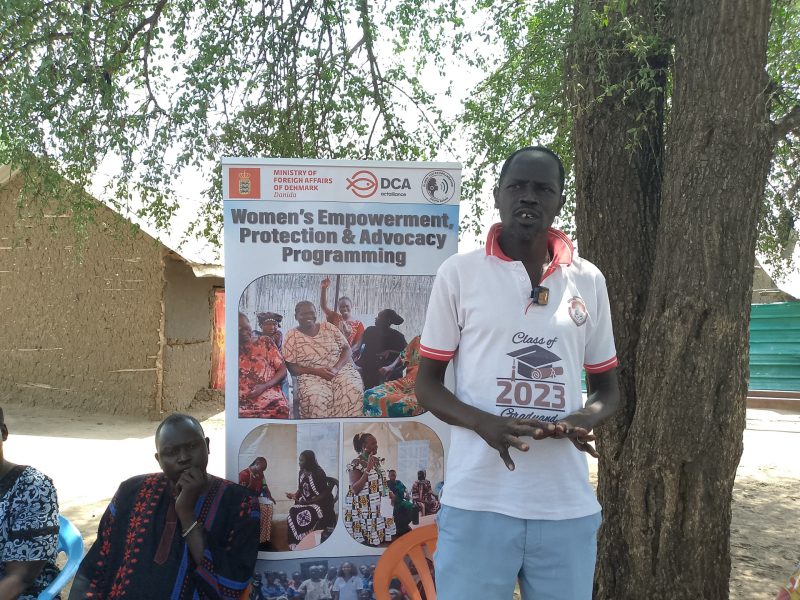
Speaking during an interview, Goroyo community chief Lafayette Matit Malondo described the situation as critical, saying residents have been abandoned without access to proper healthcare or nearby schools.
“We don’t have a hospital, we don’t have schools. Our women and children are suffering because there is no health center in this community,” Chief Lafayette said.
According to the chief, many pregnant women are forced to deliver at home using traditional methods because there are no nearby medical services.
He added that emergencies often become deadly during the night due to lack of transport to Juba Teaching Hospital.
“If someone falls sick at midnight, people have to wait until morning because there is no transport. Some people have died because of this situation,” he explained.
Chief Lafayette said the community often depends on neighbors with private vehicles to transport critically ill patients to hospitals in Juba, but such assistance is unreliable.
“Sometimes you call someone for help, but their phone is switched off. In such situations, we just put people in the hands of God,” he added.
Beyond healthcare challenges, the chief also highlighted the absence of schools in the area, saying children are forced to walk long distances to neighboring communities such as Mangateni in search of education.
“There is no school here. The children have to move very far, and along the way they can even get lost,” he said.
He revealed that the community has already allocated land for the construction of schools and health facilities but lacks the financial capacity to develop them.
“We have space for schools and a health center, but we don’t have the ability to build them. We raised these concerns to the government, but we were told there is no money,” Chief Lafayette stated.
The chief also raised concerns over child safety in the area after two children from Goroyo were allegedly kidnapped earlier this year before being recovered in Nimule and reunited with their families.
Meanwhile, Viola Francis, speaking on behalf of women in Goroyo 1 and 2, described the struggles women and children face daily due to the lack of healthcare and education services.
“In Goroyo 1 and 2, we the communities living in this area are going through a lot. We don’t have a PHCU or schools, and our children walk very far to study at Dr. John Garang Primary School,” Viola said.
She explained that pregnant women often give birth at home because there is no nearby clinic or ambulance service to support emergencies.
“In the toughest situations, most women deliver at home because there is no PHCU and no ambulance available. There is no proper care for mothers like the care offered in hospitals,” she added.
According to Viola, accessing Juba Teaching Hospital during emergencies is extremely difficult, especially at night.
“Juba Teaching Hospital is very far away from us. Going there takes almost three to four hours to access health services. It looks like we are not part of the same Juba City,” she lamented.
She also highlighted the effects of flooding and climate change, saying heavy rains frequently cut residents off from markets and essential services.
“We are also facing climate change challenges like flooding. When it rains heavily, it cuts us off from accessing services and even going to the market,” Viola explained.
Community leaders are now appealing to the government, humanitarian agencies, companies, and well-wishers to support the construction of a health facility and schools in the area.
“Our biggest need is a health care center because people are suffering. We also need primary and secondary schools for our children,” Chief Lafayette appealed.
The appeal reflects the broader struggles faced by many underserved communities across South Sudan, where limited access to healthcare, education, transport, and protection services continues to affect vulnerable populations.