The National Ministry of Health has thrown its weight behind the Kajo-Keji Community Blood Donors’ Initiative (KCBDI), praising it as a model that could transform South Sudan’s fragile blood supply system and help avert preventable deaths across the country.
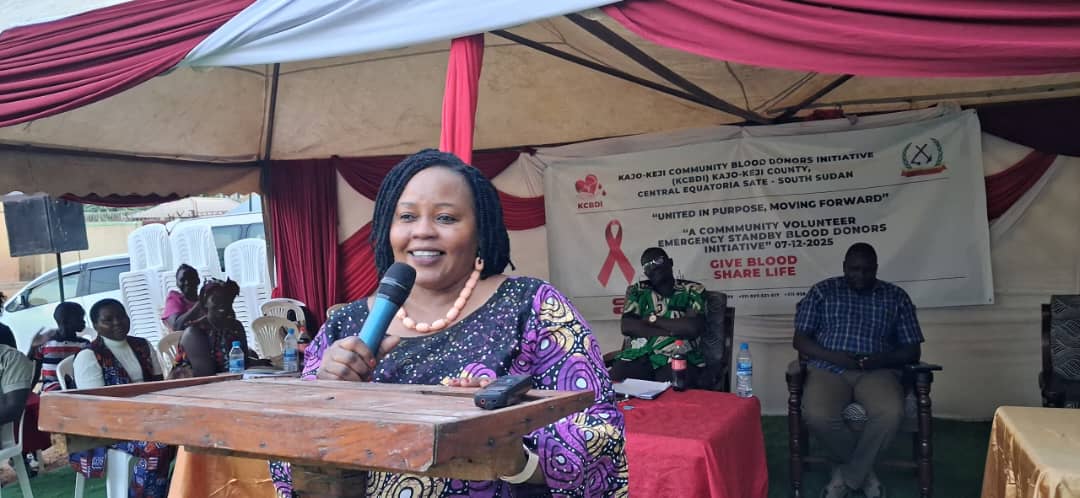
The endorsement came on Sunday during KCBDI’s Second Annual Meet-and-Greet at Epatha Primary and Secondary School, where government officials, volunteer donors, recipients, and community leaders gathered to celebrate the initiative’s growing impact.
Formed in September 2023 and launched two months later, KCBDI was born from a collective grief shared by young people who had lost loved ones due to the lack of blood in health facilities.
In just one year, the initiative has grown to maintain a database of 48 standby volunteers, credited with saving at least 35 lives mostly mothers suffering postpartum hemorrhage, children in critical condition, and patients with severe medical emergencies.
“Our journey started with pain,” said KCBDI Secretary for Information Modong Anne. “All of us here have lost loved ones due to lack of blood. We asked ourselves: why can’t we do something? This is preventable.”
She said the event aims to connect donors with survivors and motivate more volunteers while the initiative plans expansion across Central Equatoria State and eventually nationwide.
Dr. Harriet Pasquale, Director at the National Ministry of Health, hailed KCBDI’s work as a critical step toward building a reliable blood system in South Sudan, where shortages routinely endanger patients.
“Blood is a very important health product for us in South Sudan. Having a community-led initiative like this is crucial,” she said.
Dr. Pasquale pledged ministry support to strengthen KCBDI’s operations, including fast-tracking emergency blood testing, promoting public awareness, and integrating community donors into the national blood safety strategy.
Her remarks signaled an important shift in national policy recognizing that volunteer-driven efforts can complement government systems often weakened by shortages in testing supplies, storage capacity, and nationwide donor mobilization.
Central Equatoria State’s Director General of Health, Dr. James Wani, applauded the donors as “unsung heroes”, announcing that the state will now incorporate blood donation awareness into all health education programs.
“Every pint donated is a life saved. What KCBDI has built here is an example of what communities across the country should emulate,” he said.
AGOSS President Dr. Idioryo cautioned that harmful myths and fears surrounding blood donation continue to fuel South Sudan’s alarming maternal mortality rate.
“South Sudan is number one for maternal deaths due to bleeding. Many lives could be saved if more people understood that donating blood is safe and lifesaving,” she said.
She recounted the case of a cancer patient who survived after receiving eight units of blood—an example, she said, of the vast impact a committed donor community can have.
Speaking at the event, longtime universal donor Duku Evan Charles, who began donating in 2002, said he is driven by one belief, “If my blood can save a life, I will give it.”
He called for school-based awareness programs to educate young people early.
Another donor, Duku Dominic Lunga, urged citizens to “overcome fear and misinformation,” adding that donors often save people they never meet.
As the event concluded, leaders, donors, and survivors echoed a unified message: voluntary blood donation must become a national culture.
KCBDI’s model community-led, youth-driven, and supported by government health leaders is now seen as a blueprint for building a reliable national blood network capable of responding to emergencies and reducing preventable deaths.
For families who once feared losing loved ones due to blood scarcity, the initiative’s success offers renewed hope.
And with the Health Ministry’s backing, KCBDI’s fight to save lives may soon extend far beyond Kajo-Keji.