
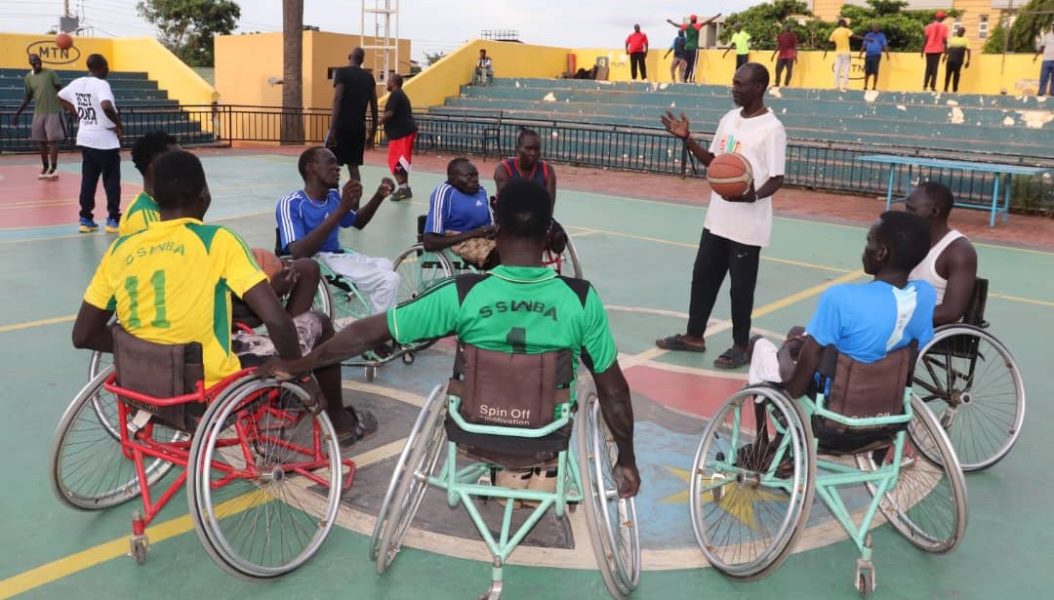
In South Sudan, where tales of conflict often drown out stories of courage, something revolutionary is happening on a basketball court. This isn’t a fight with guns, but with courage. The sound isn’t gunfire, but the rhythm of spinning wheels and bouncing balls.
This is not just a game, but a community for people who have found so much more than a sport—they’ve found a sense of purpose and a place to belong.
For survivors of polio, ambushes, and accidents, and for former child soldiers, wheelchair basketball isn’t just a pastime. It’s how they’re healing and building new hope.
At the center of it all is Malat Wei, a man whose own life is an exemplary display of resilience. A polio survivor since he was six, Malat went on to become an international player. He returned to Juba in 2019 with a single mission to bring wheelchair basketball back to life.
His journey was even featured in the ICRC documentary, “No Limits: Wheelchair Basketball in South Sudan,” which showed his dedication to helping war survivors reclaim their lives through sport.
For Malat, this game is more powerful than any weapon. “This is bigger than carrying a gun,” he says. “People who are physically challenged can represent [us] everywhere, and we should be given opportunities to keep fit and feel confident in ourselves.”
Malat dreams of a future where his players aren’t defined by their pasts. He and the team are working hard to start the country’s first wheelchair basketball federation and build a national team ready to take on the world.
Already, the team includes at least seven former child soldiers who are discovering a new identity and a shared mission on the court.
The coaches have built a space where players are seen for what they can do, not for their disabilities.
James Luate, one of the dedicated coaches, knows the impact firsthand. “I was a disabled person who did not know what to do with my life,” he shares, “but now I’ve found a community where we are accepted.” Here, they aren’t just ‘disabled people’—they’re athletes, teammates, and friends.
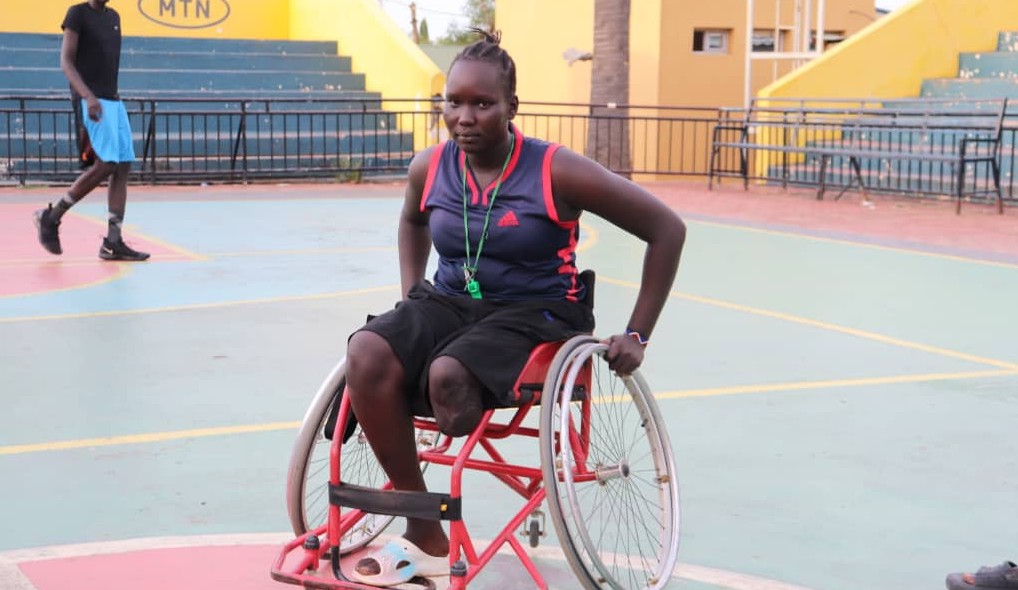
That feeling of belonging has been life-changing. Martha Ajudi, a young student whose leg was amputated in 2022 after a long illness that started when she was 5 years old. She shut herself away for months until a coach introduced her to the game.
Before the parliamentary basketball team starts playing, Martha Ajudi has always been home with her siblings if she is not at school. She was still feeling isolated and lonely from the community.
Now, as the only girl on the team, she has found a place where she can truly shine. “I have learnt a lot,” she says. “This is an exercise for me, and now I live healthy and happy.”
Her hard work paid off when she represented South Sudan at the first African Mixed Wheelchair Basketball International Tournament in Kinshasa, proving to everyone, including herself, what she was capable of.
The sport is gaining traction with local leagues of wheelchair basketball in South Sudan. This includes Juba, Wau and Yirol.
Amaychit Makuei Manyiel, a wheelchair basketball player, started playing since the post-independence period, though later stopped. He is hopeful that he, along with other team members, will lift the country’s wheelchair basketball program in the country and beyond. “We just need the support.”
James Maluany Achol Deng found the same comfort on the court after a traumatic ambush left him with an amputated leg. Mr. Maluany was travelling from Yirol to Rumbek when he fell into an ambush, where he sustained a serious injury.
In the theatre, Maluany had his leg amputated. The trauma of adapting to the new life forced him to find a place where he could reconnect.
His friends showed him the Yirol wheelchair basketball. He is among those who are now defending the country in the East African region.
As he struggled with his new reality, the game gave him an anchor. “I am happy now,” the 25-year-old says with a smile. “I am like those who have legs and are able to do any other work because I can play.”
Outside the court, James Maluach Achol is a retail businessperson in Hai Referendum. He started the business in 2023 using the financial support given by the International Committee of the Red Cross.
Barnaba Bol, a polio survivor, agrees. “When I was at home, I was so stressed… but now it’s a different thing. I am healthy.”
The need for resources
Though many left when things got tough at the beginning, the team is now 35 players and three coaches strong.
They use Nimra Talata basketball stadium which they have been given a schedule for 3-5 PM on Monday, Wednesday and Friday.
The team has quality professional wheelchairs donated by the South Sudan Red Cross, and they are in short supply. The current wheelchairs of at least 14 are the only available ones; if they get spoiled, then it will affect the players.
Transport is also a major hurdle for many players. Only 4 of them have wheelchair motorcycles that transport them. While the rest use formal public transport.
Usually, regular games out of the country are organised or supported by the International Committee of the Red Cross, which facilitates some of the activities, though they say this support is not enough.
Players like Amaychit Makuei Manyiel and Thon Mabor Ngor believe that with a little more support, the sport could become a national treasure.
“We can participate in the World Cup, and we are hopeful,” Thon says, highlighting the team’s need for resources to form an official federation.
For this incredible group of athletes, wheelchair basketball is about so much more than winning. It’s about taking back their lives, building pride, and showing the world what it truly means to be resilient.
“This story is reported with a grant from Journalists for Human Rights under the Tackling Mis/Disinformation Project, funded by the Peace and Stabilization Program of the Government of Canada.”